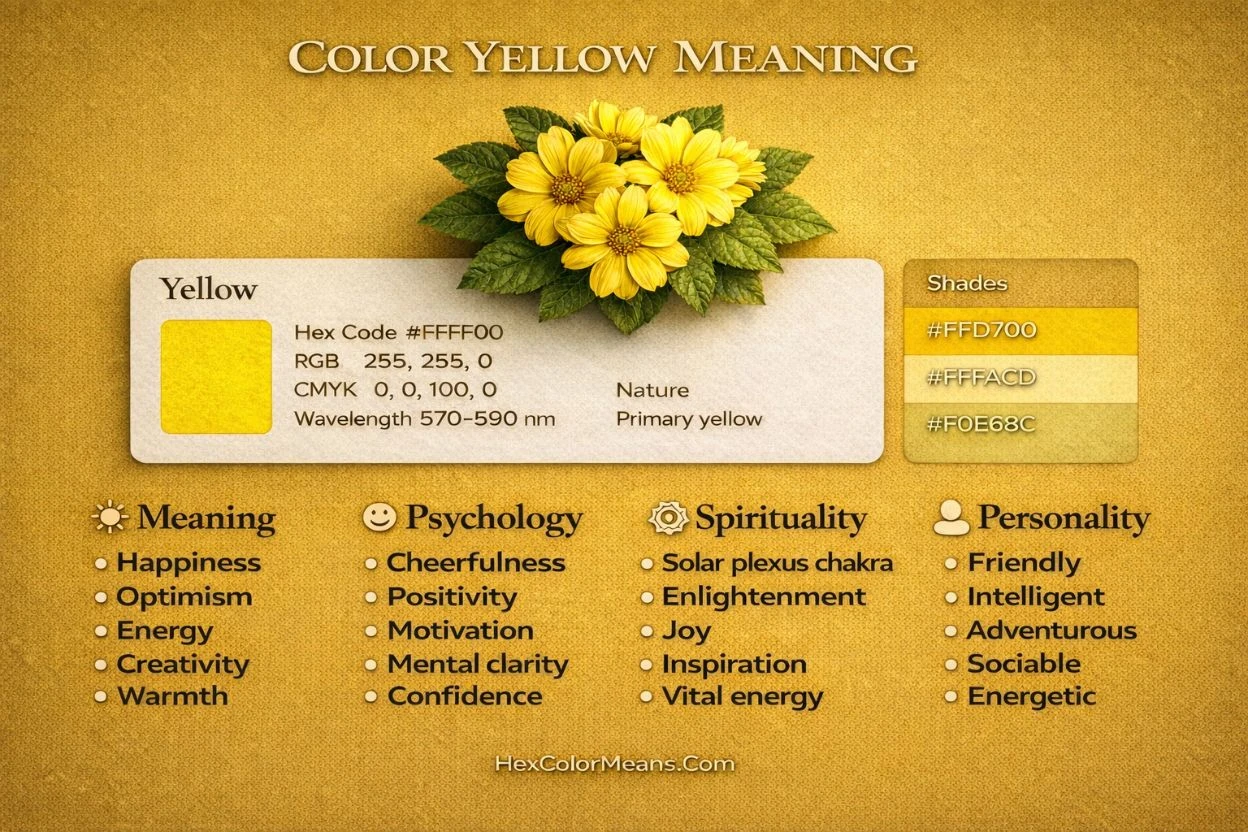
Yellow is bright, bold and impossible to ignore. This color represents sunlight, warmth and energy. It is often linked with optimism and creativity. For example, research shows that yellow can instantly uplift moods.
However, its meaning goes far beyond happiness. Actually, yellow carries deep cultural, spiritual and psychological significance worldwide. From art and fashion to marketing and spirituality, this color tells a story in every context.
Yellow commands attention and stimulates the mind. It also sparks human curiosity. You can see its role everywhere in daily life. Common examples include traffic signs, school buses, paintings and religious symbols.
Studying yellow gives insight into how color shapes perception, emotion and behavior.
Key takeaways
- Yellow symbolizes happiness, optimism, creativity and mental energy. Sometimes though, it can evoke feelings of caution or anxiety.
- The color yellow holds spiritual and religious meaning. Many cultures connect yellow to enlightenment, wisdom and divine power.
- Historically, yellow has influenced art, culture and science. Its journey ranges from natural pigments to modern digital color codes.
- Yellow is widely used in daily life. Major uses include branding, interior design and fashion. Other uses are makeup, food, literature and music.
- Yellow color symbolizes certain personality traits. Positive traits include optimism and confidence. Conversely, some negative traits are impatience or being overly cautious.
What is the color yellow?
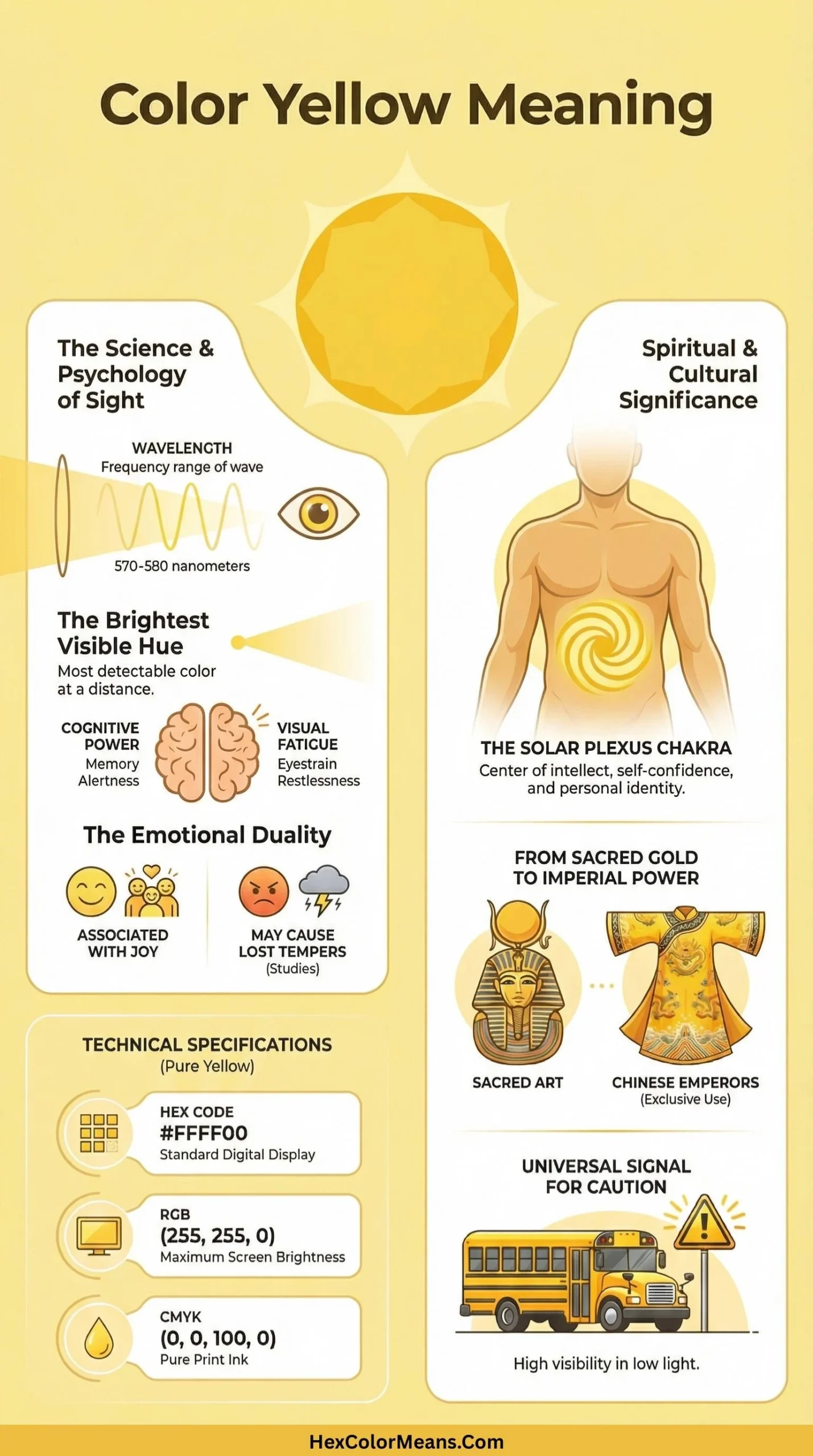
Yellow sits at the brightest end of the visible light spectrum, between green and orange. Its wavelength of approximately 570–590 nm makes it one of the most eye-catching colors humans can perceive. That natural brightness explains why yellow feels energetic, alert, and impossible to ignore.
At its core, yellow is the color of sunlight. It represents the main source of life on Earth, fueling growth, warmth, and visibility. From a symbolic angle, this connection turns yellow into a sign of optimism, awareness, and mental clarity. It reflects how light reveals what was hidden and brings attention to what matters.
In nature, yellow appears constantly. Think of sunflowers tracking the sun, ripe lemons signaling freshness, autumn leaves glowing before winter, or the golden tone of honey. Even gold takes its identity from yellow, linking the color to value, success, and power across cultures.
Digitally, yellow is a primary color in the RGB model, created by combining full red and green light. In printing and painting, it acts as a foundational secondary color that cannot be mixed from others. This dual role gives yellow a special status in both art and technology.
To reproduce standard yellow accurately in design, these color values are commonly used:
- Hex Code: #FFFF00
- RGB Code: (255, 255, 0)
- CMYK Code: (0, 0, 100, 0)
Yellow is not a single personality. It spans a wide emotional range depending on shade and tone. Its most popular variations include:
Lemon Yellow: A sharp, fresh yellow linked with cleanliness and alertness.
Golden Yellow: A warm, rich shade associated with wealth and achievement.
Mustard: A muted, earthy yellow that feels mature and grounded.
Amber: A deep yellow-orange that suggests warmth and comfort.
Pastel Yellow: A soft, gentle yellow often tied to calmness and innocence.
History and interesting facts
History of the color yellow
The history of yellow pigments spans thousands of years. Early civilizations got yellow from natural sources. For instance, they used ochre and clay. People also made dyes from plants.
Egyptians highly valued yellow for its golden color. They linked it to their sun god Ra.
Next, in medieval Europe, artists used arsenic based pigments. These were common in manuscripts and clothing. They also appeared in religious art. Significantly, arsenic sulfide is known as orpiment.
Later, the Industrial Revolution changed pigment production. It introduced synthetic yellow pigments. These new colors were more vibrant. They were also more durable.
For example, chrome yellow was created in 1809. Cadmium yellow followed in 1817. These pigments transformed art and manufacturing.
Now, we have modern yellow colors. Digital screens can show a pure yellow called #FFFF00. Meanwhile, contemporary paints are very consistent.
Interesting facts about the color yellow
- Most Visible Color: Yellow is the easiest color for the human eye to see. That’s why it’s used in road signs.
- Warning Signal: It often signifies caution, like traffic lights and hazard signs.
- Food Attraction: Yellow triggers appetite and is used in fast food branding.
- Mood Booster: Exposure to yellow light can improve alertness and energy.
- Art & Design Favorite: Artists like Van Gogh and Monet used yellow to create warmth and vibrancy.
- Rare in Nature: Pure yellow is less common in animals, making it unique and attention-grabbing.
- Cultural Shift: In the Middle Ages, yellow could symbolize both wealth and deceit depending on context.
Symbolism and representation
Yellow has always been tied to light, hope, and awareness. Its strongest symbolic root comes from the sun, the original source of warmth, visibility, and life.
Since everything on Earth depends on sunlight to grow and survive, yellow naturally became a symbol of creation, renewal, and fresh beginnings. It reflects the moment when darkness fades and clarity appears.
On a mental level, yellow represents knowledge and intelligence. It is often associated with learning, thinking, and problem-solving.
Many cultures connect yellow with scholars, teachers, and thinkers because it mirrors the way the mind lights up when new ideas arrive. Yellow feels active. It suggests curiosity, insight, and mental movement.
At the same time, yellow also functions as a warning color. Road signs, hazard labels, and safety tape rely on yellow because the human eye detects it faster than almost any other hue.
This gives yellow a rare dual identity. It can signal joy and optimism, but it can also signal danger, caution, and alertness. Few colors hold both meanings so strongly.
In art and visual culture, yellow often symbolizes youth, energy, and creativity. It feels playful and experimental.
Artists use yellow to express imagination, emotional warmth, and intellectual depth. When balanced carefully, yellow creates comfort and positivity.
When used excessively, it can feel sharp, chaotic, or mentally overwhelming. The same color that inspires can also exhaust, which reflects its powerful psychological impact.
Meaning of the yellow color in spirituality
Spiritually, yellow represents enlightenment and inner awareness. It is closely linked with higher consciousness, mental clarity, and the pursuit of truth.
Many spiritual traditions view yellow as the color of awakening, the point where a person begins to understand themselves beyond surface identity.
Yellow aligns with the solar plexus chakra, Manipura (मणिपुर), the energy center connected to confidence, personal power, and emotional control. This chakra governs how individuals see themselves and how they interact with the world.
When balanced, it creates feelings of motivation, self-trust, and inner strength. When blocked, it may lead to fear, insecurity, self-doubt, or emotional instability.
Yellow also symbolizes spiritual illumination. It represents the light that guides people through confusion and uncertainty.
In meditation practices, yellow light is often visualized to clear negative thoughts and strengthen mental focus. It acts as a spiritual cleanser for the mind.
In healing traditions, yellow is believed to attract joy, optimism, and emotional balance. It is used to lift low moods, reduce mental heaviness, and restore hope.
Spiritually, yellow reminds people that growth begins in the mind and that awareness creates transformation.
Psychological meaning of color yellow
From a psychological perspective, yellow is one of the most stimulating colors. It activates the brain, increases alertness, and sharpens memory.
That is why yellow appears frequently in classrooms, study tools, and creative environments. It keeps the mind awake and responsive.
Yellow is strongly associated with happiness and optimism. It can lift emotional energy, reduce feelings of sadness, and encourage social behavior.
People often feel more expressive and communicative in yellow spaces. The color promotes conversation, idea-sharing, and emotional openness.
However, yellow also has psychological limits. Too much exposure can cause mental strain, anxiety, and restlessness.
Bright yellow shades may feel aggressive or irritating when overused. Instead of calming the mind, excessive yellow can overload it.
That is why designers usually pair yellow with neutral tones like white, gray, or soft blues. Balance keeps yellow positive rather than overwhelming.
In therapy and emotional healing, yellow is used to treat low motivation and mental fatigue, helping people regain clarity, confidence, and creative energy.
Color yellow personality traits
People drawn to yellow often reflect the color’s mental nature. Yellow personalities are typically curious, expressive, and intellectually driven.
They enjoy thinking, learning, and exchanging ideas.
Positive personality traits
Yellow personalities are naturally optimistic and cheerful. They bring brightness into conversations and social spaces.
Their presence often feels uplifting because they focus on possibilities rather than limitations.
Individuals who are drawn to color yellow are creative problem-solvers who enjoy innovation and exploration. New concepts excite them.
They love knowledge, discussions, and mental challenges.
Socially, yellow people are friendly and open-minded. They communicate easily and value honesty.
They enjoy deep conversations and often inspire others through insight and motivation.
They also prefer independence and originality. They think logically, question traditions, and seek personal growth.
Truth matters more to them than emotional comfort.
Negative personality traits
On the negative side, yellow personalities can be restless and impatient. Their minds move quickly, which may lead to boredom or difficulty focusing on long-term tasks.
They may overthink situations, leading to anxiety or nervous behavior. Their strong mental energy can create stress if not grounded properly.
Sometimes they appear emotionally distant or overly analytical. They may seek external validation or constant stimulation.
Yellow personalities thrive with balance. When focused, they become powerful thinkers. When overwhelmed, they become scattered and mentally exhausted.
What does the Bible say about color yellow?
In biblical symbolism, yellow appears mainly through gold, which represents divine presence, holiness, and spiritual purity. Gold is not treated as ordinary wealth but as a sacred substance connected to God.
In Exodus 25:11, the Ark of the Covenant is covered with pure gold, symbolizing God’s glory and authority. Gold becomes a physical expression of divine power.
In Revelation 21:18, the New Jerusalem is described as pure gold, shining like transparent glass. This image reflects spiritual perfection, eternal truth, and heavenly light.
Yellow and gold also symbolize faith tested through trials. Gold must be refined by fire to reach purity.
Biblically, this represents how spiritual struggles strengthen belief and remove impurities from the soul.
In this context, yellow stands for God’s wisdom, divine truth, and heavenly value. It reminds believers that spiritual richness matters more than material possessions.
Cultural and religious significance of the yellow color
Yellow holds deep meaning across civilizations.
- In Hinduism, yellow represents knowledge, prosperity, and sacred learning. It is worn by priests and scholars during rituals and festivals.
- In Buddhism, monks wear yellow or saffron robes as a symbol of humility, detachment from material life, and spiritual awakening.
- In Chinese culture, yellow was reserved for emperors. It symbolized authority, power, and divine right. Common people were forbidden to wear imperial yellow.
- In Japanese culture, yellow represents courage, refinement, and harmony with nature. It is linked with seasonal change and renewal.
- In Ancient Egypt, yellow symbolized eternity and immortality. Gods were often depicted with golden skin, showing their divine nature.
- In Islamic symbolism, yellow reflects wisdom, reflection, and spiritual insight, though it can also represent caution in certain contexts.
- In Western cultures, yellow stands for happiness, creativity, warmth, and youth. It is often associated with summer, energy, and positivity.
- In many African traditions, yellow symbolizes wealth, fertility, and high social status, especially when connected with gold.
Dream interpretations of color yellow
Dreams speak in symbols, and yellow often appears when the mind is active, curious, or emotionally alert. It usually connects with thought processes, awareness, and personal evolution. When yellow enters a dream, it suggests that something in waking life needs attention, reflection, or mental clarity.
1) Bright yellow in dreams
Seeing bright yellow in a dream is linked with happiness, optimism, and intellectual growth. It often shows up during periods of learning, creativity, or new beginnings. This shade reflects confidence and a strong sense of personal direction.
If the yellow feels warm and pleasant, it can indicate emotional balance and healthy self-esteem. The dream may point toward new ideas, opportunities, or a positive shift in mindset. It acts as a mental spotlight, highlighting what feels meaningful right now.
2) Dull or dirty yellow
Muted or muddy yellow carries a different message. It tends to reflect jealousy, anxiety, or emotional uncertainty. This shade appears when the mind feels overwhelmed or unsure about a situation.
Such dreams may signal internal conflict or fear of being misled. They sometimes appear when someone feels stuck, insecure, or overly dependent on external validation. The color becomes a warning sign, suggesting the need for honesty and emotional grounding.
3) Wearing yellow in a dream
Wearing yellow symbolizes self-expression and readiness to communicate. It shows confidence in sharing ideas or speaking openly. This dream often reflects a desire to be seen, heard, or acknowledged.
If the yellow outfit feels comfortable, it points to healthy self-identity. If it feels uncomfortable or embarrassing, it may suggest fear of judgment or social pressure.
4) Yellow objects and symbols
Yellow flowers often represent healing, renewal, and emotional openness. Yellow light suggests clarity, truth, or spiritual insight. These symbols appear when the mind is processing emotional release or mental breakthroughs.
5) Yellow animals and skies
Yellow animals usually symbolize rare gifts, talents, or special opportunities. They appear during times of personal growth or transformation.
A yellow sun or sky often reflects spiritual awareness and inner truth. It shows alignment between conscious thought and deeper intuition.
How to use the color yellow
Yellow works best when used with purpose. It attracts attention, boosts energy, and creates emotional responses. However, balance is key.
Yellow should be used as an accent rather than a dominant tone in most designs. It pairs well with black, white, gray, navy, and earthy shades. Soft yellows feel warm and friendly. Bright yellows feel bold and energetic.
Used correctly, yellow becomes a powerful emotional tool.
Color Yellow in Business
In business, yellow means innovation and clarity. It also shows progressive thinking.
This color signals a company is open to new ideas. For instance, many startups use yellow in branding. They want to show creativity and momentum.
A tech company may use yellow accents in rooms. This can stimulate discussion.
Research suggests marketing teams benefit from yellow notes or boards. The color keeps the mind alert and flexible.
For leadership, yellow encourages transparent communication. Employees often feel more comfortable in bright, welcoming spaces.
On the other hand, full yellow walls can feel overwhelming. Therefore, subtle shades are better for long term use. This is especially true in areas needing deep focus.
Color Yellow in Branding and Marketing
Yellow easily grabs attention. In crowded digital spaces, it cuts through visual noise.
Many fast food chains use yellow to trigger hunger. For example, McDonald’s uses yellow with red. This combination can stimulate appetite.
IKEA pairs yellow with blue to balance warmth with trust.
In online shopping, yellow buttons often perform very well. A yellow “Buy Now” button stands out. Studies show it can increase click through rates.
Yellow also improves brand recall. The brain links yellow with alertness, which strengthens memory. This is why warning signs and sale tags frequently use yellow.
Color Yellow in Interior Design
Yellow can change a physical space. It reflects light well. This makes small rooms feel more open and lively.
In homes, soft yellow walls in kitchens promote conversation. Living rooms with yellow cushions feel more inviting.
Dining areas gain from yellow lighting. It is known to enhance appetite and mood.
In workspaces, yellow supports focus and creativity. Some research indicates students may perform better with light yellow elements.
Use yellow carefully in bedrooms. Strong yellow tones may interfere with sleep. They stimulate the brain too much.
Instead, muted pastel yellows create a calm atmosphere.
Yellow Color in Cinema
Filmmakers use yellow to signal emotion. Nostalgic scenes often use yellow filters. This creates a sense of memory.
Desert films use yellow to show heat and isolation. Dream sequences may add yellow for surreal softness.
In thrillers, yellow lighting suggests instability. Viewers feel tension from the color.
Romantic films use yellow sunsets for intimacy. Directors rely on yellow to guide emotions visually. The color communicates before any dialogue.
Yellow Color in Humans
Yellow affects both behavior and perception. People wearing yellow often seem confident and approachable.
The color draws attention in a friendly way. It signals openness to others.
Psychologically, yellow increases mental alertness. This is a key reason for its use in schools and on safety signs.
Still, long exposure to intense yellow can cause restlessness. The mind needs visual contrast to stay properly balanced.
Yellow Color In Makeup
Yellow has a practical role in cosmetics. For instance, yellow concealers neutralize dark under eye circles. They balance purple and blue tones.
Makeup artists also use yellow primers to brighten dull skin. Meanwhile, yellow eyeshadow creates artistic looks. It is popular in high fashion and suits warm skin tones.
In runway trends, yellow lipstick symbolizes bold self expression. This color breaks conventional beauty standards and attracts attention.
Therefore, correct use of yellow makeup enhances glow and skin clarity.
Yellow Food
Yellow foods naturally stimulate appetite. Consider bananas, which provide quick energy.
Next, mangoes and pineapples support good digestion. Additionally, turmeric is known to reduce inflammation. Research shows it contains curcumin, an active anti-inflammatory compound.
Corn and cheese offer comfort and satisfaction. Nutrition psychology links yellow foods with mental uplift. They often contain antioxidants that support brain function.
Moreover, food brands use yellow packaging to suggest freshness. Snack companies rely on this color to increase cravings.
Yellow Color In Quotes And Idioms
Language reflects the emotional meaning of yellow. For example, “yellow journalism” represents exaggeration and manipulation.
Conversely, “yellow bellied” is a phrase that describes fear. “Mellow yellow” suggests calm happiness. Then, a “golden opportunity” reflects success and reward.
These expressions show yellow can symbolize both positive and negative ideas.
Yellow Color In Art And Architecture
Artists use yellow to express emotion and energy. Van Gogh painted yellow skies to reflect his passion. His use of the color showed psychological intensity.
In architecture, yellow buildings feel warm and welcoming. Mediterranean towns often use yellow facades. This practice reflects sunlight and can reduce heat absorption.
In sacred spaces, gold symbolizes divine presence. Many churches use yellow to represent spiritual illumination.
Songs With Yellow In The Title
Music uses yellow as an emotional language. Coldplay’s song Yellow expresses unconditional admiration.
Yellow Submarine reflects imagination and innocence. Black and Yellow represents pride and identity. Good Day Sunshine captures emotional warmth.
Generally, in lyrics, yellow stands for hope, love, and brightness.
Cities With Color Names: Yellow
Some cities embody yellow through geography and history. Yellowknife reflects golden landscapes and mineral wealth.
Yellow Springs connects with natural mineral water. Cities along China’s Yellow River represent agricultural life.
So, the color links physical land with cultural identity.
The Color Yellow In The Garden
Yellow flowers attract pollinators efficiently. Bees respond strongly to yellow because it signals nectar.
Consider these common yellow flowers:
- Sunflowers symbolize growth and loyalty.
- Daffodils represent renewal.
- Marigolds can protect nearby crops.
- Tulips bring brightness to spring gardens.
Gardens with yellow improve mood and emotional well being. They feel lively, hopeful, and welcoming.
Final thoughts
Yellow is a bright color. However, it also acts as a powerful symbol. It represents life and energy. It also stands for knowledge and emotional power.
This color directly affects how people think and feel. It even changes how they act.
Used wisely, yellow inspires creativity. It also boosts confidence. Furthermore, it promotes positivity.
Used poorly, this color can overwhelm people. It may also cause distraction.
Balance is a key lesson from yellow. For instance, it reminds people to stay hopeful. Next, it encourages them to stay curious.
Finally, it helps them stay mentally alive.
Yellow shines in every culture and belief system. It is also important across many industries. Specifically, it remains the color of light and transformation.