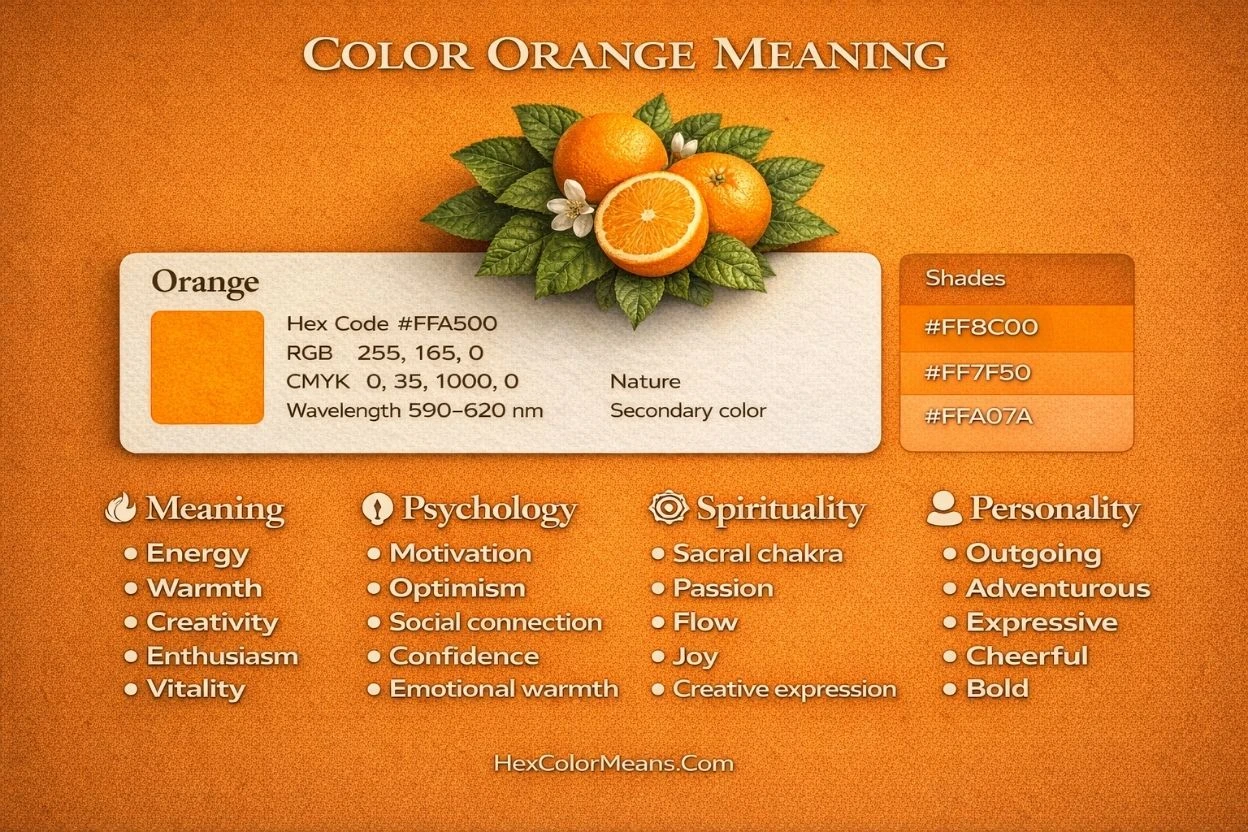
Orange occupies a precise position on the traditional color wheel. It resides directly between the primary colors red and yellow. This placement is not merely visual.
The color orange inherently combines the physical energy and intensity of red with the cheerful brightness and optimism of yellow. The resulting hybrid color generates a distinct perceptual experience.
It is universally described as warm, vibrant, and dynamic. Neuroscientific studies indicate that viewing orange triggers notable brain activity. Your mind typically responds with heightened curiosity and a sense of excitement.
Furthermore, this color is known to stimulate appetite and encourage social interaction.
Visual examples of orange are abundant in our world. Common instances include the deep glow of a sunset, the skin of a ripe citrus fruit, and the vibrant foliage of autumn.
Man-made examples include high-visibility traffic cones and the embers of a campfire. All these items demonstrate a key principle.
They command immediate visual attention, yet they generally avoid the aggressive or alarming feeling associated with pure red. This specific balance defines the functional power of orange.
Within the fields of design theory and color psychology, orange performs a unique bridging function. It serves as a connector between disparate concepts.
Specifically, it links the passion of red with the happiness of yellow. It also merges ideas of physical activity with feelings of emotional warmth and comfort.
This dual capacity for energy and approachability makes orange exceptionally effective for human-centered applications.
Key takeaways
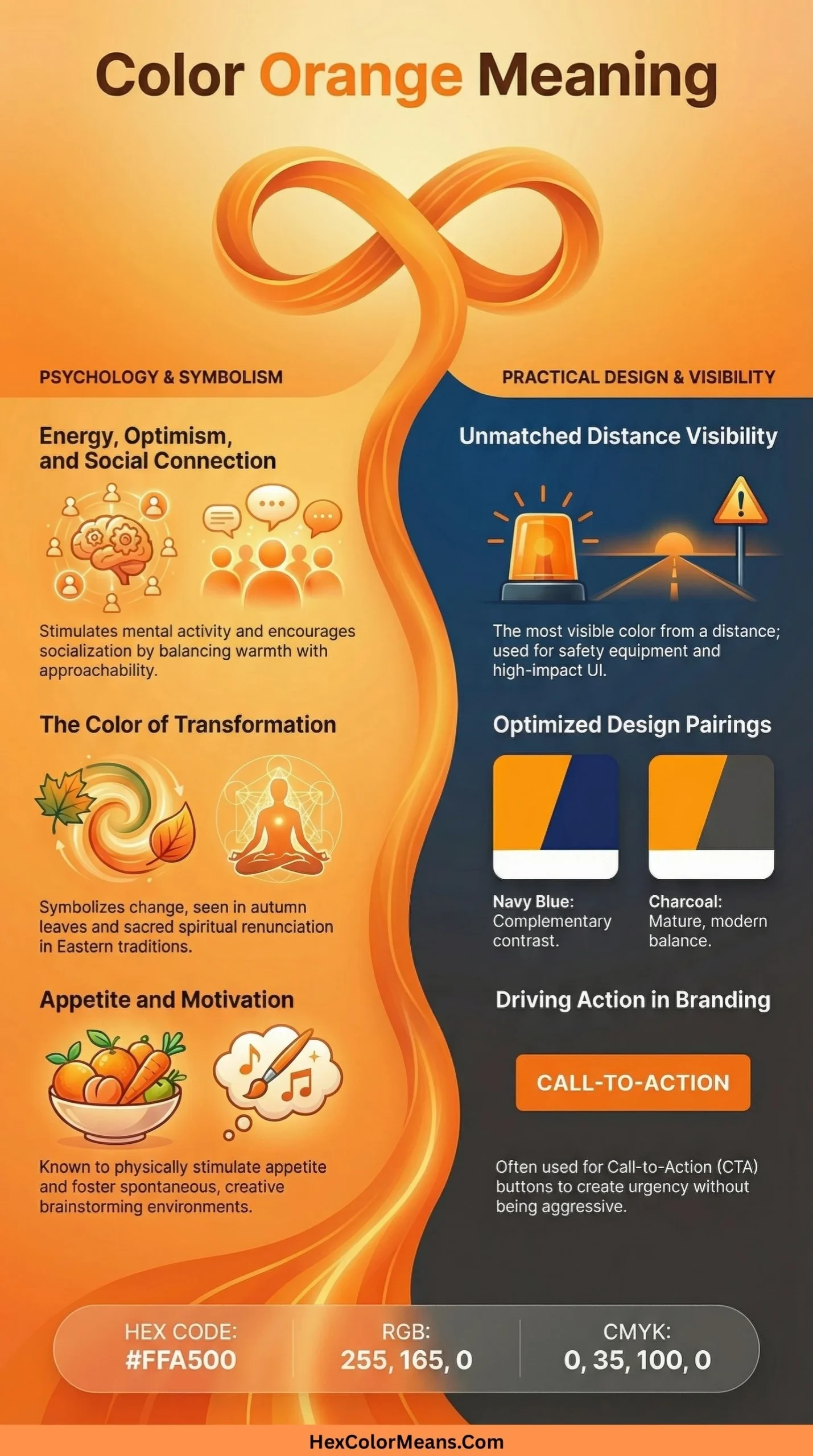
- Orange symbolizes a specific set of attributes: energy, creativity, warmth, and social connection.
- Psychological research demonstrates that orange actively stimulates mental motivation, physical appetite, and open communication.
- In spiritual traditions, orange frequently corresponds to the sacral chakra, which is linked to emotional vitality and creative flow.
- Marketing analyses show that in branding, the use of orange can increase click-through rates and consumer willingness to take action, while it reduces perceived risk.
- Culturally, orange carries strong associations with themes of celebration, harvest seasons, and personal or seasonal transformation.
What is the color orange?
From a foundational standpoint, orange is classified as a secondary color. It is produced through the direct combination of two primary pigments or lights: red and yellow.
In modern digital systems, the color is defined by standardized codes that ensure consistency across devices and media. The most recognized technical values for pure orange are:
- HEX Code: #FFA500
- RGB Values: Red: 255, Green: 165, Blue: 0
- HSL Values: Hue: 39°, Saturation: 100%, Lightness: 50%
The physics of light provides another critical lens. Within the visible spectrum, orange light possesses a wavelength of approximately 590–620 nanometers. This places it in a medium wavelength range.
Importantly, human visual perception is highly sensitive to these wavelengths. Scientific data confirms that orange is one of the most easily detected colors, especially in peripheral vision and over long distances.
This inherent visibility is a key reason for its widespread use in safety and warning contexts.
Orange also holds a distinct psychological position compared to its neighbors. While it carries energy from red, it typically lacks red’s associations with danger or overt aggression.
Similarly, it borrows brightness from yellow but avoids yellow’s potential for visual strain or instability. Instead, orange cultivates an impression of friendly invitation and grounded enthusiasm.
Orange is not a single personality. It carries different emotional tones based on shade, depth, and saturation. Its most popular shades include:
- Bright Orange: A vivid, energetic orange linked with excitement and action.
- Burnt Orange: A deep, earthy shade associated with stability and warmth.
- Tangerine: A fresh, lively orange that feels playful and youthful.
- Coral: A soft pink-orange tone connected with friendliness and balance.
- Peach: A gentle, pale orange often tied to comfort and approachability.
History and interesting facts
History of the color orange
Historically, the name for orange came from the fruit. Before the orange fruit arrived in Europe, languages lacked a dedicated word for the color. People instead used terms like “yellow-red” or compared hues to saffron.
Ancient cultures sourced orange pigments from the natural world. Their primary materials included three main categories:
- Ochre clay, derived from iron-rich soil.
- Minerals such as realgar and orpiment.
- Plant-based dyes from saffron and turmeric.
These pigments saw early and meaningful use. For instance, Ancient Egyptians applied orange ochre in detailed tomb paintings. Meanwhile, Romans utilized it in vibrant fresco art. Across the world, Buddhist monks in India and Southeast Asia adopted saffron-dyed robes. This choice carried deep spiritual symbolism.
Modern synthetic orange pigments emerged much later. Key developments occurred during the 19th century. Chemists successfully created brighter, more stable oranges like chrome orange and cadmium orange. These new pigments permanently transformed artistic expression. They also revolutionized commercial printing and advertising.
Interesting facts about the color orange
- Orange was the last basic color term added to the English language. The fruit’s name provided the color’s name.
- This color is a proven appetite stimulant. Marketing research supports its frequent use in fast-food brand logos and interiors.
- In sports psychology, orange boosts the perception of speed. Teams using orange often appear faster to spectators.
- Due to its long wavelength, orange has high atmospheric visibility. Objects in orange appear closer than they are. This principle guides its use in life jackets and traffic cones.
- Orange is exceptionally rare in national flags. Only a handful of countries, like Ireland and India, feature it prominently.
- In nature, orange sends dual signals. It attracts animals to ripe fruit. Conversely, it warns predators of poisonous creatures like monarch butterflies.
- Human eyes process orange efficiently in low-light conditions. This fact makes it ideal for safety gear and urgent digital alerts.
Symbolism and representation
Orange carries a rich and active symbolic meaning. Its symbolism is built upon its energetic nature, which broadly represents concepts of movement, creativity, warmth, and open emotional expression. This makes it a color of action and interaction, rather than passivity or reserve.
More specifically, orange has become associated with a set of distinct concepts. It symbolizes adventure and travel, evoking images of open roads and exploration. The color is strongly linked to youth and enthusiasm, capturing a spirit of optimism and vitality.
It is a hallmark of celebration and festivals, from the vibrant hues of Holi to autumn harvest gatherings. Orange also represents a form of courage without aggression, suggesting confidence and extroversion rather than confrontation.
Finally, it is deeply connected to ideas of change and transformation, mirroring the shifting leaves of fall or the glow of a sunrise.
This color possesses a strong motivating quality. Research in environmental psychology suggests that, unlike calming blues or greens, orange prompts both physical and social action. It actively encourages conversation and engagement.
Furthermore, studies on color perception note its capacity to lower social inhibitions and reduce feelings of fear in group settings. This is why it is sometimes used in communal spaces to foster interaction.
Therefore, orange feels perfectly suited for dynamic and social environments. You will often see it embraced by brands and spaces that wish to project innovation and energy.
This includes innovative startups seeking to appear bold, energetic gyms promoting activity, social cafes aiming to stimulate conversation, and creative brands highlighting their originality and approachability.
Meaning of the orange color in spirituality
In spiritual traditions, orange holds a profound connection to the sacral chakra. Known in Sanskrit as Svadhishthana, this energy center is located in the lower abdomen.
It acts as the body’s spiritual hub for several core human experiences. Specifically, it governs our emotions, our capacity for pleasure and joy, and our creative expression.
This chakra is also linked to sexual energy and the formation of deep human connections.
The state of this chakra directly influences emotional well being. When the sacral chakra is balanced and open, a person typically feels emotionally fluid, creatively inspired, and motivated to connect with others.
Conversely, a blockage in this center is often associated with feelings of emotional numbness, creative stagnation, or a sense of disconnection from one’s own desires and from people.
Beyond chakra systems, orange carries broader spiritual symbolism across many practices. It is widely seen as representing the vital flow of life energy, or prana.
This color symbolizes the inner fire of personal desire and will. It is associated with healing that occurs through joy and play, rather than solemnity.
Furthermore, orange is connected to the process of healthy emotional release, helping to transform stored feelings into positive action.
This spiritual principle extends to related practices. An individual with a bright orange aura is often described as being creative, adventurous, and in healthy touch with their emotions.
Crystals like carnelian, orange calcite, and sunstone are used in healing for their believed properties. Practitioners use them to boost creativity, restore vitality, and courageously release old emotional wounds.
Meditation techniques frequently involve visualizing a warm, glowing orange light in the sacral area. The practice focuses on breathing into this space to build confidence, stabilize emotions, and encourage a positive flow of energy.
Psychological meaning of color orange
From a psychological perspective, orange is a potent stimulant that affects both the mind and the body. Research into color psychology confirms that exposure to orange can trigger measurable reactions.
It reliably creates feelings of excitement, optimism, and a general sense of warmth. This color strongly promotes sociability and motivation, making it an effective tool for environments that require energy and interaction.
It can also enhance perceived confidence, in both the wearer and how they are viewed by others.
A key psychological benefit of orange is its social function. It actively reduces feelings of isolation and loneliness by creating an inviting atmosphere.
The color encourages people to engage, communicate, and talk more freely, which is why it is often used in common areas like dining spaces and lounges.
However, the psychological impact of orange requires careful consideration. In excessive amounts, the very energy that makes it effective can become counterproductive.
Too much bright orange can overstimulate the senses, leading to feelings of restlessness, agitation, or an inability to focus. It can feel demanding rather than inviting.
Therefore, in practical application, orange works best in balanced, intentional doses. Using it as a vibrant accent against more neutral backgrounds is a widely accepted strategy.
Color orange personality traits
Positive traits
People who are drawn to the color orange, or identify as an “orange personality,” frequently exhibit a distinct and vibrant set of characteristics. Their most defining feature is often a high level of physical and mental energy.
This energy directly fuels a natural inclination toward creative thinking, allowing them to approach problems with originality and inventiveness. Furthermore, they typically possess strong social skills, making them outgoing, communicative, and effective in group settings.
A foundational optimism and sense of humor underpin their interactions, making them enjoyable company. Their emotional openness allows for genuine and spontaneous connections with others.
In practical terms, individuals with these traits usually enjoy collaborative teamwork and thrive in dynamic environments. They actively dislike boredom and monotony, constantly seeking novelty, stimulation, and movement in their daily lives.
Negative traits
On the flip side, the same vibrant energy that defines orange personalities can present certain challenges. Without balance, these individuals may sometimes display noticeable impulsiveness, acting on sudden desires without full consideration of consequences.
This can intertwine with attention-seeking behavior, as their need for stimulation may manifest as a desire to be the center of focus. A strong difficulty with routine and repetitive tasks is common, as structure can feel restrictive.
At times, their emotional openness may lead to emotional overreactions, where feelings are expressed with heightened intensity. Additionally, a tendency toward risk-taking habits can emerge from the pursuit of excitement.
Consequently, they may struggle with long-term discipline in quiet or solitary tasks, as they inherently prefer immediate excitement over sustained structure.
What does the Bible say about color orange?
Even though this guide focuses on orange, many spiritual texts interpret orange as a shade connected to both yellow and red. In the Biblical context, yellow-gold tones carry profound symbolic weight, often representing divine glory, God’s holy presence, spiritual purification, and immense value. Since orange carries this golden warmth within its composition, its symbolic meaning overlaps strongly with these sacred concepts.
Gold, which sits visually close to yellow-orange on the color spectrum, appears with significant frequency in Scripture as a material of holiness. For instance, in Exodus 25:11, God provides specific instructions for the Ark of the Covenant: “You shall overlay it with pure gold, inside and outside shall you overlay it.” Here, the gold is not merely decorative; it reflects absolute holiness and divine perfection, setting the object apart for sacred use.
Later, in Revelation 21:18, the celestial beauty of heaven is described with: “The city was pure gold, like clear glass.” This imagery suggests a state of flawless spiritual purity and eternal, divine light, with gold symbolizing the unblemished nature of God’s kingdom.
Orange, by its blended nature, extends this symbolism. It reflects the living warmth of God’s creative fire and the vital energy of human spirit infused with faith. The color thus comes to symbolize passionate devotion and heartfelt vitality, guided by spiritual purpose rather than worldly chaos. It represents the warmth of an active and joyful spiritual life.
Cultural and religious significance of the orange color
In Hinduism, the color orange, often called saffron, carries supreme importance. It represents the sacred concepts of purity, renunciation, and divine knowledge. Saints and monks deliberately wear robes in this hue. Their choice visually shows their detachment from material desires and their dedication to a spiritual path.
Within Buddhism, orange robes also hold profound symbolism. Monks wear this color as a clear marker of simplicity, humility, and the ongoing journey toward enlightenment. The orange garment acts as a daily reminder. It encourages them to consciously release ego and worldly attachments.
For Sikhism, orange conveys themes of strength and wisdom. In Sikh culture, this color represents bravery and sacrifice. You will frequently see it displayed in religious flags, known as Nishan Sahib, and within ceremonial clothing during important festivals and observances.
Moving to Celtic traditions, orange connects deeply to the natural world. It is tied to harvest abundance, fire festivals like Samhain, and clear seasonal change. Here, orange visually marks the important transition between different cycles of life and death in nature.
In many Native American tribes, orange carries specific social meaning. Tribes often associate this color with clear communication, strong community bonding, and powerful healing rituals. It serves as a symbol for connection and vitality within the group.
Japanese culture links orange to positive human qualities. In Japan, the color symbolizes love, happiness, and personal courage. Notably, the vibrant orange gates, or torii, at Shinto temples stand as symbols of protection and a gateway to sacred, vital spaces.
Across the diverse continent of Africa, orange frequently appears in art and symbolism. It commonly represents raw energy, a deep connection to the earth, and the enduring power of ancestral spirits. The color embodies a dynamic life force.
Dream interpretations of color orange
Seeing the color orange in dreams usually relates to emotional or creative shifts within the dreamer. Analysts view it as a sign of internal movement and change.
Common interpretations vary based on the dream’s context. A bright, clear orange often points to new opportunities, fresh enthusiasm, or awakening passion. Conversely, a dark or muddy orange can hint at underlying emotional tension or unresolved personal desires.
Dreaming of orange clothing frequently signals growing confidence or a deep desire to express your true self more openly. When orange food appears, it may indicate a subconscious need for more pleasure, comfort, or social connection in your waking life.
Notably, an orange light or sky in a dream is often considered a powerful symbol. It typically suggests a spiritual awakening or a movement toward greater emotional clarity.
In dream psychology, the presence of orange strongly suggests the dreamer is entering a phase of personal expansion. It marks a time of emotional healing and positive internal growth.
How to use the color orange
Orange is a powerful tool for communication and design. It operates in a high-energy psychological space, similar to yellow, but with a warmer and more grounded feeling. This color works most effectively when your goal is to stimulate action, enthusiasm, or social connection without applying harsh pressure.
1) Color Orange in Business
In a business context, orange strategically builds an impression of approachability and dynamic energy. It performs exceptionally well for companies that want to appear innovative, active, and human-centric.
This includes modern startups, personal coaching services, gyms and fitness brands, and lively event companies. Offices that incorporate orange often feel more lively and engaging.
Studies on workplace environments suggest such spaces can reduce feelings of sterile stress and even improve open team communication. However, traditional financial institutions or law firms typically avoid heavy use of orange.
For these sectors, the color can feel too playful and may subtly undermine the desired message of sober, trust-based stability.
2) Color Orange in Branding and Marketing
Within branding and marketing, orange is a recognized driver of consumer action. Data from digital marketing indicates it can increase click-through rates and support impulse decisions.
Brands frequently use orange to create a subtle sense of urgency, to highlight critical call-to-action buttons, and to make users feel safe about taking a small risk.
Famous global brands that leverage orange include Fanta, Nickelodeon, SoundCloud, Harley-Davidson, and Amazon’s accent logo. The core function of orange here is conversion; it effectively turns a viewer’s momentary curiosity into a tangible action.
3) Color Orange in Interior Design
For interior spaces, orange introduces psychological warmth and visual comfort. Best practices involve choosing specific shades for different rooms.
Designers recommend burnt orange for inviting living rooms, soft peach for calming bedrooms, vibrant coral for stimulating creative spaces, and earthy terracotta for warm, communal kitchens. Orange is most manageable and effective when used as an accent.
Strategic placements include a single feature wall, throw cushions, area rugs, or statement artwork. It is important to note that using too much orange in one space can feel visually chaotic and overstimulating.
4) Orange Color in Cinema
In cinematic storytelling, orange is a versatile tool for creating emotional depth and guiding audience feeling. Directors and cinematographers use orange filters and lighting to visually code specific moments.
It is often employed in romantic scenes, nostalgic flashbacks, warm memories, and sequences showing a character’s emotional growth. A widespread technical application is the orange-and-teal color grading scheme.
This method uses orange tones on actors’ skin to make them stand out vividly against cool blue or teal backgrounds, keeping the focus on characters while maintaining a cinematic, dynamic look.
5) Color Orange in Humans
Observations in color psychology connect orange to specific human behaviors and traits. People drawn to orange often exhibit high physical energy, an expressive personality, social confidence, and a high degree of emotional openness.
Furthermore, research on social perception shows that individuals wearing orange are frequently judged as more friendly and approachable by others. The color’s warm properties are also noted to reduce feelings of social anxiety in group settings, making it a favorable choice for social gatherings.
6) Orange Color in Makeup
In makeup artistry, orange’s color theory properties make it highly functional for correction and enhancement. Its position opposite blue on the color wheel allows it to neutralize dark, bluish tones.
Practical uses include applying an orange corrector to conceal dark under-eye circles, using a peach blush to add a natural-looking warmth, choosing a coral lipstick for a bold yet friendly statement, and applying burnt orange eyeshadow to create depth and dimension.
7) Orange Food
Orange food establishes a direct link to health, immunity, and vitality. This connection is grounded in nutritional science. Most orange-colored foods are abundant in beta-carotene. The human body converts this compound into vitamin A.
Common examples of these nutritious foods include oranges, carrots, pumpkins, and sweet potatoes. The list also extends to mangoes, papayas, apricots, cheddar cheese, and dishes featuring turmeric.
Psychologically, the color orange is a proven appetite stimulant. Visually, it acts as a universal signal for freshness and perfect ripeness.
Professional chefs frequently apply this knowledge. They add orange elements to a plate to make the entire meal appear more inviting and delicious.
From a health perspective, orange foods provide documented benefits. They are known to support long-term eye health and promote a healthy skin glow.
Additionally, they contribute to immune system strength and aid in digestive balance. These foods also possess a mood-boosting effect. Neurological studies suggest this happens because the brain automatically associates the color orange with feelings of warmth and sensory pleasure.
8) Orange Color in Quotes and Idioms
Within language, orange functions as a symbol for energy and boldness. Several common expressions highlight this role.
People say, “Orange is the happiest color,” or talk about “Seeing the world through orange-tinted glasses.” Descriptive phrases like “As bright as an orange sunset” or a “Burst of orange energy” are also popular.
In literary works and poetry, orange often serves a specific descriptive purpose. Writers use it to illustrate autumn transitions and emotional warmth. It effectively conveys a sense of nostalgia and vivid memory.
The color can also express passion without implying danger. Generally, authors choose orange when they wish readers to feel an accessible warmth, avoiding the intensity linked to red.
9) Orange Color in Art and Architecture
Throughout art history, orange has been a tool for adding visual movement and emotional depth. Famous painters employed it for distinct effects.
They used orange to highlight core emotion within a subject. It was also applied to create striking contrast, especially against cool blue backgrounds. In landscape paintings, artists relied on orange tones to add essential warmth and light.
Masters like Vincent van Gogh, Henri Matisse, and Mark Rothko used orange heavily. For them, it was a vital color for expressing raw emotional intensity and spiritual feeling.
In architecture, orange appears across global traditions. You can see it in the intricate patterns of Moroccan tiles and on the imposing walls of Indian temples. Mediterranean rooftops and adobe houses also feature distinctive orange hues.
Many terracotta buildings utilize these natural orange tones for a practical reason. The color helps regulate interior heat while maintaining a visually lively and inviting exterior.
10) Songs With Orange in the Title
In musical expression, orange often symbolizes specific moods and personal memory. Many popular songs feature the color in their titles.
Notable examples include “Orange Sky” by Alexi Murdoch and “Orange Crush” by R.E.M. The list continues with “Tangerine” by Led Zeppelin and “Orange Colored Sky” by Nat King Cole. A more modern example is “Oranges” by the band Lawrence.
Lyrically, these songs frequently revolve around shared themes. They explore feelings of nostalgia, hope, and emotional warmth. Many also describe moments of personal growth or change.
Within music, the mention of orange typically signals an emotional turning point or a moment of vivid, warm reflection.
11) Cities With Color Names: Orange
Several cities and regions formally incorporate “orange” into their identity. Notable examples are Orange in France, Orange in California, and Orange in New South Wales, Australia. Various places worldwide also use the designation Orange County.
These locations often associate the name with positive local attributes. It connects to abundant sunshine and historic citrus farming. The name implies a warm, agreeable climate and a relaxed community lifestyle.
Essentially, the word “orange” itself helps create an instantly positive and welcoming image for these places.
12) The Color Orange in the Garden
In gardening and landscape design, orange represents growth, life, and natural attraction. Many popular flowers showcase this vibrant hue.
Common orange blooms include marigolds, tulips, and lantana. Gardeners also favor nasturtium, zinnias, and calendula for their orange shades.
These orange plants serve an important ecological function. They are exceptionally good at attracting beneficial wildlife. Butterflies, bees, and hummingbirds are all drawn to orange flowers.
From a design perspective, horticulturists use orange for specific effects. It creates dramatic focal points and breaks the monotony of green foliage. Orange also adds necessary seasonal warmth to a garden layout.
It performs beautifully as a balancing agent against cooler colors like blue and purple. Ultimately, a garden using orange feels energetic, alive, and full of movement.
Final thoughts
Orange is not a passive or quiet color. It moves. It speaks. It connects. The color successfully blends the physical passion of red with the cheerful joy of yellow. This combination makes it the signature color of human energy in motion.
Scientific research shows it motivates action and social exchange. Spiritual traditions link it to healing and emotional flow. Culturally, it remains a symbol for global celebration.
Visually, it commands attention without using force or aggression. From the robes of ancient monks to the logos of modern brands, its application is vast. You find it in peaceful gardens and on dynamic cinema screens.
Orange consistently shapes how people feel, act, and connect with each other. When used with thoughtful intention, orange does far more than simply decorate a space. It actively engages and energizes, helping to activate life itself.