White seems simple initially, but it holds great meaning. This color stays quiet in daily life. It shapes our feelings and thoughts. It also changes how we see the world around us. White has a powerful role from sacred rituals to modern design, yet it never demands attention.
People often see white as empty or plain. In truth, it is full of intention. White reflects light. It creates a sense of space. It also signals new beginnings. You will find it in spiritual traditions, and see it in medical places. It appears in fashion and architecture. It is even present in personal change.
This post explains the meaning of white. It covers psychology and spirituality. It also includes culture and real world use. Every section provides deep and practical details. So, you might wonder why white feels calming or serious. Alternatively, you may question why it seems sacred or distant. In the end, you will find your answers here.
Key takeaways
- White symbolizes purity, clarity, and new beginnings, making it a universal color of renewal.
- Psychologically, white promotes calm, order, and mental space, yet may feel cold when overused.
- Spiritually, white connects with higher consciousness, crown chakra energy, and divine protection.
- Across cultures and religions, white can represent holiness, mourning, truth, or peace depending on context.
- In design and branding, white creates trust, simplicity, and visual balance.
- White reflects light fully, which explains its strong emotional and symbolic impact.
What is the color white?
From a foundational standpoint, white is classified as an achromatic color. Rather than absorbing light, white appears when all visible wavelengths of light combine and reflect back to the eye in near equal measure. This quality makes white visually expansive and perceptually complete.
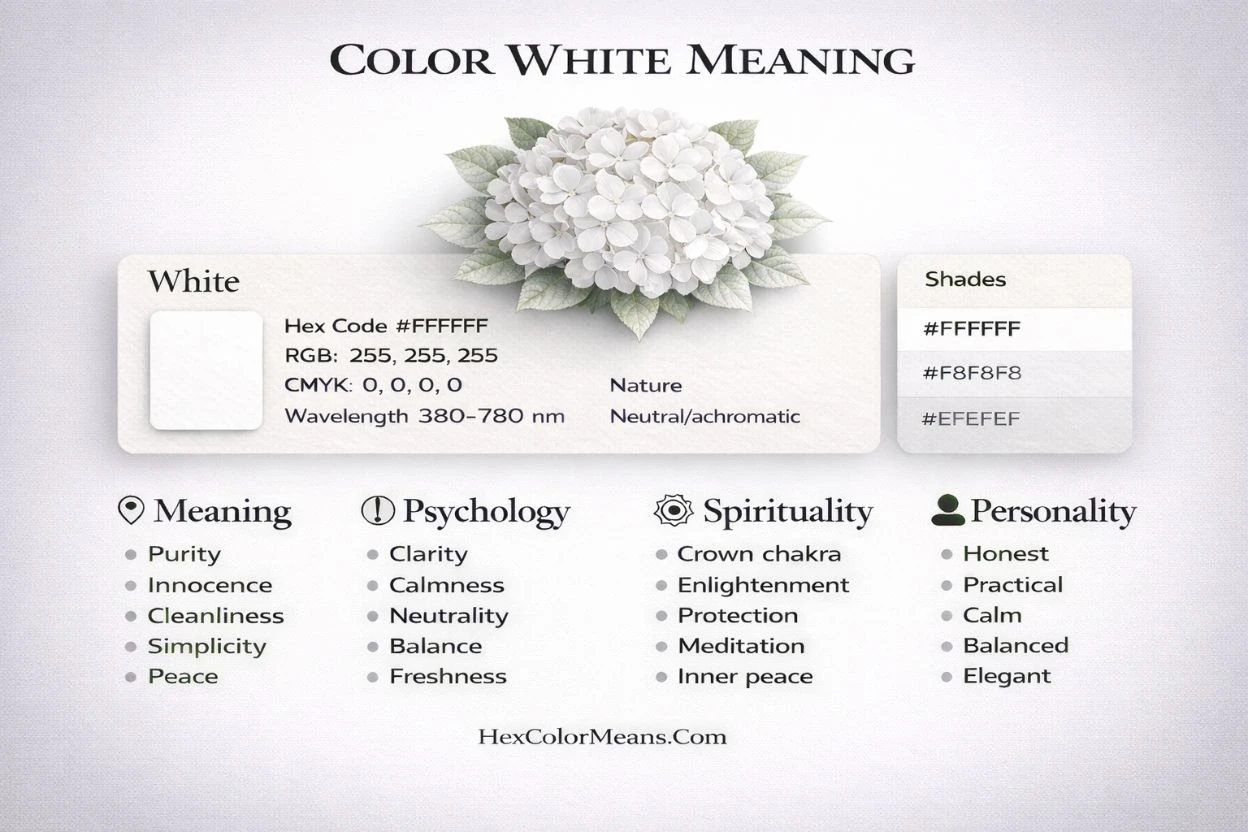
In modern digital and print systems, white is defined by standardized values that maintain consistency across screens, paper, and materials. The most recognized technical values for pure white are:
- Hex Code: #FFFFFF
- RGB Values: (255, 255, 255)
- HLS Values: (0°, 0%, 100%)
- CMYK Values: (0, 100, 100, 0)
From the physics of light, a white surface reflects most incoming light rather than absorbing it. Because no single wavelength dominates, the eye perceives the surface as neutral and bright. This high reflectivity explains why white environments feel open, airy, and visually enlarged.
Human perception interprets white as space, clarity, and openness. Unlike darker colors that create depth, white creates distance and breathing room. This is why white backgrounds are widely used in typography, healthcare settings, galleries, and spiritual spaces where focus and calm are required.
White is not a single visual experience. Its emotional tone shifts depending on undertone, texture, and surrounding colors. Common shades of white include:
- Pure White: A bright, neutral white associated with cleanliness, truth, and precision.
- Ivory: A warm white with yellow undertones linked to tradition, softness, and comfort.
- Alabaster: A smooth, slightly muted white connected to elegance and timeless design.
- Pearl White: A luminous white with subtle sheen that feels refined and calming.
- Snow White: A cool, crisp white that conveys freshness, stillness, and clarity.
History and interesting facts
History of the color white
The history of white pigments stretches back thousands of years. Early humans used chalk and limestone to create white markings in cave art. These materials were easy to find and symbolized light, bones, and the sacred.
In ancient Egypt, white held strong ritual value. Artists used gypsum and chalk to paint priests’ garments and sacred objects. White linen was worn during religious ceremonies to signal spiritual cleanliness.
One of the most influential white pigments in history was lead white, used heavily in ancient Greece, Rome, and later during the Renaissance. It produced a warm, opaque white prized by painters. Despite its beauty, it was highly toxic and caused serious health issues.
By the nineteenth century, safer alternatives like zinc white and titanium white emerged. Titanium white, still widely used today, offers brightness, durability, and safety. Its invention changed modern painting, architecture, and industrial design.
White has always followed human progress. As materials evolved, the meaning of white shifted from sacred rarity to everyday necessity.
Interesting facts about the color white
- White reflects nearly all visible light, which is why it feels bright and expansive. This reflective quality also makes white surfaces appear larger than darker ones.
- In many languages, words for white are closely linked to ideas of light, day, and vision. This shows how deeply white is tied to perception itself.
- Doctors and healers adopted white clothing to signal cleanliness and trust. Over time, this association became so strong that white now feels medical and authoritative.
- In photography and film, white is used to suggest truth, innocence, or exposure. A white scene often reveals rather than hides.
- Snow covered landscapes appear quieter because white absorbs visual noise. This creates a psychological sense of stillness.
- White animals are often seen as sacred or rare across cultures, reinforcing the color’s link to purity and the divine.
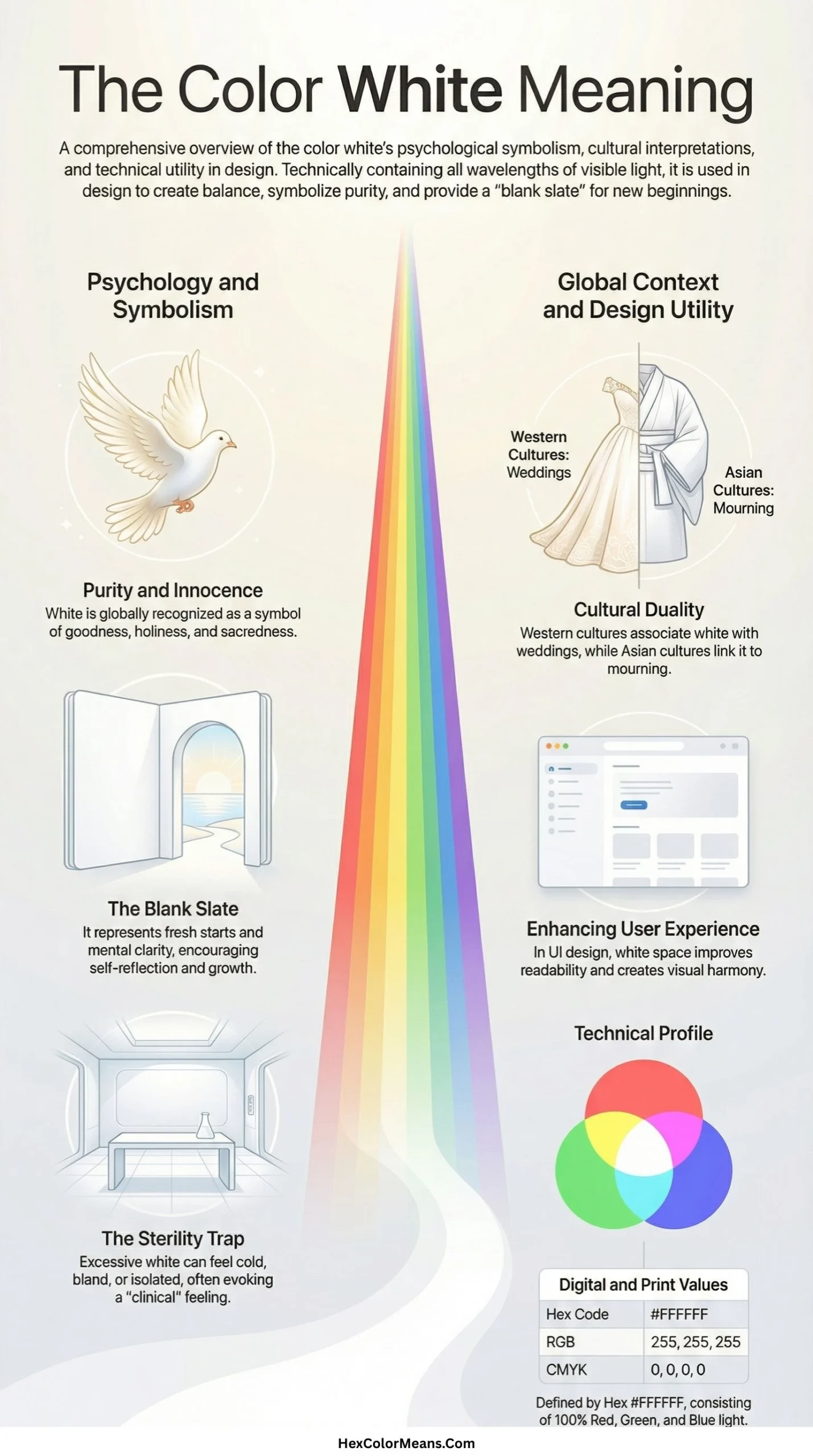
- In digital design, white space improves readability and focus, proving that absence can enhance meaning.
Symbolism and representation
White symbolizes purity, truth, innocence, and clarity across most belief systems. It represents a state untouched by distortion. When people describe a fresh start, they often picture a blank white page. That image alone explains much of white’s symbolic power.
White also stands for order and precision. Clean rooms, organized spaces, and professional environments rely on white to signal control and intention. At the same time, white can suggest distance or emotional neutrality. When something feels sterile or too perfect, white is usually involved.
In symbolic language, white often acts as a mirror. It reflects what surrounds it. In peaceful settings, it feels calming. In tense environments, it can feel cold or exposed. This flexibility makes white one of the most psychologically responsive colors.
Meaning of the white color in spirituality
Spiritually, white is strongly connected to higher consciousness and divine awareness. It is often associated with enlightenment, spiritual awakening, and protection. Many traditions describe white light as the highest vibrational state, representing unity and truth.
In chakra systems, white aligns with the crown chakra, located at the top of the head. This chakra governs spiritual connection, universal wisdom, and inner clarity. When balanced, it encourages faith, awareness, and a sense of purpose beyond the material world.
A white aura is believed to indicate spiritual purity, healing ability, and elevated intuition. People with this aura are often described as old souls, empaths, or natural guides. It does not suggest perfection, but rather alignment with truth and compassion.
White crystals such as clear quartz, selenite, and moonstone are widely used for energy cleansing and amplification. These stones do not impose energy. They clear blockages and enhance intention, which makes them ideal for meditation and healing work.
White candles are common in rituals focused on peace, cleansing, protection, and prayer. They are often used when intention matters more than specificity. White candles can replace any other color in spiritual practice, reinforcing their role as universal tools.
Psychological meaning of color white
Psychologically, white creates a sense of mental space and calm. It reduces visual clutter, helping the brain relax and focus. This is why white environments often feel quiet, even when they are busy.
White also encourages honesty and transparency. In communication, white backgrounds and layouts signal openness. There is nothing hidden. Everything is visible. This can feel reassuring or uncomfortable, depending on emotional state.
At the same time, too much white can trigger feelings of isolation or emptiness. When warmth and texture are missing, white may feel impersonal. The human mind seeks balance, and white works best when paired with grounding elements.
White appeals to people who value structure, clarity, and fresh starts. It supports decision making by removing distractions, yet it requires thoughtful use to avoid emotional detachment.
Color white personality traits
People drawn to white often seek simplicity, truth, and inner peace. Their personalities reflect a desire for clarity, both mentally and emotionally.
Positive traits
White associated personalities tend to be honest, thoughtful, and self aware. They value fairness and avoid unnecessary conflict. Many are natural organizers who enjoy clean environments and clear plans.
They often act as mediators, bringing calm energy into chaotic situations. Their presence can feel grounding because they listen more than they speak. There is strength in their restraint.
Creativity also appears in subtle ways. Rather than loud expression, white personalities prefer refinement, precision, and meaningful detail.
Negative traits
On the shadow side, white personalities may struggle with emotional distance. They can suppress feelings to maintain control or peace. This can lead to detachment or avoidance.
Perfectionism is another challenge. The desire for purity or order may create unrealistic expectations, both for themselves and others.
At times, they may appear cold or reserved, even when they care deeply. Learning to introduce warmth and vulnerability brings balance.
What does the Bible say about color white?
In the Bible, white symbolizes righteousness, holiness, and divine presence. It appears repeatedly in visions, garments, and descriptions of spiritual purity.
In Isaiah 1:18, scripture states, “Though your sins are like scarlet, they shall be as white as snow.” Here, white represents forgiveness and moral cleansing.
Revelation frequently uses white imagery. Revelation 7:9 describes a multitude clothed in white robes, symbolizing salvation and spiritual victory. White garments signify alignment with God and freedom from corruption.
In Ecclesiastes 9:8, believers are encouraged to keep their garments white, reflecting a life lived with integrity and devotion.
White in biblical texts is never passive. It actively represents transformation, truth, and closeness to the divine.
Cultural and religious significance of the white color
White carries different meanings across cultures, yet it always signals something profound. In Western societies, white is linked to weddings, innocence, and peace. Brides wear white to symbolize new beginnings and moral clarity.
In many Eastern cultures, white represents mourning and death. In China, Japan, and Korea, white is worn at funerals. It reflects the belief that death is a return to purity and the natural cycle of existence.
In Hinduism, white symbolizes detachment and spiritual discipline. Widows traditionally wear white to show release from worldly desire and social identity. It is also worn by spiritual seekers and monks.
In Islam, white is deeply respected. Pilgrims wear white during Hajj to represent equality, humility, and purity before God. The absence of color removes status and ego.
In Buddhism, white represents mental clarity and liberation. It is associated with the purification of the mind and freedom from suffering.
In African spiritual traditions, white often symbolizes ancestral presence, protection, and sacred authority. White markings and garments are used in rituals to communicate with the spiritual realm.
Christianity uses white to mark holy events such as baptisms, Easter, and divine appearances. It signals resurrection, light, and victory over darkness.
Dream interpretations of color white
Seeing white in dreams often reflects a desire for clarity, peace, or resolution. It may appear during periods of emotional reset or spiritual reflection.
A white room or landscape can symbolize mental openness or a new phase in life. It may suggest healing, forgiveness, or release from past burdens.
White clothing in dreams often relates to identity. Wearing white may indicate honesty or spiritual alignment. Seeing others in white can reflect trust or idealization.
However, white can also represent emotional emptiness. A dream filled with cold white tones may signal isolation or suppressed feelings. Context and emotion within the dream matter more than the color alone.
How to use the color white
White is practical, symbolic, and emotionally powerful. At the same time, it asks for care. When you use white with intention, it creates clarity. When you overuse it, the feeling can fade. Therefore, balance matters.
White works quietly. It does not demand attention. Instead, it supports focus, meaning, and emotional space. Because of that, white fits many areas of life, from work to art to daily choices.
Color white in business
White communicates clear professionalism in business. It also shows transparency and efficiency. Many offices use white on walls. This practice improves worker focus. It also reduces visual stress. Therefore, it supports better logical thinking. It aids in clearer decision making too.
Businesses in certain fields rely on white. Healthcare, technology, and consulting are examples. They use white to build instant credibility. This color suggests cleanliness and strong ethics. It also implies reliability to customers. A white background in a report feels serious. Meanwhile, a white lab coat signals trust and care.
Color white in branding and marketing
In branding, white effectively builds trust. It allows products and messages to breathe. Notice how luxury brands often use white. They use it to signal refinement and confidence. A simple white package feels expensive and pure.
White also dramatically enhances contrast. It makes logos appear much clearer. Messages become more readable too. Many minimalist brands depend on white space. This space gently guides customer attention. It carefully shapes their overall perception of the brand.
Color white in interior design
White interiors feel wonderfully open and calming. They reflect natural light very well. This reflection makes small spaces appear larger. White walls create a neutral canvas. You can use this canvas for personal expression through art.
Texture is very important with white. Layered textures make white feel warm and inviting. Think of a white knitted blanket. Without texture, white may feel a bit sterile. Achieving the right balance is always the key.
White color in cinema
In film, white often symbolizes truth or innocence. Sometimes it means exposure. Characters dressed in white usually represent moral clarity. They can also show deep vulnerability to the audience.
White lighting heightens emotional intensity in scenes. It reveals every small detail. This lighting also removes comforting shadows. Consequently, it forces honesty within the story’s action.
White color in humans
White clothing strongly suggests cleanliness and sincerity. It also shows restraint. People often wear white during meaningful life moments. Weddings and graduations are common examples. It is worn during other personal transitions as well.
Psychologically, people choose white for specific reasons. They may seek visual simplicity. Sometimes they desire a complete emotional reset.
White color in makeup
Makeup artists use white for very practical reasons. For example, a white eyeliner pencil can brighten the lower waterline. This technique makes the eyes appear wider and more awake. They also use white eyeshadow as a base. This base makes other colors on the lid appear more vibrant.
White highlighter is applied to the cheekbones. It brings light to the face and creates balance. Therefore, it enhances a person’s natural skin tones beautifully. The contrast white provides is very useful.
Editorial makeup, seen in magazines, uses white symbolically. A model’s entire face might be painted white. This can represent purity or a blank slate. Alternatively, sharp geometric lines in white can suggest a futuristic elegance. These looks are about artistic expression rather than daily wear.
White food
Many everyday foods we eat are white. Consider the universal presence of rice or bread. Milk is another foundational white food. Ingredients like garlic and onion form a flavor base in many cuisines. Vegetables such as cauliflower and potatoes are staples. These foods symbolize basic nourishment and simplicity. A bowl of mashed potatoes often represents deep comfort. A family recipe for rice pudding ties to tradition.
Culturally, white foods have important roles. Milk or rice are used in rituals for purity. Weddings or celebrations feature white cakes. The wedding cake specifically ties white to joy and new beginnings.
White color in quotes and idioms
Our language is filled with references to white. The phrase “white as snow” describes perfect innocence. Calling someone a “white knight” means they are a heroic defender. Saying you told a “white lie” admits to a harmless falsehood. This lie is told to protect someone’s feelings. These common phrases reveal our cultural ideas. They connect white directly to innocence and good intent. Everyday language constantly reinforces this symbolic role.
White color in art and architecture
Artists use white to create specific feelings. A painter might leave white space on a canvas. This space makes the artwork feel open and light. It can provide an emotional pause for the viewer. Sculptors use white marble to capture the soft look of light on skin.
Architects choose white for buildings frequently. White walls reflect heat, which is practical in warm climates. They also suggest a clean and timeless style. Think of modern museums or classic Greek temples. Many sacred structures rely on white. The white domes of churches express an idea of transcendence. They point toward heaven and the divine.
Songs with White in the title
Music uses white to convey strong feelings. The song “White Christmas” expresses longing for a perfect past. “White Flag” by Dido uses white to mean peaceful surrender. “White Room” by Cream connects the color to memory and isolation. These titles link white with hope or peace. They also tie it to emotional clarity and reflection.
Cities with color names: White
Some cities have names that include the word white. White Plains, New York, is a known example. White Settlement, Texas, is another. These names reflect historical traditions. Often, they are tied to local landscape features. A town named White Rock might be near a pale stone formation. Sometimes the name connects to a shared community identity from early settlers.
The color white in the garden
White flowers bring a special calm to garden spaces. They provide essential visual balance. For instance, planting white impatiens brightens a deeply shaded area. White roses or lilies create a place for visual rest. This rest is needed among more vibrant red or purple flowers. At night, white blooms seem to glow in the moonlight. Therefore, they extend the beauty of the garden into the evening.
Final thoughts
White is never a truly empty color. It holds deep meaning through reflection and clarity. It also requires intention. This color shapes our emotion quietly. Yet it acts very powerfully.
Using white with awareness makes it a powerful tool. It becomes a tool for truth and healing. It can also help with personal renewal. The strength of white lies in its subtlety. It does not shout for attention. Instead, it quietly invites you in.
Our world is often full of noise. White offers a valuable space to breathe.