Colors speak before words. They reach you quietly. Yet, they shape emotions, thoughts, and reactions in powerful ways. A soft color can relax your mind. A bold color can wake something inside you. This silent influence becomes even stronger within spiritual systems.
In energy traditions, colors reflect inner movement. They show how energy travels through the body. This idea forms the heart of chakra colors. Each chakra vibrates at its own frequency. Each frequency expresses itself through a specific color. Because of this, color becomes a language of energy.
The chakra system connects color with awareness. It links the physical body with emotions and spiritual perception. When chakra energy flows freely, life feels smoother. You respond rather than react. When energy slows or blocks, discomfort appears. Stress builds. Emotional confusion follows.
Therefore, learning chakra colors allows deeper self awareness. You begin to notice patterns. You understand why certain feelings repeat, and you sense imbalance before it turns heavy. This awareness creates clarity. And clarity leads to balance.
What Are Chakras?
Chakras are energy centers within the human body. Ancient traditions describe them as spinning wheels of energy. These wheels move constantly. They receive and release energy. They connect what you feel inside with how you live outside.
Each chakra links the physical body with emotions and consciousness. Because of this connection, chakras influence mood, behavior, and even physical comfort. When energy flows smoothly, the body feels aligned. Thoughts feel lighter. Emotions feel manageable.
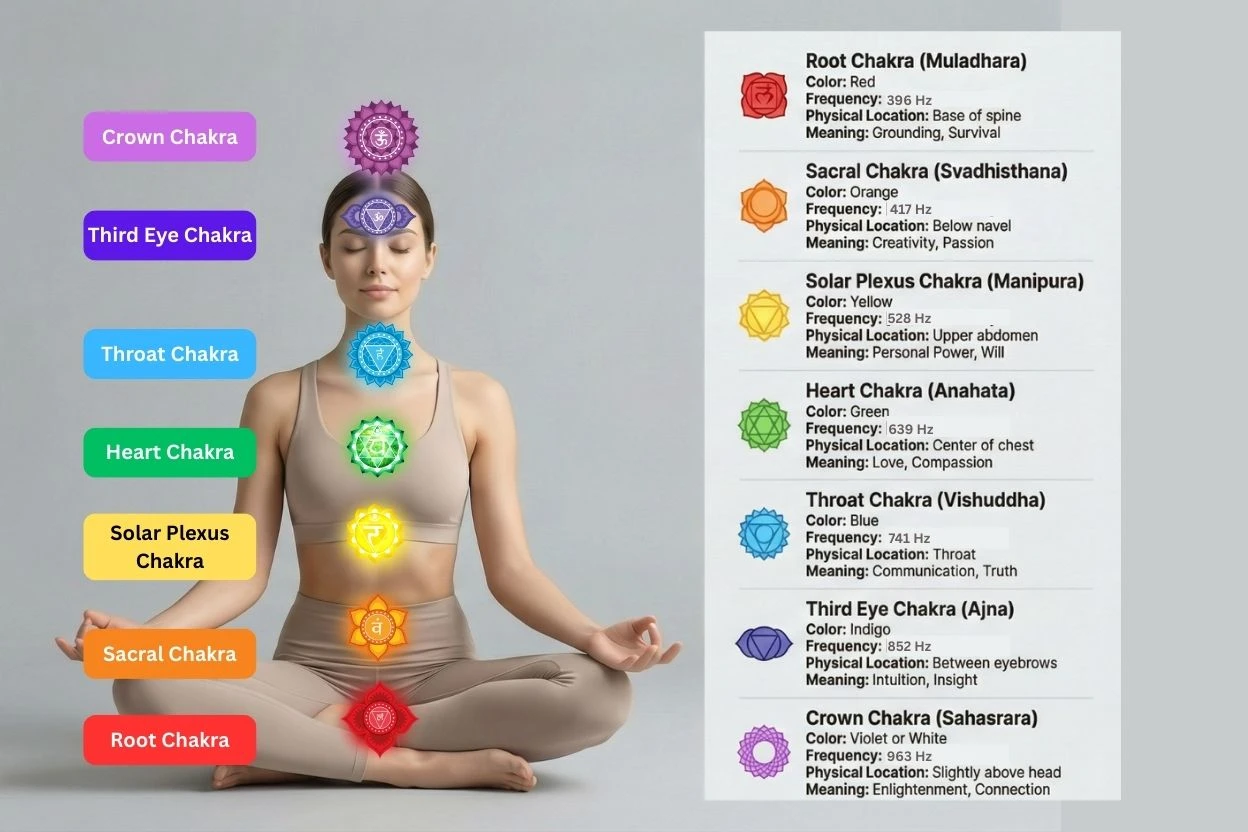
There are many chakras across the body. However, seven main chakras form the core system. These seven align vertically from the base of the spine to the crown of the head. Each chakra sits at a specific point. Each governs a specific area of life.
Every chakra vibrates at a different speed. This vibration creates color. Lower chakras move slower and carry warmer colors. Higher chakras move faster and express cooler tones. Energy flows upward through these centers. When one chakra struggles, others feel the impact.
Balance matters deeply here. Yet, flow matters even more. Energy wants movement. When movement stops, tension grows. When movement returns, harmony follows.
The Seven Chakra Colors in Order and Their Meanings
Below is a simple overview of the seven chakra colors, their locations, and core themes.
| Chakra | Color | Frequency (Hz) | Location | Core Meaning |
|---|---|---|---|---|
| Root | Red | 396 Hz | Base of spine | Safety and survival |
| Sacral | Orange | 417 Hz | Lower abdomen | Creativity and pleasure |
| Solar Plexus | Yellow | 528 Hz | Upper abdomen | Confidence and power |
| Heart | Green | 639 Hz | Center of chest | Love and compassion |
| Throat | Blue | 741 Hz | Throat | Truth and expression |
| Third Eye | Indigo | 852 Hz | Forehead | Intuition and insight |
| Crown | Violet or White | 963 Hz | Top of head | Spiritual connection |
Root Chakra (Muladhara) – Color, Meaning, Function and Location
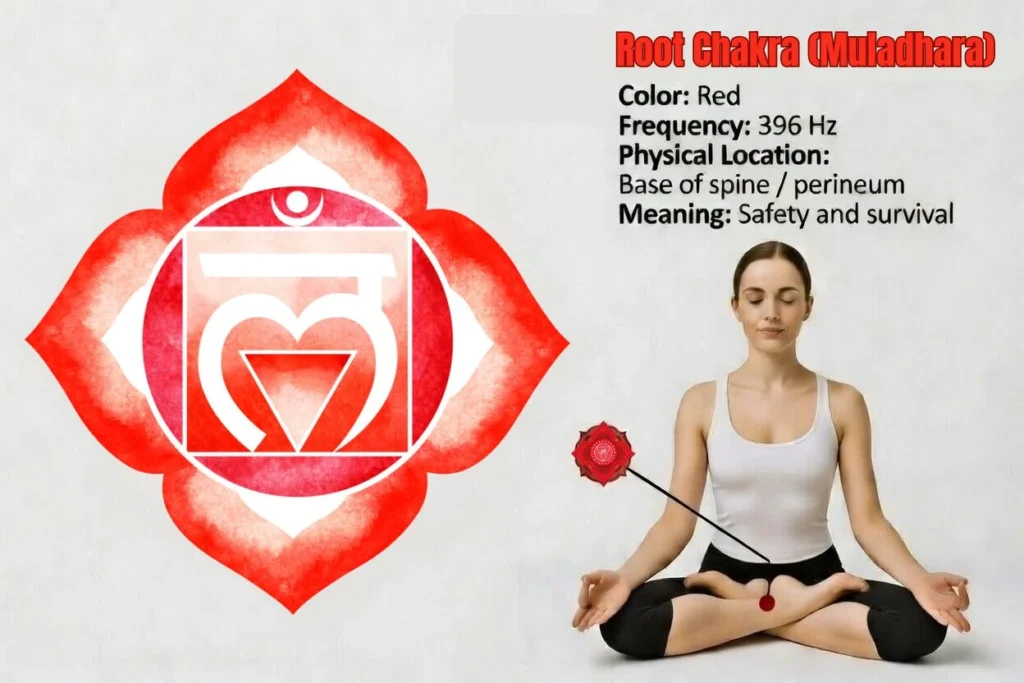
The Root Chakra glows red. Red represents life force, strength, and survival energy. This chakra sits at the base of the spine. It anchors you to the physical world. It acts as your energetic foundation.
This chakra governs basic needs. Food. Shelter. Safety. Stability. It also shapes your sense of belonging. When the Root Chakra feels strong, you feel secure. You trust the ground beneath you. You trust life itself.
A balanced Root Chakra creates calm confidence. You feel present in your body. You feel supported by routines and structure. And, you handle daily responsibilities with less fear. Even challenges feel manageable.
When this chakra blocks, fear takes the lead. Anxiety rises. Restlessness appears. Financial stress often connects here. Constant worry about survival or stability also points to imbalance. Physically, tension may settle in the legs or lower back.
Healing the Root Chakra begins with grounding. Physical presence matters. Time in nature helps reconnect energy with the earth. Regular routines also strengthen this center. Consistent sleep. Nourishing food. Gentle exercise.
The Root Chakra responds well to steady habits. Predictability calms it. Slow movement brings safety. When this chakra feels secure, higher chakras gain support. Stability grows from the ground up.
Sacral Chakra (Svadhisthana) – Color, Meaning, Function and Location
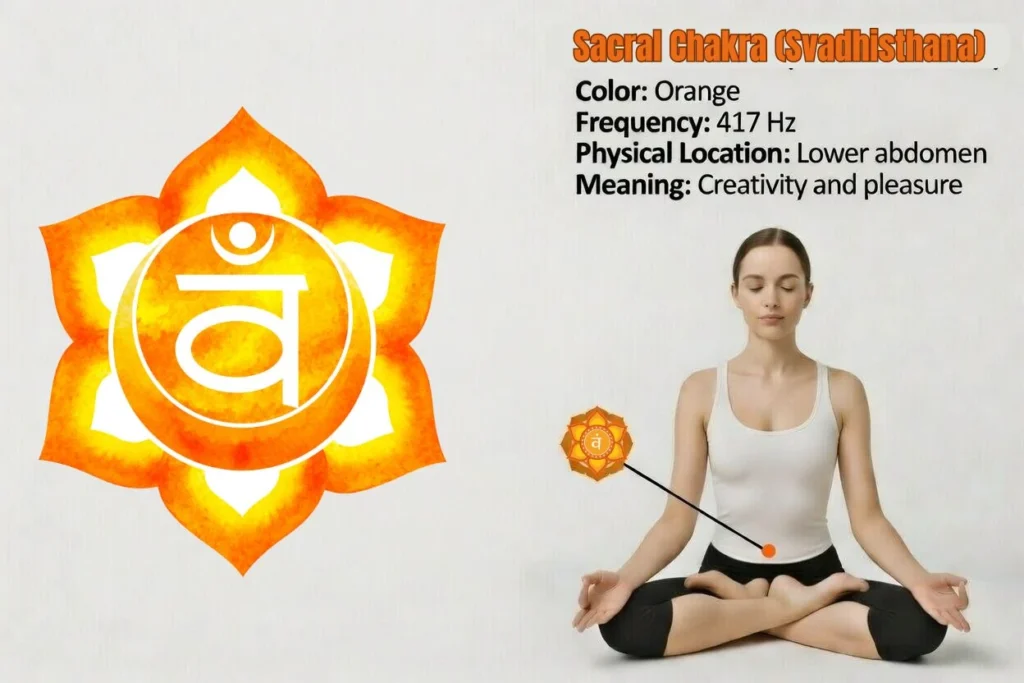
The Sacral Chakra shines orange. Orange carries warmth, creativity, and emotional flow. This chakra sits just below the navel, near the lower abdomen. It governs how you feel pleasure and connection.
This chakra rules emotions, desire, and creative expression. It shapes how you relate to others. It influences intimacy and joy. When energy flows freely here, emotions move naturally. You feel alive. You feel inspired.
A balanced Sacral Chakra allows emotional flexibility. You express feelings without fear. Creativity flows without pressure. Relationships feel warmer and more authentic. Pleasure feels safe rather than confusing.
When this chakra blocks, emotional numbness may appear. Guilt may follow joy. Creative energy may fade. Some people feel disconnected from desire. Others feel overwhelmed by emotions they cannot process.
Restoring balance requires movement and expression. The Sacral Chakra loves motion. Gentle dance helps energy circulate. Creative outlets also reopen flow. Drawing, writing, or music allow emotions to move without force.
Allowing feelings without judgment plays a key role here. Emotions want space. When you listen instead of resisting, balance returns. As the Sacral Chakra heals, joy feels natural again. Emotional flow becomes smooth. Creativity finds its voice.
Solar Plexus Chakra (Manipura) – Color, Meaning, Function and Location
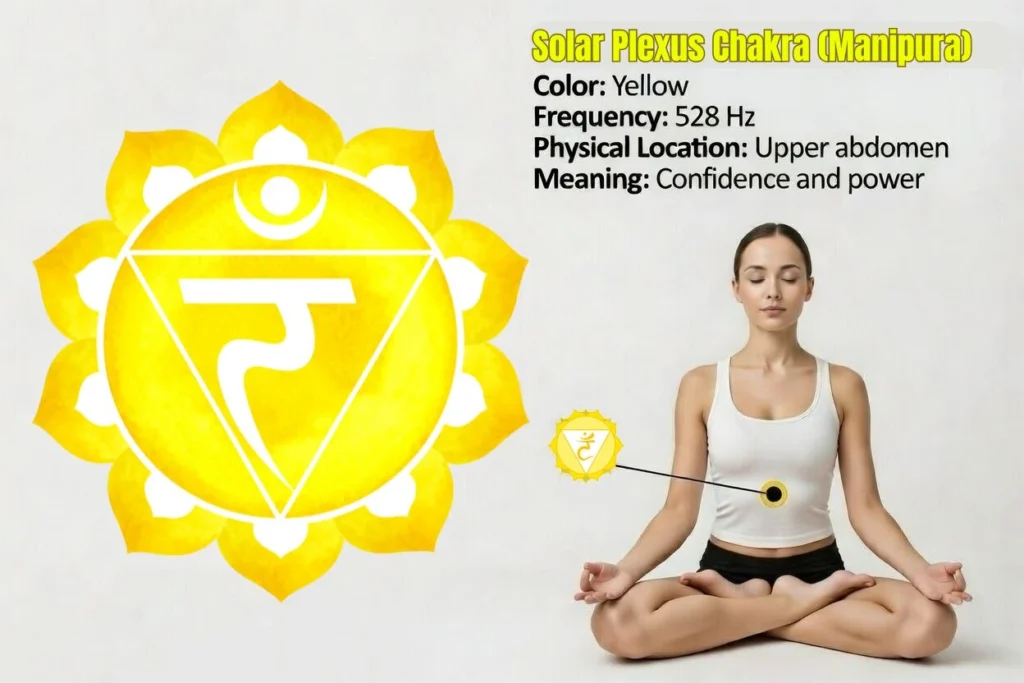
The Solar Plexus Chakra carries the color yellow. Yellow reflects clarity, confidence, and inner fire.
This chakra sits above the navel, close to the stomach area. It acts as the center of personal power. It shapes how you see yourself and how you move through the world.
This chakra governs self esteem and decision making. It fuels motivation and willpower.
When this energy flows freely, you trust your choices. You feel capable. You act with direction instead of hesitation. Inner strength feels natural rather than forced.
A balanced Solar Plexus Chakra creates quiet confidence. You respect yourself. You take responsibility without feeling burdened.
Challenges feel like lessons instead of threats. Even mistakes become sources of growth.
When this chakra blocks, doubt creeps in. You may question every decision. Control issues may appear, either through dominance or withdrawal.
Some people feel powerless. Others overcompensate to hide insecurity. Digestive discomfort often mirrors this imbalance.
Healing begins with self trust. Small actions matter here. Completing simple goals rebuilds confidence.
Setting clear boundaries protects energy. Sunlight supports this chakra strongly, since yellow responds to warmth and brightness. Mindful breathing also helps calm inner tension and restore balance.
Heart Chakra (Anahata) – Color, Meaning, Function and Location
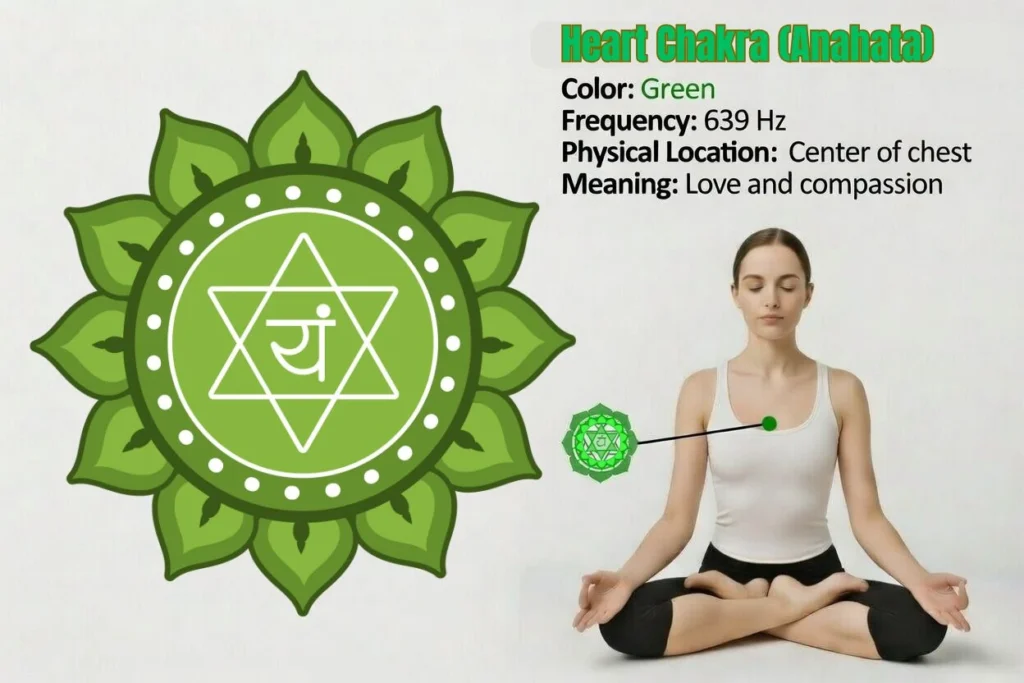
The Heart Chakra radiates green. Green symbolizes healing, balance, and renewal.
This chakra sits at the center of the chest. It holds emotional equilibrium. It acts as the meeting point between physical needs and spiritual awareness.
This chakra connects lower and upper energy centers. Because of this role, it bridges body and spirit.
It governs love, empathy, compassion, and forgiveness. It shapes how you relate to others and how you treat yourself.
A balanced Heart Chakra allows love to flow naturally. You give without losing yourself. You receive without fear.
Emotional openness feels safe. Relationships feel nurturing rather than draining.
When this chakra blocks, emotional walls form. Grief may linger. Resentment may harden.
Trust becomes difficult. You may withdraw or protect yourself excessively. Physical tightness in the chest can reflect this inner closure.
Healing begins with compassion. Forgiveness plays a central role, especially toward yourself.
Acts of kindness soften emotional armor. Time in nature supports this chakra deeply. Green spaces calm the heart and remind it how to heal.
Throat Chakra (Vishuddha) – Color, Meaning, Function and Location
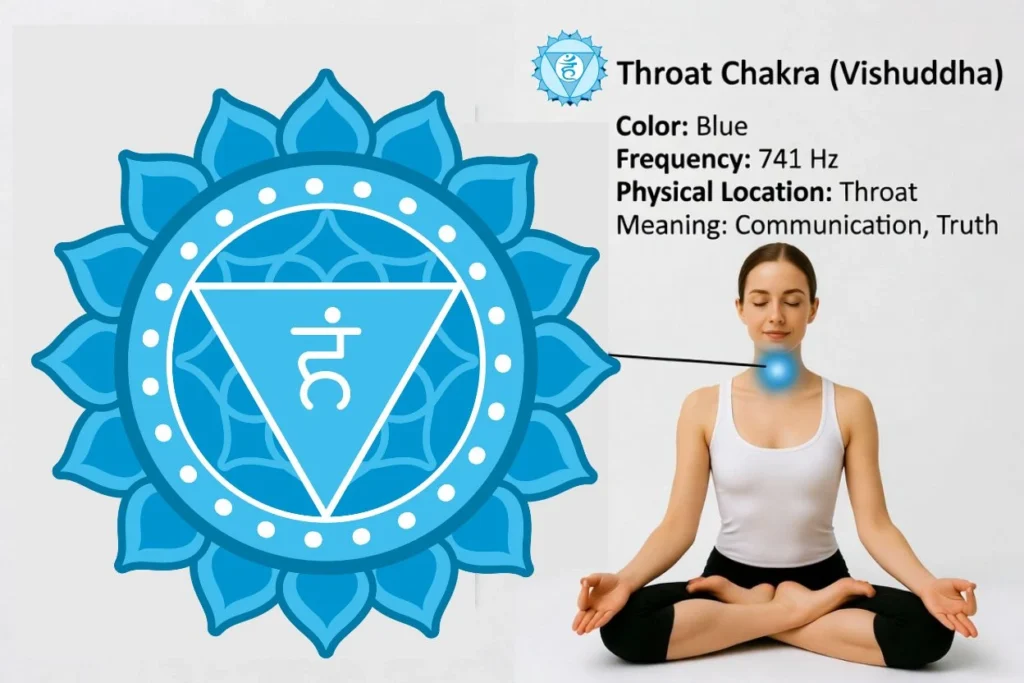
The Throat Chakra glows blue. Blue represents truth, calm, and clarity.
This chakra rests in the throat area. It governs communication in all forms—spoken, written, and even unspoken.
This chakra shapes how you express thoughts and emotions. It also influences how well you listen.
When energy flows smoothly, words come easily. Honesty feels safe. Communication feels balanced.
A balanced Throat Chakra supports clear expression. You speak with confidence. You listen with presence.
Your voice reflects your inner truth without fear or force.
When this chakra blocks, expression becomes difficult. You may fear speaking up. Emotions may stay trapped inside.
Some people talk excessively to cover insecurity. Others stay silent to avoid conflict. Tension in the neck or throat often appears.
Restoring balance requires expression. Speaking honestly helps release blocked energy. Singing vibrates this chakra gently.
Writing also clears inner clutter. As communication opens, emotional relief follows naturally.
Third Eye Chakra (Ajna) – Color, Meaning, Function and Location
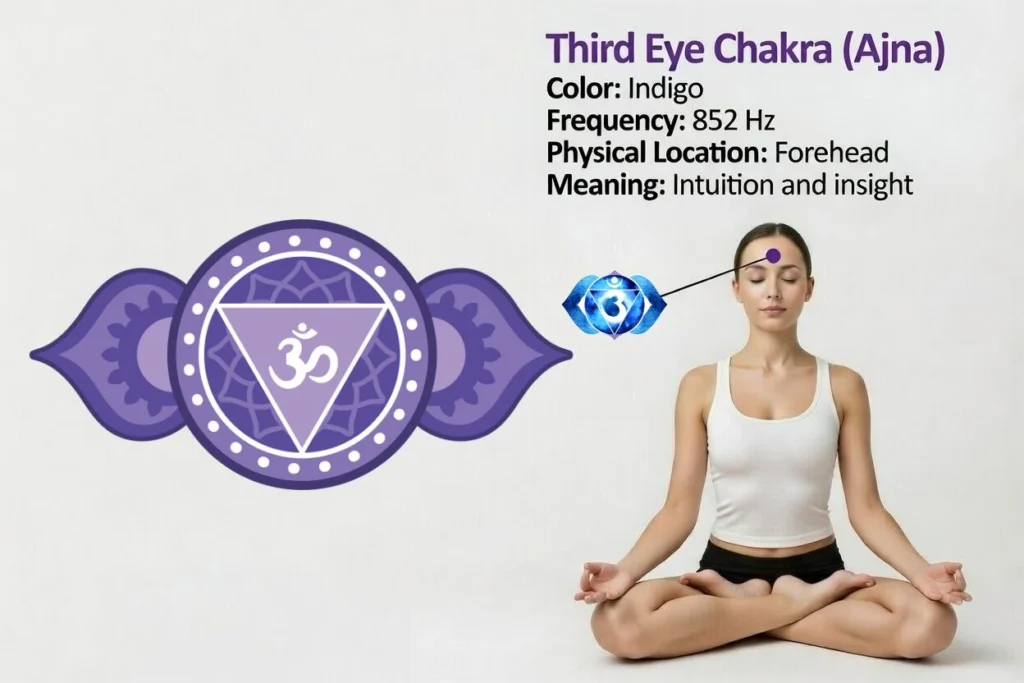
The Third Eye Chakra shines indigo. Indigo reflects intuition, perception, and inner awareness.
This chakra sits between the eyebrows. It governs how you interpret reality beyond surface appearances.
This energy center influences insight and imagination. It supports intuition and mental clarity.
When balanced, inner guidance feels accessible. You sense direction even during uncertainty.
A healthy Third Eye Chakra sharpens perception. You trust your instincts. Creativity flows with ease.
Thought patterns feel organized rather than chaotic.
When this chakra blocks, confusion increases. Overthinking dominates.
You may doubt intuition or feel disconnected from inner wisdom. Head tension or mental fatigue often reflect imbalance.
Meditation strengthens this chakra. Quiet moments allow insight to rise.
Reducing mental noise helps restore clarity. Trusting intuitive nudges also reinforces balance and awareness.
Crown Chakra (Sahasrara) – Color, Meaning, Function and Location
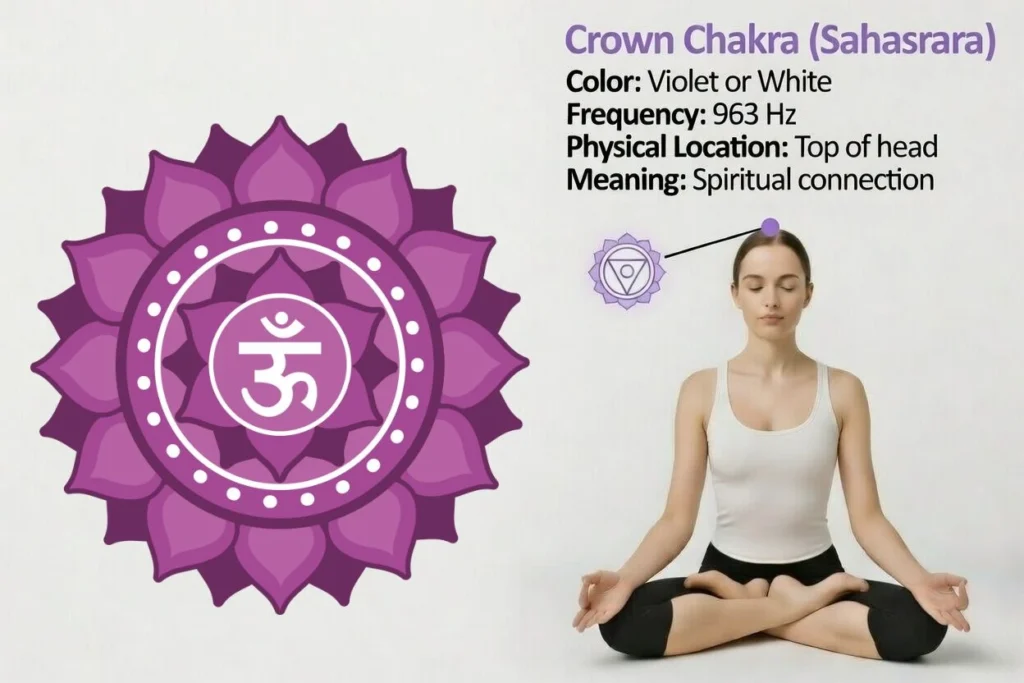
The Crown Chakra appears violet or white. These colors symbolize unity, awareness, and connection beyond the self.
This chakra rests at the top of the head. It represents spiritual expansion and meaning.
This chakra connects you to higher consciousness. It reflects purpose and inner peace.
When balanced, life feels guided. Trust replaces fear. Presence deepens.
A healthy Crown Chakra creates calm acceptance. You feel connected to something greater than personal identity.
Questions soften. Inner stillness grows.
When this chakra blocks, spiritual disconnection may appear. Life may feel empty or confusing.
Rigid beliefs may replace curiosity. A sense of isolation may surface.
Healing supports simplicity. Silence nourishes this chakra. Mindfulness strengthens awareness.
Letting go of fixed ideas opens space for clarity and peace.
The Origins of Chakra Colors Concept
Ancient spiritual texts spoke about chakras as energy centers within the body. They described movement, balance, and inner flow. However, they rarely mentioned color in the way we see today. The idea of chakra colors developed much later, shaped by modern spiritual teachers and energy researchers.
As spiritual understanding met visual symbolism, color became a bridge. Teachers began linking chakras to the visible color spectrum. This connection helped people see energy instead of only sensing it. Light frequency offered a clear framework. Energy vibration suddenly had a visual form.
Lower chakras aligned with deeper, denser colors. Higher chakras reflected lighter and subtler tones. This alignment made the chakra system easier to grasp. It also made it easier to practice in daily life. People could now work with color intentionally.
Despite these modern influences, the symbolism remains deeply effective. Color speaks directly to the mind and emotions. It creates a shared language for energy. Through color, the invisible becomes tangible.
Why Chakras Have Different Colors?
Each chakra vibrates at its own frequency. This vibration shapes how energy expresses itself. Color mirrors that frequency naturally. Slower vibrations appear as warmer, heavier colors. Faster vibrations show up as lighter, cooler shades.
Red vibrates slowly. It connects to physical existence and survival. Violet vibrates rapidly. It reflects expanded awareness and spiritual connection. As energy rises through the body, awareness grows. Therefore, colors shift from dense to subtle.
This gradient reflects human growth. It begins with safety and instinct. It moves through emotion and expression. And, it rises toward insight and unity. Color captures this journey in a simple visual form.
Emotion also plays a role here. Colors trigger emotional responses without effort. This emotional link strengthens the chakra color system. When you see a color, your body reacts. Energy responds before thought does.
Chakra Color Therapy and Healing?
Color therapy works through visual and emotional stimulation. The eyes absorb color. The mind processes it. Energy responds quietly. Wearing certain colors can support weak chakras over time.
Visualization also plays a strong role. During meditation, imagining a color flowing through a chakra helps restore movement. The mind directs attention. Attention directs energy.
Red encourages grounding and stability. Green promotes calm and emotional repair. Blue soothes mental noise and tension. With repetition, these color cues reshape emotional patterns.
Healing deepens when intention leads the process. Color acts as a tool. Awareness gives it direction. When both align, energy responds more clearly.
How Chakras Affect the Colors of the Aura?
The aura reflects your inner energy state. It responds directly to chakra balance. When chakras function well, aura colors appear bright and clear. Energy flows without resistance.
Blocked chakras dull aura tones. Colors lose clarity. They appear muted or uneven. This change reflects inner stagnation rather than failure.
Strong heart energy often shows green hues. Heightened intuition may appear as indigo shades. These colors shift constantly as emotions and awareness change.
Because of this, the aura and chakras move together. One reflects the other. Inner balance shapes outer energy fields.
Final Thoughts
Chakra colors offer a clear map of inner balance. They reveal where energy moves freely and where it slows. Color gives energy a voice without words.
Awareness creates change. Small shifts create healing. When energy flows with ease, life feels lighter and more connected.