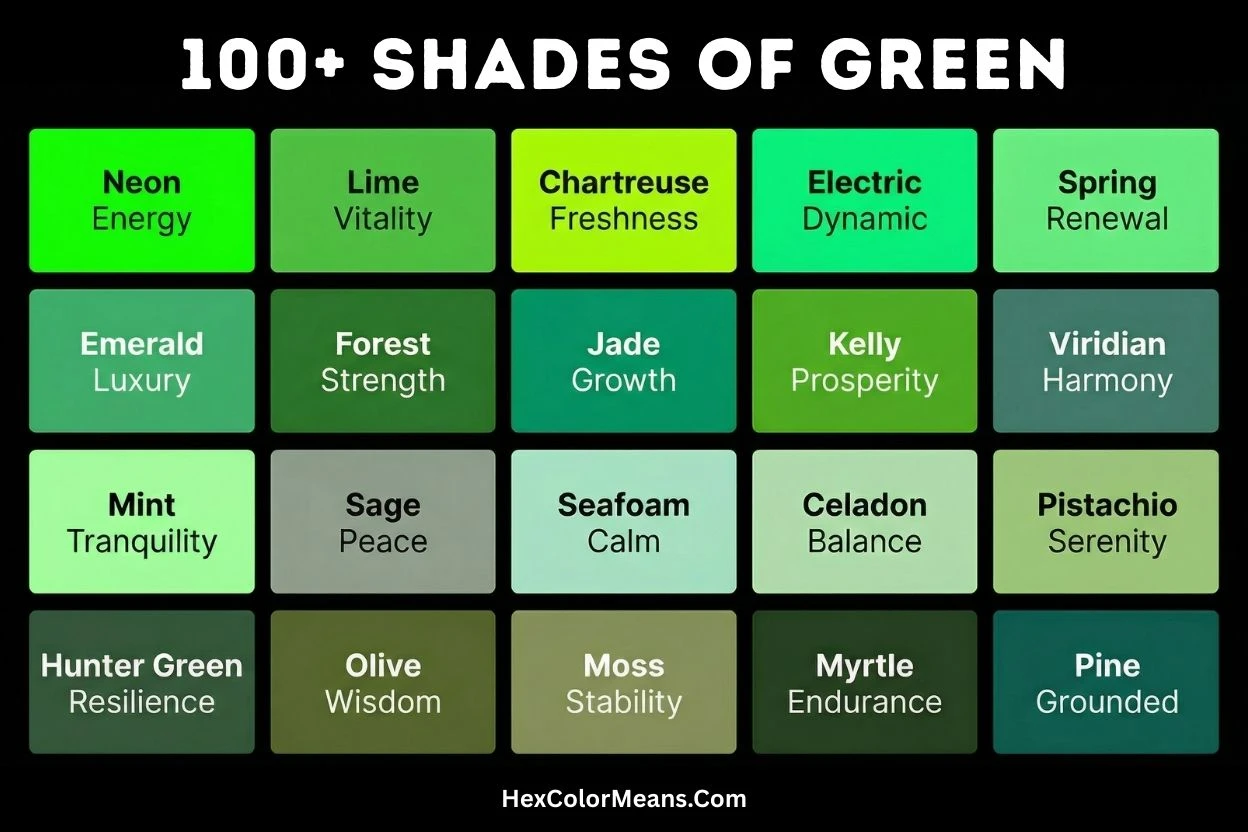
Green is one of the most versatile and emotionally resonant colors, spanning a spectrum from light, refreshing tones to deep, luxurious shades. From soft mints and celery greens to rich emeralds and forest hues, each shade carries its own mood and meaning. Green is often categorized by undertones—blue-greens like teal and aquamarine evoke calm and sophistication, while yellow-greens such as olive and chartreuse feel lively and organic.
Across design, fashion, and everyday life, green inspires a sense of balance, growth, and connection to nature. Its wide range allows it to be refreshing, energizing, calming, or elegant, depending on how it’s used. Whether creating a serene space, adding vibrancy to a wardrobe, or highlighting natural elements, green offers endless possibilities for expression.
Common Shades of Green
Light/Pastel Greens: Mint, Celadon, Pistachio, Seafoam, Honeydew
Bright/Vibrant Greens: Lime, Kelly Green, Chartreuse, Neon Green, Shamrock
Dark/Deep Greens: Forest Green, Emerald, Hunter Green, Bottle Green, Pine
Earth/Olive Greens: Sage, Olive, Moss Green, Army Green, Fern
Blue-Greens: Teal, Aqua, Viridian, Cyan, Turquoise
This post dives into the meanings, symbolism, and practical uses of greens, exploring how each shade influences mood, design, and culture.
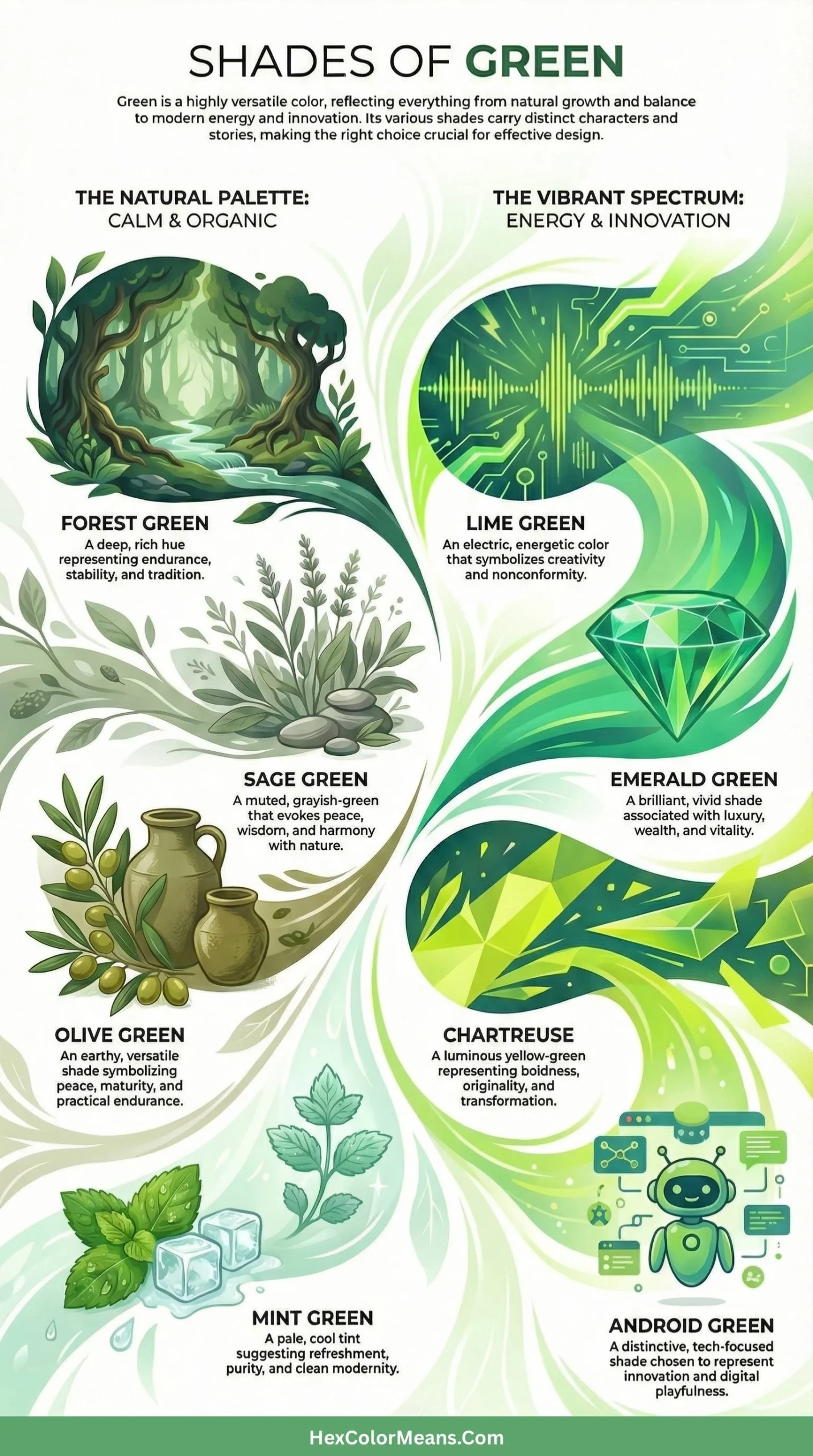
Apple Green
Apple Green (#8DB600) is a bright, fresh, and slightly yellow-toned green directly named after the skin of a Granny Smith apple. Historically, it became a distinct color name with the rise of consumer goods and food marketing in the 20th century. Interestingly, this shade is strongly associated with tartness and crispness. In design, Apple Green signifies freshness, health, and vitality, making it popular for packaging, logos, and websites related to natural foods, tech startups, and spring themes.
- HEX #8DB600
- RGB 141, 182, 0
- CMYK 23, 0, 100, 29
Artichoke
Artichoke (#8F9779) is a subdued, grayish-green shade inspired by the outer leaves of the artichoke vegetable. This color name entered common usage with the rise of horticultural and food-based palettes in the 19th century. Interestingly, it is considered a quintessential earth tone and is often used in military uniforms for its natural camouflage properties. Artichoke evokes a sense of organic calm, maturity, and understated elegance. Consequently, it is favored in home décor, matte paint finishes, and rustic design schemes to create a muted, natural background.
- HEX #8F9779
- RGB 143, 151, 121
- CMYK 5, 0, 20, 41
Asparagus
Asparagus (#87A96B) is a soft, grayish spring green named after the edible spear of the asparagus plant. This color became popular in the late 19th century as part of a trend for naturalistic hues. Notably, it is one of the official Crayola crayon colors introduced in 1993. The shade represents fresh growth, subtlety, and early spring. As a result, Asparagus is commonly used in feminine designs, wedding stationery, and soft interior accents to convey gentle renewal.
- HEX #87A96B
- RGB 135, 169, 107
- CMYK 20, 0, 37, 34
Avocado
Avocado (#568203) is a deep, yellowish-green that mimics the flesh of a ripe avocado. The color name gained prominence in the 1960s and 1970s, often associated with appliances and home décor of that era. It is a retro tone that symbolizes organic richness, fertility, and the 1970s aesthetic. Therefore, Avocado is effectively used in vintage designs, eco-branding, and natural product marketing to evoke warmth and natural abundance.
- HEX #568203
- RGB 86, 130, 3
- CMYK 34, 0, 98, 49
Bamboo
Bamboo (#DEB887) is a warm, light beige with strong yellow-green undertones, named after the giant woody grass. This color connects to East Asian art and culture where bamboo symbolizes resilience and flexibility. Interestingly, it captures the color of dried, processed bamboo poles rather than the living plant. Bamboo represents natural simplicity, strength, and earthy warmth. Thus, it is widely applied in interior design for flooring and furniture, spa branding, and minimalist aesthetics to create a serene, organic environment.
- HEX #DEB887
- RGB 222, 184, 135
- CMYK 0, 17, 39, 13
Basil
Basil (#6F9940) is a muted, grayish green inspired by the leaves of the popular culinary herb. This color name reflects the Victorian era’s fascination with botanical and garden-inspired hues. Interestingly, it is a sophisticated and subdued alternative to brighter greens. Basil conveys herbal freshness, tranquility, and understated taste. Consequently, it is often used in culinary branding, wellness websites, and natural paint colors to suggest organic quality and calm.
- HEX #6F9940
- RGB 111, 153, 64
- CMYK 27, 0, 58, 40
Beetle Green
Beetle Green (#4A5D23) is a dark, desaturated green with brown undertones, named for the iridescent shell of certain beetles. This color draws from the naturalist observations of the 19th century. Notably, it has a camouflage-like quality and a mysterious, earthy depth. Beetle Green suggests resilience, antiquity, and the natural world. As such, it is employed in military apparel, historical recreations, and luxury packaging to impart a sense of rugged durability and heritage.
- HEX #4A5D23
- RGB 74, 93, 35
- CMYK 20, 0, 62, 64
Bottle Green
Bottle Green (#006A4E) is a very dark, bluish-green traditionally associated with glass bottles, particularly wine and beer bottles from the 19th century. Historically, it was a popular color for woollen cloth and academic dress. This shade signifies traditionalism, substance, and reliability. Therefore, Bottle Green is a staple in preppy fashion, institutional branding, and traditional library interiors to convey established trust and depth.
- HEX #006A4E
- RGB 0, 106, 78
- CMYK 100, 0, 26, 58
Bright Green
Bright Green (#66FF00) is an intense, highly saturated yellowish-green that is extremely luminous. It is a color of pure spectral light, often associated with digital displays and neon signs. This shade represents radiant energy, extreme vibrancy, and cyber culture. Thus, Bright Green is used for highlighter pens, safety gear, and futuristic graphics to command maximum attention and suggest technological advancement.
- HEX #66FF00
- RGB 102, 255, 0
- CMYK 60, 0, 100, 0
British Racing Green
British Racing Green (#004225) is a deep, very dark green famously linked to British motorsports since the early 1900s. Its origin is tied to a racing nationality code and the shade varies from near-black to forest green. This color embodies heritage, prestige, and high performance. Consequently, it is iconic in automotive design, luxury branding, and sporting memorabilia to evoke tradition and exclusive competition.
- HEX #004225
- RGB 0, 66, 37
- CMYK 100, 0, 44, 74
Brunswick Green
Brunswick Green (#1B4D3E) is a very dark, bluish-green historically used as a pigment for paints and enamels. The name originates from the Duke of Brunswick who popularized it in the 18th century. Notably, it was a standard color for railway locomotives and carriages. This shade signifies industrial strength, tradition, and dignified formality. Therefore, Brunswick Green is applied in heritage signage, official uniforms, and historic restoration projects to communicate steadfastness and authority.
- HEX #1B4D3E
- RGB 27, 77, 62
- CMYK 65, 0, 19, 70
Bud Green
Bud Green (#7BB661) is a soft, yellowish-green that mimics the color of new leaf buds in spring. This color name evokes early growth and renewal. It is a gentle and optimistic shade, less intense than full leaf green. Bud Green represents youthful potential, tender beginnings, and natural cycles. Consequently, it is ideal for children’s products, garden center branding, and eco-friendly packaging to suggest new life and gentle growth.
- HEX #7BB661
- RGB 123, 182, 97
- CMYK 32, 0, 47, 29
Cadmium Green
Cadmium Green (#006B3C) is a strong, vivid green originally made from cadmium pigments, known for their opacity and permanence. It emerged with modern chemistry in the 19th century. This pigment is highly toxic but brilliantly stable. The color conveys boldness, artistic intensity, and synthetic vibrancy. Thus, it is prized in artist’s paints, theatrical backdrops, and bold graphic design where maximum impact and lightfastness are required.
- HEX #006B3C
- RGB 0, 107, 60
- CMYK 100, 0, 44, 58
Celadon
Celadon (#ACE1AF) is a pale, grayish-green with a soft blue undertone, named after a type of traditional East Asian ceramic glaze. Historically, it dates back over a thousand years to Chinese and Korean pottery. This color is celebrated for its serene, jade-like quality and subtle elegance. Celadon suggests refinement, tranquility, and ancient artistry. As a result, it is used in luxury product packaging, spa interiors, and wedding themes to evoke calm sophistication.
- HEX #ACE1AF
- RGB 172, 225, 175
- CMYK 24, 0, 22, 12
Celadon Green
Celadon Green (#2F847C) is a stronger, more defined blue-green than Celadon, also derived from ceramic traditions. It represents the more saturated end of the celadon glaze spectrum. This shade carries a cooler, more aquatic feel. It embodies clarity, depth, and artistic heritage. Therefore, Celadon Green is chosen for website design elements, contemporary ceramics, and nautical themes to provide a cultured and refreshing accent.
- HEX #2F847C
- RGB 47, 132, 124
- CMYK 64, 0, 6, 48
Chartreuse
Chartreuse (#DFFF00) is a vibrant yellow-green sitting precisely between yellow and green. It is named after the French liqueur made by Carthusian monks since the 1740s. This color is extremely eye-catching and energetic. Chartreuse represents vivacity, unconventionality, and neon-like glow. Consequently, it is used for high-visibility safety apparel, psychedelic art, and modern tech accents to denote innovation and boldness.
- HEX #DFFF00
- RGB 223, 255, 0
- CMYK 13, 0, 100, 0
China Green
China Green (#C2F732) is a bright, acidic green often associated with the color of greenware in porcelain production. The name references Chinese ceramics, though it’s a modern Western term. This shade is luminous and slightly artificial. It signifies vibrant growth, electric energy, and modern China. Thus, China Green appears in contemporary digital art, advertising, and product design aiming for a futuristic and energetic look.
- HEX #C2F732
- RGB 194, 247, 50
- CMYK 21, 0, 80, 3
Chrome Green
Chrome Green (#2E3A23) is a dark, cool green originally made from chromium oxide pigments, discovered in the early 1800s. It was prized for its chemical stability and opacity. This color is serious, muted, and deeply natural. Chrome Green conveys durability, resilience, and industrial practicality. Therefore, it is common in industrial coatings, military vehicles, and outdoor equipment for its protective and camouflage qualities.
- HEX #2E3A23
- RGB 46, 58, 35
- CMYK 21, 0, 40, 77
Claret Green
Claret Green (#347235) is a medium green with a subtle red wine (claret) undertone, creating a unique, muted earthiness. The name reflects a Victorian descriptive trend combining luxury items. It is a complex and sophisticated shade. Claret Green suggests heritage, richness, and understated luxury. As such, it is used in traditional upholstery, classic wallpaper patterns, and university branding to imply aged prestige.
- HEX #347235
- RGB 52, 114, 53
- CMYK 54, 0, 54, 55
Clover
Clover (#008F00) is a pure, mid-toned green directly named after the leaves of the common clover plant. It is strongly associated with luck, especially the rare four-leaf variety. This color is simple, natural, and universally recognizable. Clover represents fortune, verdant fields, and simple natural beauty. Consequently, it is popular in St. Patrick’s Day themes, gardening logos, and eco-friendly product labels to symbolize luck and nature.
- HEX #008F00
- RGB 0, 143, 0
- CMYK 100, 0, 100, 44
Congo Green
Congo Green (#00A483) is a vivid, bluish-green reminiscent of tropical waters or parrot feathers. The name evokes the lush rainforests of the Congo Basin. It is a rich and exotic shade with high saturation. Congo Green signifies tropical depth, vitality, and vibrant wilderness. Therefore, it is often used in travel industry marketing, tropical prints, and aquatic branding to convey a sense of adventurous luxury and natural splendor.
- HEX #00A483
- RGB 0, 164, 131
- CMYK 100, 0, 20, 36
Cucumber Green
Cucumber Green (#83A96C) is a cool, pale green with strong gray undertones, named for the skin of a cucumber. This color is refreshing, crisp, and subtly cool. It became popular in 1950s kitchen and appliance design. Cucumber Green evokes cool freshness, cleanliness, and mildness. Consequently, it is applied in spa decor, healthcare environments, and product packaging for water or hygiene to suggest a clean, calming experience.
- HEX #83A96C
- RGB 131, 169, 108
- CMYK 22, 0, 36, 34
Dark Green
Dark Green (#013220) is a deep, very dark green approaching black, representing the shadows of dense foliage. It is one of the fundamental and oldest color descriptions. This shade is authoritative, conservative, and natural. Dark Green embodies stability, affluence, and the deep forest. Thus, it is a staple in finance branding, traditional academia, and military uniforms to communicate solidity, wealth, and tradition.
- HEX #013220
- RGB 1, 50, 32
- CMYK 98, 0, 36, 80
Dark Olive Green
Dark Olive Green (#556B2F) is a muted, earthy green with strong brown undertones, akin to a ripe olive. It is a classic military and utilitarian color, standardized for camouflage uniforms. This color is practical, subdued, and naturally concealing. Dark Olive Green suggests resilience, practicality, and a connection to the earth. As a result, it is ubiquitous in workwear, outdoor gear, and rustic interior design for its durable and natural aesthetic.
- HEX #556B2F
- RGB 85, 107, 47
- CMYK 21, 0, 56, 58
Dark Sea Green
Dark Sea Green (#8FBC8F) is a soft, desaturated green with a significant gray influence, reminiscent of ocean depths or mossy stones. It is a web color from early X11 palettes. This shade is calming, muted, and weathered. Dark Sea Green conveys subtlety, tranquility, and natural aging. Therefore, it is frequently used in vintage website themes, coastal interior design, and backgrounds to provide a soft, nondistracting earthy tone.
- HEX #8FBC8F
- RGB 143, 188, 143
- CMYK 24, 0, 24, 26
Dark Spring Green
Dark Spring Green (#177245) is a rich, cool green that captures the deeper tones of new growth in a shaded forest. It is a darker variant of the vibrant Spring Green. This color is lush, cool, and deeply natural. Dark Spring Green symbolizes renewal, abundance, and the mature phase of spring. Consequently, it is effectively used in environmental campaigns, garden center branding, and luxury product packaging to evoke a sense of premium, thriving nature.
- HEX #177245
- RGB 23, 114, 69
- CMYK 80, 0, 39, 55
Deep Green
Deep Green (#056608) is a rich, saturated medium green that represents the essence of greenness at its fullest depth without leaning toward blue or yellow. It is the archetypal, pure mid-green. This color embodies abundance, fertility, and robust health. It is direct and life-affirming. Consequently, Deep Green is a powerful choice for gardening brands, organic supermarket signage, and environmental activism materials.
- HEX #056608
- RGB 5, 102, 8
- CMYK 95, 0, 92, 60
Deep Jungle
Deep Jungle (#004B49) is a very dark, bluish-green that mimics the shadowy depths of a tropical rainforest. The name directly invokes dense, untamed wilderness. This shade is mysterious, rich, and enveloping. Deep Jungle suggests luxuriant growth, secrecy, and adventure. Therefore, it is ideal for mystery novel covers, high-end travel branding, and dramatic wall colors to create an atmosphere of depth and intrigue.
- HEX #004B49
- RGB 0, 75, 73
- CMYK 100, 0, 3, 71
Emerald
Emerald (#50C878) is a bright, vivid green with a cool, bluish bias, named after the precious gemstone. Historically, it has been prized for centuries in jewelry and art. This color is luxurious, radiant, and crisp. Emerald represents wealth, harmony, and dazzling beauty. As a result, it is synonymous with high fashion, jewelry design, and celebratory themes to communicate opulence and vibrant life.
- HEX #50C878
- RGB 80, 200, 120
- CMYK 60, 0, 40, 22
Erin
Erin (#00FF40) is an intense, pure green with a strong yellow undertone. The name is an Anglicization of the Irish word “Éireann,” meaning Ireland. It is a vibrant, almost neon, shade. Erin signifies Irish identity, vivid energy, and unadulterated green. Thus, it is prominently used in digital graphics, national symbolism, and festive decorations to portray maximum brightness and Celtic pride.
- HEX #00FF40
- RGB 0, 255, 64
- CMYK 100, 0, 75, 0
Fern
Fern (#71BC78) is a soft, grayish-green inspired by the fronds of common ferns. This color name became popular during the Arts and Crafts movement which celebrated natural motifs. It is a quiet, soothing, and ubiquitous woodland shade. Fern evokes woodland calm, graceful growth, and natural simplicity. Consequently, it is frequently used in bedroom decor, nature-themed logos, and outdoor apparel to create a serene, organic atmosphere.
- HEX #71BC78
- RGB 113, 188, 120
- CMYK 40, 0, 36, 26
Fern Green
Fern Green (#4F7942) is a darker, more saturated version of Fern, representing the mature, deeper tones of the plant. It is a classic, mid-tone forest green. This shade is grounded, traditional, and deeply natural. Fern Green signifies stability, longevity, and the heart of the forest. Therefore, it is a common choice for national park signage, durable outerwear, and traditional home furnishings to convey reliability and a strong connection to nature.
- HEX #4F7942
- RGB 79, 121, 66
- CMYK 35, 0, 45, 53
Forest Green
Forest Green (#228B22) is a strong, deep green that embodies the color of dense, sun-dappled evergreen trees. It is a standard web color with broad recognition. This color is iconic, robust, and universally associated with woodland. Forest Green represents endurance, natural conservation, and outdoor life. As such, it is fundamental in scouting uniforms, environmental logos, and outdoor product branding to instantly communicate a natural theme.
- HEX #228B22
- RGB 34, 139, 34
- CMYK 76, 0, 76, 45
French Green
French Green (#00755E) is a dark, cool green with a distinct blue undertone, historically known as “Vert de France.” It was popular in French textile and decor during the 18th and 19th centuries. This shade is elegant, refined, and slightly somber. French Green suggests historical luxury, artistic sophistication, and formal gardens. Thus, it is employed in period drama costumes, high-end wallpaper, and museum exhibit design to evoke a sense of European heritage.
- HEX #00755E
- RGB 0, 117, 94
- CMYK 100, 0, 20, 54
Fresh Green
Fresh Green (#69D84F) is a bright, lively yellowish-green that suggests newly sprouted grass. The name directly implies newness and crisp vitality. It is an optimistic and energizing shade. Fresh Green embodies youthful energy, renewal, and eco-innovation. Consequently, it is popular in start-up branding, healthy food packaging, and fitness app interfaces to project a modern, healthy, and dynamic image.
- HEX #69D84F
- RGB 105, 216, 79
- CMYK 51, 0, 63, 15
Granny Smith Apple
Granny Smith Apple (#A8E4A0) is a light, slightly yellowish-green specifically named after the popular tart apple variety. This color captures the crisp, sour, and refreshing quality of the fruit. It became a distinct color reference with global fruit marketing. The shade is clean, zesty, and invigorating. Granny Smith Apple represents healthful tartness, modern freshness, and simple purity. Therefore, it is often used in health food branding, kitchenware design, and spring fashion to convey a crisp, clean feel.
- HEX #A8E4A0
- RGB 168, 228, 160
- CMYK 26, 0, 30, 11
Gray Green
Gray Green (#5E716A) is a muted, desaturated green with a dominant gray tone, resembling weathered stone or lichen. It is a fundamental earth tone found in natural landscapes. This color is subdued, sophisticated, and neutral. Gray Green evokes calmness, timelessness, and organic subtlety. Consequently, it is a favorite in modern interior design, military field gear, and art gallery walls for its quiet, versatile, and elegant backdrop.
- HEX #5E716A
- RGB 94, 113, 106
- CMYK 17, 0, 6, 56
Green Blue
Green Blue (#0D98BA) is a distinct cyan or teal, sitting on the border between green and blue. The name straightforwardly describes its hybrid spectral position. It is a cool, clear, and aquatic color. Green Blue signifies clarity, refreshment, and communicative openness. Thus, it is widely used in social media branding, swimwear lines, and tropical resort advertising to evoke clean water and clear skies.
- HEX #0D98BA
- RGB 13, 152, 186
- CMYK 93, 18, 0, 27
Green Sheen
Green Sheen (#6EAEA1) is a soft, metallic-seeming green with strong gray and blue undertones, reminiscent of tarnished copper or aged patina. The name suggests a lustrous, surface-quality green. This shade is unique, weathered, and elegant. Green Sheen conveys heritage, artifact quality, and subdued luxury. As a result, it is applied in heritage branding, antique restoration, and specialty packaging to suggest age and refined beauty.
- HEX #6EAEA1
- RGB 110, 174, 161
- CMYK 37, 0, 7, 32
Green Yellow
Green Yellow (#ADFF2F) is a bright, fluorescent chartreuse-like color, officially a web color on the spectrum between green and yellow. It is highly luminous and attention-grabbing. This shade embodies electric energy, radioactivity, and synthetic vibrancy. Consequently, Green Yellow is essential for hazard signage, neon fashion accents, and highlighters where maximum visibility and a modern feel are required.
- HEX #ADFF2F
- RGB 173, 255, 47
- CMYK 32, 0, 82, 0
Harlequin Green
Harlequin Green (#46CB18) is a bright, intense green with a slight yellow bias, named after the patterned costume of the Harlequin character from Italian comedy. This color is theatrical, lively, and bold. It represents playfulness, dramatic flair, and vivid festivity. Therefore, Harlequin Green is often used in carnival and festival designs, toy packaging, and performing arts graphics to convey energy and celebration.
- HEX #46CB18
- RGB 70, 203, 24
- CMYK 66, 0, 88, 20
Hooker’s Green
Hooker’s Green (#49796B) is a dark, muted green traditionally made from Prussian Blue and Gamboge, named after botanical illustrator William Hooker. It is a staple color in artist’s watercolor palettes. This shade is naturalistic, deeply muted, and essential for landscape painting. Hooker’s Green suggests botanical accuracy, traditional artistry, and the English countryside. Consequently, it is favored in fine art, heritage branding, and classic print design.
- HEX #49796B
- RGB 73, 121, 107
- CMYK 40, 0, 12, 53
Hunter Green
Hunter Green (#355E3B) is a very dark green with a slight cool undertone, historically associated with 19th-century hunters’ attire for camouflage. It is a classic, formal, and deep green. This color embodies tradition, the great outdoors, and understated wealth. Hunter Green is synonymous with preppy fashion, academic regalia, and luxurious library interiors to communicate heritage and rugged sophistication.
- HEX #355E3B
- RGB 53, 94, 59
- CMYK 44, 0, 37, 63
Ice Green
Ice Green (#87FFCD) is a very pale, cool green with strong blue and white tones, reminiscent of glacial ice or mint frost. It is a cool, ethereal, and almost pastel shade. Ice Green evokes chill, freshness, and pristine clarity. Thus, it is effectively used in winter-themed designs, hygiene product packaging, and spa branding to suggest a clean, cool, and refreshing sensation.
- HEX #87FFCD
- RGB 135, 255, 205
- CMYK 47, 0, 20, 0
India Green
India Green (#138808) is a strong, mid-toned green inspired by the color of the lower band of the Indian national flag. It is a patriotic and culturally significant shade. This green represents fertility, prosperity, and national identity. Consequently, India Green is prominently used in Indian cultural motifs, festival decorations, and products celebrating Indian heritage to symbolize growth and auspiciousness.
- HEX #138808
- RGB 19, 136, 8
- CMYK 86, 0, 94, 47
Inchworm
Inchworm (#B2EC5D) is a bright, yellowish-green named after the color of the common larval insect. It is also a Crayola crayon color introduced in 2003. This shade is playful, vibrant, and slightly neon. Inchworm suggests youthful curiosity, springtime, and whimsical growth. Therefore, it is popular in children’s products, educational materials, and playful website design to evoke fun and natural discovery.
- HEX #B2EC5D
- RGB 178, 236, 93
- CMYK 25, 0, 61, 7
Islamic Green
Islamic Green (#009000) is a pure, medium green historically associated with Islam, mentioned in early Islamic texts and frequently seen in flags of Muslim-majority countries. It is a culturally and religiously significant color. This green symbolizes paradise, faith, and life. Consequently, Islamic Green is used in religious contexts, cultural artifacts, and national symbolism to represent the Islamic faith and heritage.
- HEX #009000
- RGB 0, 144, 0
- CMYK 100, 0, 100, 44
Jade
Jade (#00A86B) is a medium to dark green with a cool, bluish undertone, named after the venerated ornamental stone important in many Asian cultures. This color has been prized for millennia for its beauty and symbolism. Jade represents wisdom, serenity, and good fortune. As such, it is a key color in luxury jewelry design, spa branding, and packaging for high-end products to communicate purity, value, and calm.
- HEX #00A86B
- RGB 0, 168, 107
- CMYK 100, 0, 36, 34
Jungle Green
Jungle Green (#29AB87) is a vibrant, tropical green with a strong cyan influence, directly evoking lush rainforests. It is a Crayola crayon color and a term used in camouflage. This shade is wild, saturated, and energetic. Jungle Green signifies adventure, exotic flora and fauna, and untamed nature. Thus, it is ideal for adventure travel logos, children’s play areas, and vibrant textiles to suggest exploration and vitality.
- HEX #29AB87
- RGB 41, 171, 135
- CMYK 76, 0, 21, 33
Kelly Green
Kelly Green (#4CBB17) is an intense, pure green with a slight yellow bias, often associated with Irish heritage and St. Patrick’s Day. The name likely derives from the common Irish family name. This color is bold, cheerful, and highly visible. Kelly Green represents Irish pride, celebration, and lively exuberance. Consequently, it is ubiquitous in sports team uniforms, festive decorations, and promotional materials for maximum impact.
- HEX #4CBB17
- RGB 76, 187, 23
- CMYK 59, 0, 88, 27
Khaki Green
Khaki Green (#8A865D) is a dull, yellowish-brown with a strong green undertone, originating from the Persian word for “dust.” It is the original color of military field uniforms from the 19th century. This shade is utilitarian, neutral, and naturally camouflaging. Khaki Green suggests practicality, endurance, and a rugged outdoor lifestyle. Therefore, it remains fundamental in military apparel, safari clothing, and casual workwear for its functional and earthy quality.
- HEX #8A865D
- RGB 138, 134, 93
- CMYK 0, 3, 33, 46
La Salle Green
La Salle Green (#087830) is a dark, bluish-green named after René-Robert Cavelier, Sieur de La Salle, and is associated with La Salle University. It is a deep, academic, and formal shade. This color embodies tradition, growth, and institutional integrity. Consequently, La Salle Green is used in university branding, academic regalia, and official seals to convey established credibility and scholarly pursuit.
- HEX #087830
- RGB 8, 120, 48
- CMYK 93, 0, 60, 53
Lawn Green
Lawn Green (#7CFC00) is a bright, vivid yellowish-green that mimics a well-maintained, sunlit grass lawn. It is an official web color. This shade is artificially vibrant, healthy, and suburban. Lawn Green represents manicured nature, leisure, and ideal suburban life. As a result, it is commonly used in gardening product labels, sports field imagery, and retro design to evoke a perfect, cheerful outdoor scene.
- HEX #7CFC00
- RGB 124, 252, 0
- CMYK 51, 0, 100, 1
Light Green
Light Green (#90EE90) is a pale, tinted green with a high value, officially designated as a web color. It is a soft, airy, and calming shade. This color suggests gentleness, new beginnings, and soft freshness. Consequently, Light Green is frequently applied as a background color in web design, nursery decor, and spring-themed marketing to create a light, peaceful, and uplifting atmosphere.
- HEX #90EE90
- RGB 144, 238, 144
- CMYK 39, 0, 39, 7
Light Moss Green
Light Moss Green (#ADDFAD) is a very pale, grayish-green that resembles sun-bleached moss or lichen. It is a subtle and neutral earth tone. This shade evokes dryness, antiquity, and quiet natural decay. Light Moss Green is ideal for vintage aesthetic designs, muted wall paints, and natural fabric dyes where a soft, weathered, and organic feel is desired.
- HEX #ADDFAD
- RGB 173, 223, 173
- CMYK 22, 0, 22, 13
Lime
Lime (#BFFF00) is a vivid, fluorescent yellowish-green at the extreme end of the green spectrum near yellow. Named after the citrus fruit, it is a piercing and electric color. Lime signifies zest, high energy, and a modern, slightly acidic vibe. Therefore, it is extensively used in energy drink branding, safety visibility items, and cyberpunk graphics to command attention and convey a sharp, contemporary feel.
- HEX #BFFF00
- RGB 191, 255, 0
- CMYK 25, 0, 100, 0
Lime Green
Lime Green (#32CD32) is a slightly less intense, more balanced green than pure Lime, but still highly saturated and vibrant. It is an official web color. This shade is fresh, lively, and digitally friendly. Lime Green represents vibrancy, growth, and approachable energy. Consequently, it is a popular choice for website call-to-action buttons, fitness logos, and summertime promotions to stimulate action and positivity.
- HEX #32CD32
- RGB 50, 205, 50
- CMYK 76, 0, 76, 20
Limeade
Limeade (#6FFF00) is an extremely bright, almost neon green with a strong yellow base, named after the sweetened lime drink. It is even more fluorescent than standard Lime. This color embodies synthetic sweetness, playful intensity, and eye-popping brightness. Thus, Limeade is effective in party supplies, candy packaging, and futuristic video game interfaces to create a fun, hyper-realistic aesthetic.
- HEX #6FFF00
- RGB 111, 255, 0
- CMYK 56, 0, 100, 0
Malachite
Malachite (#0BDA51) is a rich, deep green with a vivid, slightly bluish undertone, named after the copper carbonate mineral known for its striking banded patterns. Historically used as a pigment and ornamental stone. This color is luxurious, intense, and naturally ornate. Malachite suggests opulence, transformative beauty, and natural artistry. As a result, it is used in jewelry design, luxurious packaging, and decorative arts to signify wealth and sophistication.
- HEX #0BDA51
- RGB 11, 218, 81
- CMYK 95, 0, 63, 15
Mango Green
Mango Green (#96FF00) is a bright, yellow-dominated green that captures the color of an unripe mango. It is a tropical, tangy, and energetic shade. This color evokes tropical climates, tartness, and youthful energy. Consequently, Mango Green is frequently seen in tropical beverage branding, summer fashion, and youth-oriented marketing to project a juicy, fun, and exotic vibe.
- HEX #96FF00
- RGB 150, 255, 0
- CMYK 41, 0, 100, 0
Mandarin Green
Mandarin Green (#34C424) is a vibrant, mid-toned green with a noticeable yellow influence, though not as citrus-bright as Lime. The name may derive from the Mandarin orange or Chinese official robes. It is a cheerful and approachable green. This shade signifies balance, lively growth, and accessible vitality. Therefore, Mandarin Green is used in educational tools, health food branding, and community-focused logos to communicate friendly energy and natural well-being.
- HEX #34C424
- RGB 52, 196, 36
- CMYK 73, 0, 82, 23
Mantis
Mantis (#74C365) is a medium, slightly grayed green named after the praying mantis insect. This color mimics the insect’s natural camouflage in foliage. It is a calm, organic, and balanced shade. Mantis represents stealth, patience, and harmony with nature. Consequently, it is often chosen for eco-tech branding, wellness blogs, and outdoor product design to suggest intelligent design and natural integration.
- HEX #74C365
- RGB 116, 195, 101
- CMYK 41, 0, 48, 24
Maple Green
Maple Green (#507D2A) is a deep, yellowish-green reminiscent of maple tree leaves in summer, not the autumnal red. It is a warm, rich, and hearty forest tone. This color embodies strength, natural abundance, and woodland stability. Maple Green is effective in forestry-related branding, durable goods packaging, and cozy interior accents to evoke a sense of robust, reliable nature.
- HEX #507D2A
- RGB 80, 125, 42
- CMYK 36, 0, 66, 51
May Green
May Green (#4C9141) is a fresh, mid-toned green that captures the lushness of Northern Hemisphere landscapes in late spring. It is a hopeful and vigorous shade. This color symbolizes the peak of spring, fertility, and renewed life. As such, May Green is popular in European folk designs, spring festival materials, and garden-related products to celebrate seasonal renewal and natural beauty.
- HEX #4C9141
- RGB 76, 145, 65
- CMYK 48, 0, 55, 43
Medium Sea Green
Medium Sea Green (#3CB371) is a moderate, cool green with distinct blue undertones, directly evoking shallow coastal waters. It is a standard web color. This shade is refreshing, tranquil, and universally appealing. Medium Sea Green suggests clarity, calm depth, and oceanic serenity. Thus, it is widely used in travel websites, healthcare interfaces, and environmental graphics to promote a clean, peaceful, and natural feeling.
- HEX #3CB371
- RGB 60, 179, 113
- CMYK 66, 0, 37, 30
Mint
Mint (#3EB489) is a light, cool green with strong blue and white tones, named after the herb’s leaves and the popular confection. It is a clean, cool, and refreshing color. Mint evokes fresh breath, coolness, and modern crispness. Consequently, it is extensively used in hygiene product packaging, website backgrounds, and wedding stationery to convey a sense of cleanliness, calm, and contemporary style.
- HEX #3EB489
- RGB 62, 180, 137
- CMYK 66, 0, 24, 29
Mint Green
Mint Green (#98FF98) is a very pale, pastel version of Mint, almost whitened. It is an extremely soft and gentle tint. This color represents delicate freshness, innocence, and subtle coolness. Therefore, Mint Green is a favorite for nursery decor, vintage kitchen appliances, and spring fashion to create a soft, soothing, and nostalgic atmosphere.
- HEX #98FF98
- RGB 152, 255, 152
- CMYK 40, 0, 40, 0
Moss Green
Moss Green (#8A9A5B) is a dull, yellowish-green with significant gray undertones, directly mimicking the color of damp moss on rocks and trees. It is a classic, earthy, and weathered hue. Moss Green suggests age, resilience, and organic decay. As a result, it is commonly used in historical recreations, landscape painting, and rustic home decor to impart a sense of timeless natural texture.
- HEX #8A9A5B
- RGB 138, 154, 91
- CMYK 10, 0, 41, 40
Myrtle Green
Myrtle Green (#317873) is a dark, bluish-green named after the leaves of the myrtle plant, sacred to Venus in mythology. It is a deep, rich, and somewhat somber shade. This color embodies love, peace, and immortality in a classical sense. Consequently, Myrtle Green is used in academic dress (particularly for medicine), traditional interior design, and solemn branding to convey dignity and quiet prestige.
- HEX #317873
- RGB 49, 120, 115
- CMYK 59, 0, 4, 53
Neon Green
Neon Green (#39FF14) is an extremely bright, fluorescent green that appears to emit its own light, simulating the glow of neon tubing. It is a modern, artificial, and high-energy color. Neon Green signifies technology, nightlife, and extreme visibility. Thus, it is iconic in club graphics, sci-fi media, and high-visibility athletic wear to create a futuristic and attention-grabbing effect.
- HEX #39FF14
- RGB 57, 255, 20
- CMYK 78, 0, 92, 0
Olive
Olive (#808000) is a dark, muted yellow-green that takes its name from the ripe fruit of the olive tree. It is a fundamental earth tone with military and natural associations. This color is subdued, traditional, and practical. Olive represents peace, wisdom, and natural endurance. Consequently, it is a cornerstone of military uniforms, safari attire, and rustic design palettes for its neutral, camouflaging properties.
- HEX #808000
- RGB 128, 128, 0
- CMYK 0, 0, 100, 50
Olive Drab
Olive Drab (#6B8E23) is a dull, brownish-green specifically developed for military camouflage, notably used by the U.S. Army in WWII. It is more brown and less yellow than standard Olive. This shade is utilitarian, functional, and historically martial. Olive Drab suggests practicality, field readiness, and historical authenticity. Therefore, it remains essential for military reenactment gear, workwear, and vintage-inspired products.
- HEX #6B8E23
- RGB 107, 142, 35
- CMYK 25, 0, 75, 44
Olive Green
Olive Green (#B5B35C) is a lighter, more yellowish version of Olive, often resembling green olives or unripe fruit. It is a warmer and slightly brighter earth tone. This color evokes Mediterranean landscapes, rustic charm, and organic warmth. As such, Olive Green is used in culinary branding, earthy fashion, and landscape design to suggest a sunny, natural, and slightly vintage feel.
- HEX #B5B35C
- RGB 181, 179, 92
- CMYK 0, 1, 49, 29
Opal Green
Opal Green (#A6C36F) is a soft, pale green with a subtle grayish-yellow tone, inspired by the milky, iridescent gemstone. It is a delicate, luminous, and feminine shade. Opal Green represents mystery, softness, and ethereal beauty. Consequently, it is favored in jewelry design, bridal accessories, and dreamy artistic illustrations to convey a sense of magical subtlety.
- HEX #A6C36F
- RGB 166, 195, 111
- CMYK 15, 0, 43, 24
Oregon Green
Oregon Green (#024B1B) is a very dark, cool green that evokes the dense, evergreen forests of the Pacific Northwest. It is a deep, rich, and regional color. This shade symbolizes wilderness, evergreen resilience, and natural majesty. Thus, Oregon Green is effectively used in state-related branding, outdoor apparel for hiking, and environmental conservation materials to represent pristine, rugged nature.
- HEX #024B1B
- RGB 2, 75, 27
- CMYK 97, 0, 64, 71
Pale Green
Pale Green (#98FB98) is a very light, whitened green with a cool undertone, officially a web color. It is the quintessential pastel green. This color is soft, calming, and innocent. Pale Green suggests gentle growth, fragility, and springtime dawn. Therefore, it is commonly used as a background in web and UI design, in baby products, and in hospital decor to create a soothing, non-intrusive environment.
- HEX #98FB98
- RGB 152, 251, 152
- CMYK 39, 0, 39, 2
Paris Green
Paris Green (#50C878) is a bright, bluish-green pigment historically known as Emerald Green, but infamously highly toxic due to its arsenic content. It was popular in 19th-century wallpapers and paints. This color represents historic luxury, danger, and a vivid, poisonous beauty. Consequently, Paris Green is now used cautiously in historical references, artistic contexts, and as a striking digital color to evoke its complex past.
- HEX #50C878
- RGB 80, 200, 120
- CMYK 60, 0, 40, 22
Pear
Pear (#D1E231) is a light, yellowish-green that captures the hue of a ripe Bartlett pear. It is a soft, sweet, and fruity color. This shade evokes mellow sweetness, ripe abundance, and gentle luminosity. As a result, Pear is often used in cosmetic packaging, light interior design accents, and food branding to suggest natural sweetness and soft freshness.
- HEX #D1E231
- RGB 209, 226, 49
- CMYK 8, 0, 78, 11
Pear Green
Pear Green (#78AB46) is a deeper, more saturated green than Pear, resembling the skin of a green Anjou pear. It is a crisp, lively, and natural mid-tone. Pear Green signifies healthful crispness, orchard freshness, and organic vitality. Thus, it is effective for grocery store signage, juice branding, and outdoor furniture to communicate wholesome, natural quality.
- HEX #78AB46
- RGB 120, 171, 70
- CMYK 30, 0, 59, 33
Peridot
Peridot (#E6E200) is a distinctive yellow-green named after the gemstone, which is the birthstone for August. It is a vibrant, luminous, and golden-green shade. Peridot represents cosmic origin (it’s found in meteors), warmth, and protective energy. Consequently, it is popular in jewelry design, mystical or spiritual graphics, and luxury accents to signify unique beauty and positive light.
- HEX #E6E200
- RGB 230, 226, 0
- CMYK 0, 2, 100, 10
Pine Green
Pine Green (#01796F) is a dark, bluish-green that captures the color of pine tree needles in shadow. It is a Crayola crayon color and a classic deep green. This shade is solemn, evergreen, and deeply natural. Pine Green symbolizes endurance, winter resilience, and timeless stability. Therefore, it is a traditional choice for holiday décor (especially Christmas), national park branding, and traditional menswear to convey steadfastness and natural heritage.
- HEX #01796F
- RGB 1, 121, 111
- CMYK 99, 0, 8, 53
Pistachio
Pistachio (#93C572) is a light, desaturated green with a distinct beige or gray undertone, named after the pale green nutmeat. It is a soft, creamy, and slightly dusty shade. Pistachio evokes subtle flavor, understated luxury, and calm sophistication. Consequently, it is frequently used in wedding color palettes, upscale food packaging, and modern interior design to create a refined, soothing ambiance.
- HEX #93C572
- RGB 147, 197, 114
- CMYK 25, 0, 42, 23
Poison Green
Poison Green (#40FD14) is a glaring, electric green that implies toxicity and danger through its unnatural, luminous quality. Historically, it warned of poisonous chemicals or substances. This color is alarming, artificial, and highly saturated. Poison Green signifies extreme hazard, radioactivity, and digital warning. Thus, it is used in comic book art, toxic waste symbolism, and edgy fashion to signal danger or rebellion.
- HEX #40FD14
- RGB 64, 253, 20
- CMYK 75, 0, 92, 1
Prussian Green
Prussian Green (#003153) is a very dark green with a strong blue base, historically derived from Prussian Blue pigments mixed with yellow. It is a deep, cool, and somber color. This shade embodies historical depth, martial severity, and intellectual rigor. As a result, Prussian Green is found in historical military uniforms, classic book bindings, and university insignia to communicate authority and tradition.
- HEX #003153
- RGB 0, 49, 83
- CMYK 100, 41, 0, 67
Psychedelic Green
Psychedelic Green (#00FF47) is an intensely bright, pure green that appears to vibrate or glow, associated with the psychedelic art movement of the 1960s. It is a hallucinatory and ultra-vivid shade. This color represents altered perception, mind expansion, and countercultural vibrancy. Consequently, it is iconic in music festival posters, retro psychedelic designs, and avant-garde digital art to evoke a trippy, energetic feel.
- HEX #00FF47
- RGB 0, 255, 71
- CMYK 100, 0, 72, 0
Rifle Green
Rifle Green (#444C38) is a very dark, grayish-green traditionally used for the woollen uniforms of rifle regiments, such as the British Rifle Brigade. It is a muted, practical, and martial hue. This color signifies stealth, discipline, and military precision. Therefore, Rifle Green remains a standard for formal military dress uniforms, tactical gear, and heritage brands to convey professionalism and understated authority.
- HEX #444C38
- RGB 68, 76, 56
- CMYK 11, 0, 26, 70
Russian Green
Russian Green (#679267) is a medium, grayish-green often associated with historical Russian military uniforms and infrastructure. It is a cool, subdued, and utilitarian shade. Russian Green evokes northern landscapes, resilience, and historic state power. Consequently, it is used in historical recreations, military modeling, and certain national branding contexts to reflect its specific cultural and historical references.
- HEX #679267
- RGB 103, 146, 103
- CMYK 29, 0, 29, 43
Sap Green
Sap Green (#507D2A) is a warm, yellowish-green historically made from the juice of buckthorn berries. It was a staple in medieval and Renaissance manuscript illumination and watercolor. This color is organic, rich, and associated with ancient artistry. Sap Green represents vital fluid, natural dyes, and traditional craftsmanship. Thus, it is prized in fine art contexts, historical illustration, and natural pigment studies for its authentic, earthy quality.
- HEX #507D2A
- RGB 80, 125, 42
- CMYK 36, 0, 66, 51
Sea Green
Sea Green (#2E8B57) is a moderate, cool green that directly evokes the color of shallow seawater over a sandy bottom. It is an official web color. This shade is calm, refreshing, and deeply natural. Sea Green suggests oceanic tranquility, healthy ecosystems, and serene depth. As a result, it is widely used in marine biology branding, coastal tourism marketing, and spa design to promote relaxation and natural beauty.
- HEX #2E8B57
- RGB 46, 139, 87
- CMYK 67, 0, 37, 45
Shamrock Green
Shamrock Green (#009E60) is a bright, mid-toned green named after the three-leaf clover, a national symbol of Ireland. It is a lively, verdant, and culturally Irish color. Shamrock Green signifies Irish identity, luck, and religious symbolism (the Holy Trinity). Consequently, it is omnipresent in St. Patrick’s Day merchandise, Irish sports teams, and cultural events to celebrate Irish heritage and good fortune.
- HEX #009E60
- RGB 0, 158, 96
- CMYK 100, 0, 39, 38
Snake Green
Snake Green (#6AAB52) is a muted, yellowish-green that mimics the scales of many non-venomous grass and tree snakes. It is a camouflage color found in nature. This shade evokes stealth, natural adaptation, and reptilian coolness. Therefore, Snake Green is used in camouflage patterns, wildlife illustration, and products aiming for an edgy, natural aesthetic to suggest sleekness and organic disguise.
- HEX #6AAB52
- RGB 106, 171, 82
- CMYK 38, 0, 52, 33
Spring Green
Spring Green (#00FF7F) is a bright, pure cyan-green that sits between green and cyan on the spectrum. It is one of the original web colors and named for the season. This color is exuberant, clean, and intensely vibrant. Spring Green represents renewal, explosive growth, and digital freshness. Consequently, it is a popular choice for tech startup logos, spring fashion accents, and graphics requiring a punchy, modern feel.
- HEX #00FF7F
- RGB 0, 255, 127
- CMYK 100, 0, 50, 0
Tea Green
Tea Green (#D0F0C0) is a very pale, yellowish-green reminiscent of the light infusion of green tea. It is a delicate, soothing, and gentle pastel. This color suggests health, calm ritual, and subtle energy. As such, Tea Green is frequently used in wellness and tea packaging, spa environments, and soft interior design to create a peaceful, natural, and health-conscious atmosphere.
- HEX #D0F0C0
- RGB 208, 240, 192
- CMYK 13, 0, 20, 6
Tea Leaf Green
Tea Leaf Green (#4A766E) is a much darker, grayish-green that captures the color of dried tea leaves before brewing. It is a mature, sophisticated, and earthy shade. Tea Leaf Green represents antiquity, richness, and natural substance. Thus, it is effective for artisanal product branding, traditional typography, and cozy, study-like interiors to convey depth and organic authenticity.
- HEX #4A766E
- RGB 74, 118, 110
- CMYK 37, 0, 7, 54
Terrestrial Green
Terrestrial Green (#3E6334) is a dark, muted green with brown undertones, evoking the color of forest floors and vegetated earth. The name emphasizes its earthy, planetary quality. This color is grounded, stable, and fundamental. Terrestrial Green signifies fertility, ecology, and the biosphere. Therefore, it is used in environmental science graphics, outdoor equipment, and natural history exhibits to represent the solid, living surface of the planet.
- HEX #3E6334
- RGB 62, 99, 52
- CMYK 37, 0, 47, 61
Tropical Rainforest
Tropical Rainforest (#00755E) is a deep, lush green with a strong cyan bias, directly named after the Earth’s most biodiverse ecosystem. It is a rich, vibrant, and humid color. This shade embodies exuberant life, mystery, and ecological wonder. Consequently, Tropical Rainforest is a powerful choice for conservation organization branding, travel advertising for exotic destinations, and vibrant textile prints to evoke dense, teeming jungle.
- HEX #00755E
- RGB 0, 117, 94
- CMYK 100, 0, 20, 54
Verdigris
Verdigris (#43B3AE) is a blue-green patina that forms on copper, brass, and bronze through weathering. The name comes from the Old French “vert-de-Grèce” (green of Greece). This color is aged, artistic, and chemically formed. Verdigris suggests antiquity, classical art, and the beauty of decay. Therefore, it is used in historical art restoration, statuary references, and designs aiming for an aged, elegant look.
- HEX #43B3AE
- RGB 67, 179, 174
- CMYK 63, 0, 3, 30
Vert Green
Vert Green (#3C8243) is a heraldic term for the color green, from the French word for “green.” In heraldry, it is simply called “Vert.” This shade is a classic, medium heraldic green. It represents joy, loyalty in love, and abundance in heraldic symbolism. As a result, Vert Green is found in coat of arms designs, traditional pageantry, and institutional crests to convey these historic symbolic values.
- HEX #3C8243
- RGB 60, 130, 67
- CMYK 54, 0, 48, 49
Vibrant Green
Vibrant Green (#00FF00) is pure, fully saturated green light, also known as electric green. It is the pure green of a RGB computer screen. This color is blindingly bright, digital, and impossibly vivid. Vibrant Green signifies pure energy, digital “on” signals, and extreme attention. Thus, it is used sparingly in software UI to indicate active status, nightclub lighting, and high-impact graphics where maximum visual stimulation is needed.
- HEX #00FF00
- RGB 0, 255, 0
- CMYK 100, 0, 100, 0
Viridian
Viridian (#40826D) is a medium, blue-green pigment discovered in the 19th century, prized for its stability and transparency. It is a cool, serene, and artistic color. Viridian represents calm depth, artistic precision, and natural coolness. Consequently, it is a fundamental pigment in artist’s palettes, used in landscapes and portraiture, and inspires design in sustainable and tech fields for its clean, balanced feel.
- HEX #40826D
- RGB 64, 130, 109
- CMYK 51, 0, 16, 49
Vivid Green
Vivid Green (#2FEF10) is an intense, slightly yellowish green that is extremely bright and saturated, though not as pure as the RGB “00FF00.” It is a luminous, eye-catching, and artificial shade. This color embodies hyper-growth, synthetic vitality, and neon-like intensity. Therefore, Vivid Green is effective for gaming peripherals, energetic sports branding, and futuristic product design to project a high-energy, cutting-edge image.
- HEX #2FEF10
- RGB 47, 239, 16
- CMYK 80, 0, 93, 6
Willow Green
Willow Green (#8DE072) is a light, yellowish-green inspired by the leaves of the willow tree. It is a soft, flexible, and graceful color. Willow Green evokes gentleness, weeping forms, and lyrical nature. Consequently, it is often used in poetic or literary designs, spring-themed decor, and products related to flexibility or calm to suggest a peaceful, flowing elegance.
- HEX #8DE072
- RGB 141, 224, 114
- CMYK 37, 0, 49, 12
Wintergreen
Wintergreen (#20F986) is a bright, minty green with a strong blue undertone, named after the aromatic plant and the mint flavor. It is a cool, crisp, and refreshing color, more vibrant than typical mint. Wintergreen represents sharp freshness, icy coolness, and invigoration. Thus, it is popular in chewing gum and candy packaging, winter sports apparel, and clean-tech branding to convey a brisk, clean sensation.
- HEX #20F986
- RGB 32, 249, 134
- CMYK 87, 0, 46, 2
Woodland Green
Woodland Green (#4A5D23) is a dark, desaturated green with brown and yellow undertones, capturing the color of a mixed deciduous forest floor. It is a camouflage and earth tone. This shade suggests concealment, natural diversity, and autumnal woodlands. As a result, Woodland Green is standard in hunting and outdoor camouflage, national park merchandise, and rustic home furnishings for its natural, grounded feel.
- HEX #4A5D23
- RGB 74, 93, 35
- CMYK 20, 0, 62, 64
Yellow Green
Yellow Green (#9ACD32) is a defined web color that is a bright, distinct mix of yellow and green, leaning slightly more towards green. It is cheerful, sharp, and somewhat acidic. Yellow Green signifies liveliness, citrus energy, and approachable vibrancy. Consequently, it is used in summer sales graphics, budget-friendly branding, and educational toys to appear friendly and stimulating without being overwhelming.
- HEX #9ACD32
- RGB 154, 205, 50
- CMYK 25, 0, 76, 20
Zucchini
Zucchini (#17462E) is a very dark green, nearly black, named after the skin of the summer squash. It is a deep, rich, and vegetable-inspired shade. Zucchini represents dense growth, garden abundance, and deep organic matter. Therefore, it is used in gardening industry branding, deep natural accents in design, and as a sophisticated near-black alternative to convey lush depth.
- HEX #17462E
- RGB 23, 70, 46
- CMYK 67, 0, 34, 73
Neon Lime
Neon Lime (#C6FF00) is an intensely bright, fluorescent yellow-green that appears to glow against darker backgrounds. It is a modern, urban, and electric color. Neon Lime signifies nightlife, extreme sport energy, and digital edge. Thus, it is iconic for club flyers, athletic shoes, and tech gadget accents to project a bold, contemporary, and high-visibility identity.
- HEX #C6FF00
- RGB 198, 255, 0
- CMYK 22, 0, 100, 0
Kelly Lime
Kelly Lime (#B1DD52) is a vibrant, yellowish-green that blends the pure intensity of Kelly Green with the zest of Lime. It is a custom, high-energy hybrid shade. This color embodies festive athleticism, tropical punch, and modern exuberance. Consequently, Kelly Lime is found in sports team alternates, summer beverage advertising, and lively web design to create a uniquely energetic and friendly vibe.
- HEX #B1DD52
- RGB 177, 221, 82
- CMYK 20, 0, 63, 13
Shamrock Lime
Shamrock Lime (#45CE95) is a bright, cyan-leaning green that merges the cultural resonance of Shamrock with the freshness of Lime. It is a lucky, vibrant, and refreshing tone. Shamrock Lime suggests modern Irish pride, sparkling freshness, and celebratory energy. Therefore, it is used in contemporary St. Patrick’s Day designs, eco-friendly product lines, and vibrant app icons for a fresh take on tradition.
- HEX #45CE95
- RGB 69, 206, 149
- CMYK 67, 0, 28, 19
Emerald Isle
Emerald Isle (#019875) is a rich, deep green directly named after the poetic nickname for Ireland. It is a verdant, lush, and culturally evocative shade. This color represents Irish landscape mythology, deep natural beauty, and romantic heritage. As a result, Emerald Isle is employed in tourist advertising for Ireland, cultural products, and literary publications to instantly evoke the lush, green imagery of Ireland.
- HEX #019875
- RGB 1, 152, 117
- CMYK 99, 0, 23, 40