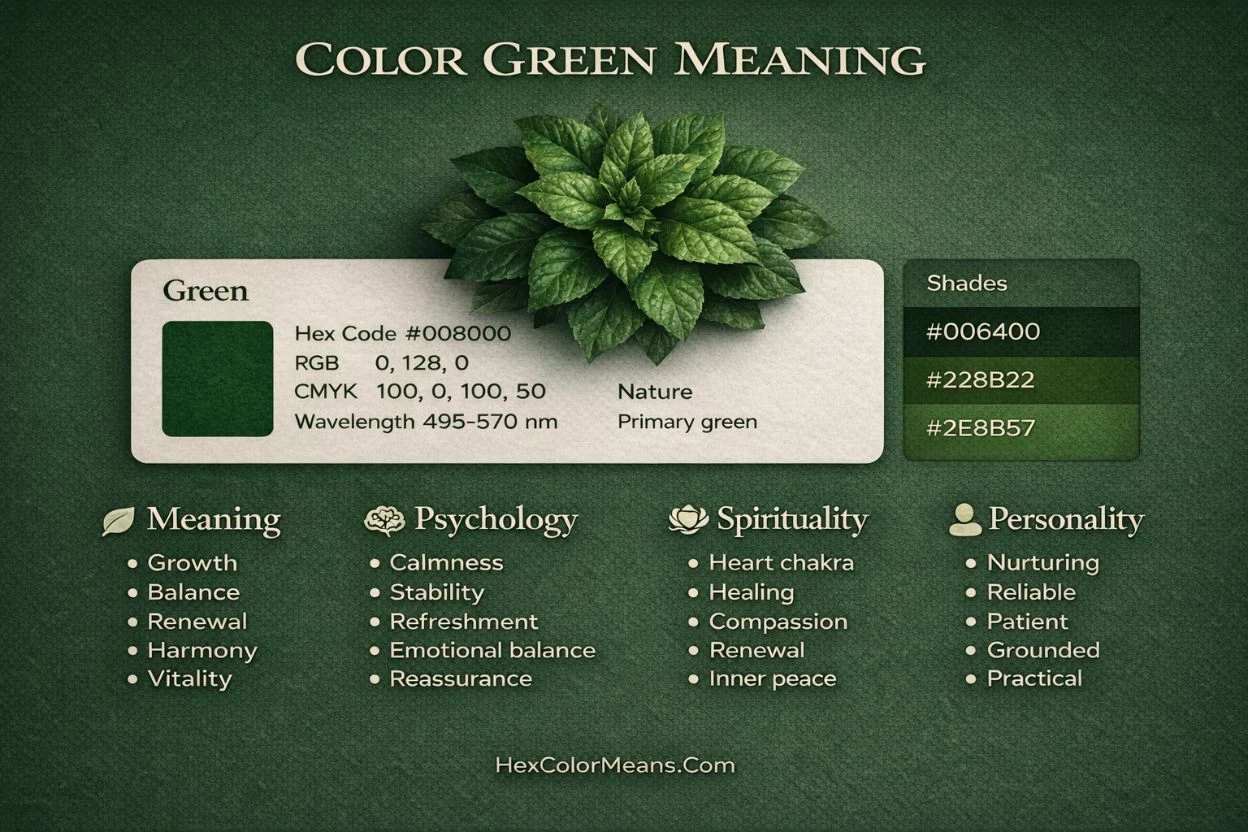
Green is not just a color. It is the very pulse of life on our planet. A sprout breaking through soil signals growth. Additionally, a dense forest canopy shows renewal. This color represents a deep connection to nature. Essentially, it is a quiet hum of balance in our world. Moreover, it visually reminds us of harmony and stability.
Interestingly, green has unique power to calm our minds. For example, it can refresh our spirits. It also grounds us in the present moment. You might love its vibrant energy. Alternatively, you may prefer its peaceful serenity. Knowledge about green unlocks a new layer of interaction with our environment.
Key takeaways
- Green is the universal symbol of nature and growth. It represents life’s continuous cycle.
- Psychologically, green promotes a powerful sense of calm. Research shows it can reduce stress and foster emotional balance.
- Spiritually, green is the color of the heart chakra named Anahata. This chakra governs love, compassion, and healing.
- Across cultures, green carries deep significance. For instance, it represents paradise in Islam. Meanwhile, it symbolizes fertility in many Eastern traditions.
- In practical use, green conveys health and sustainability. Therefore, it is common in business branding and interior design.
What is the color green?
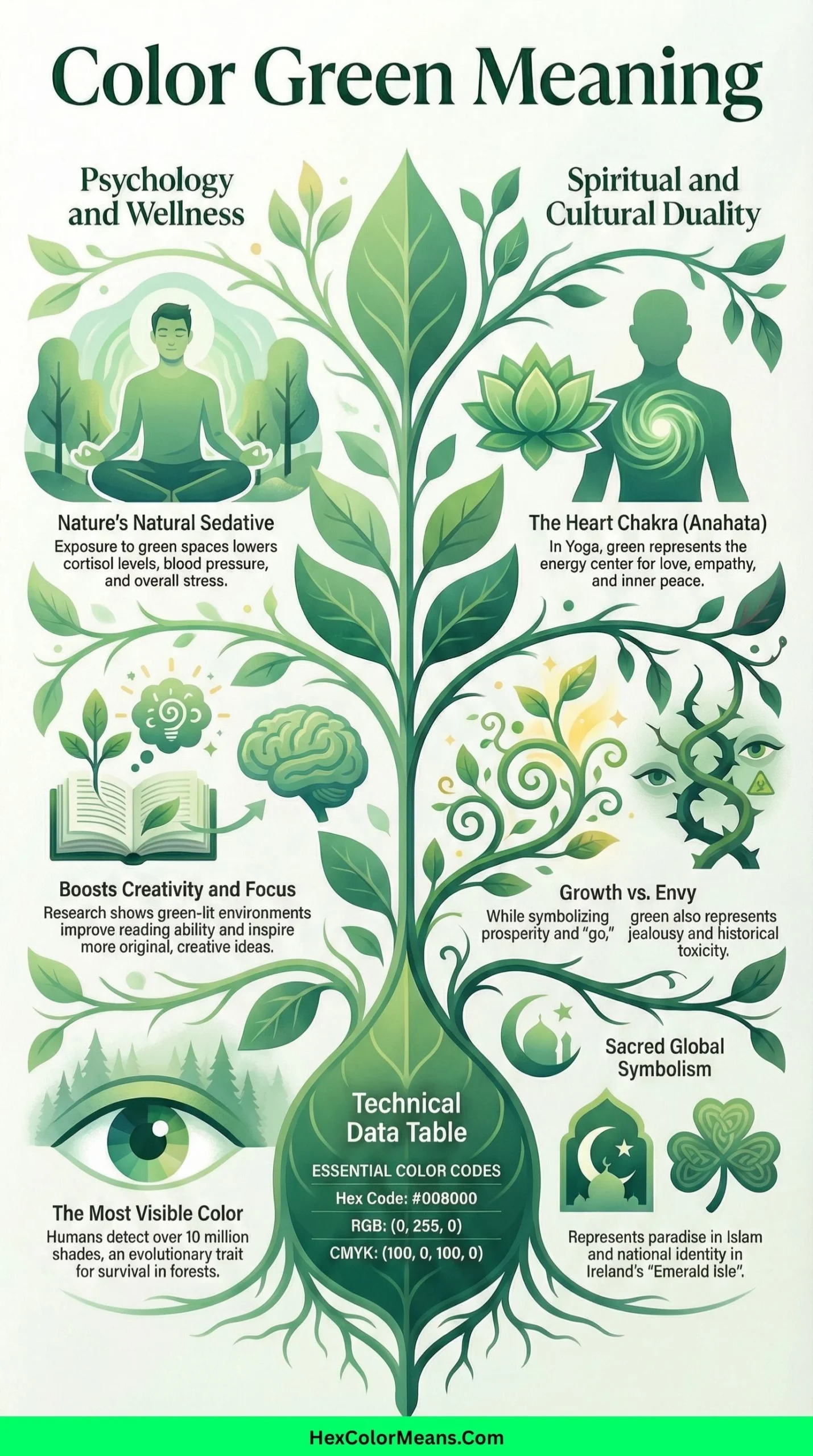
Green sits comfortably in the middle of the visible light spectrum, between blue and yellow. Its wavelength of approximately 495–570 nm makes it the most restful color for the human eye, which is why it is so universally soothing.
At its core, green is the color of chlorophyll, the essential pigment that allows plants to convert sunlight into energy, making it the literal foundation of life on Earth. This biological fact is the root of all its symbolic meanings: vitality, abundance, and the constant process of regeneration.
While its shades range from the sharp, electric zing of lime to the deep, mysterious shadows of forest green, every variation carries an echo of this fundamental connection to the living world.
To reproduce green accurately in digital and print media, designers use specific color codes for a standard green:
- Hex Code: #008000
- RGB Code: (0, 128, 0)
- CMYK Code: (100, 0, 100, 50)
However, green is a broad and diverse family. Its popular shades each convey a distinct mood, proving its incredible versatility. The spectrum includes:
- Lime Green: A bright, vibrant, and energetic yellow-green.
- Emerald: A brilliant, dense green associated with luxury and clarity.
- Forest Green: A deep, rich green that evokes woodland depth and maturity.
- Olive Green: A muted, earthy green with brown or gray undertones.
- Mint: A pale, cool, and fresh pastel green.
History of the color green
The history of creating the color green is very long. However, making a reliable green pigment was difficult for centuries. Ancient cultures often used unstable minerals. These included malachite, green earth, and copper-based verdigris. Consequently, these early greens frequently faded or darkened over time. In fact, scientific analysis of Roman art shows many greens have changed color.
Next, the 18th century introduced much brighter green pigments. For instance, Scheele’s Green and Paris Green became popular. Despite their vivid appeal, they were highly toxic. Research shows these pigments contained arsenic, which caused illness and even death. Nevertheless, they were widely used in paints, fabrics, and wallpaper.
Eventually, the 19th and 20th centuries brought safer alternatives. These included chromium oxide green and viridian. Later, science developed synthetic phthalocyanine greens. Therefore, green finally became a stable and durable color. As a result, it became widely accessible for all uses. Modern studies confirm these synthetic greens are both non-toxic and lightfast.
Interesting facts about the color green
- Human eyes see green light best. Specifically, they are most sensitive to 555 nanometer light. This wavelength is a bright green. Consequently, green lasers appear brighter than others at equal power.
- Green eyes are extremely rare globally. In fact, only about two percent of people have them. Therefore, green is the second rarest eye color after violet.
- A rare event called the green flash sometimes occurs at sunrise or sunset. Importantly, a green spot appears above the sun for just a second.
- Many East Asian languages traditionally combine blue and green. For instance, the Japanese word “ao” can mean both colors. However, modern language now often distinguishes them.
- Historically, some green pigments were dangerously toxic. For example, Scheele’s Green and Paris Green contained arsenic. Research shows these caused illness and even death in the 1800s.
- Green is the world’s most common flag color. It appears on over half of all national flags. Typically, it symbolizes agriculture, forests, or Islamic heritage.
Symbolism and Representation
Green is a key symbol of life in action. It primarily represents nature and organic growth.
According to color psychology studies, it is tied to a state of flourishing. For instance, this can mean a healthy plant or a balanced mind.
Additionally, green connects to spring and new beginnings. Therefore, it stands for renewal, freshness, and hope.
On a practical level, green is a universal signal. It means “go” and “safe” in many cultures.
Consequently, it signifies permission, progress, and environmental safety.
In finance, a “green” market shows rising stock prices. Research links this color with economic prosperity perceptions.
Ultimately, green mixes natural vitality with human made signals. This combination makes it a deeply positive color.
Indeed, it remains reassuring across countless situations globally.
Spiritual meaning of the color green
Spiritually, green is a powerful anchor for the heart. Global traditions see it as a bridge between physical and spiritual worlds.
For example, Hinduism connects green to the heart chakra, Anahata. This chakra governs love, compassion, and empathy. Consequently, a balanced heart chakra promotes deep peace and forgiveness.
Meanwhile, Islam considers green a sacred color. Researchers note it symbolizes paradise and purity in Islamic art.
Additionally, Celtic traditions linked green to evergreen plants and fairy folk. Therefore, it represented nature’s immortal spirit.
Ultimately, green invites us toward harmony.
Psychological effects of the color green
Psychologically, green creates balance and restoration. It sits in the middle of the color spectrum. This position makes it a natural mediator for the mind and body.
Scientifically, studies show that exposure to green lowers blood pressure. It also reduces stress hormones like cortisol. For this reason, hospitals often use soft green decor.
Furthermore, green promotes feelings of safety and security. It provides a visual safe space that can ease anxiety.
Another key point is that it reduces mental fatigue. As a result, green is excellent for workspaces needing focus.
In essence, it fosters a peaceful and stable internal environment.
Color green personality traits
People drawn to green often reflect its steady and balanced energy. This color sits between warm and cool. Consequently, green personalities typically feel calm yet purposeful. You will notice strong emotional depth in them. Additionally, they show practical thinking.
Positive Traits
Green personalities tend to be loyal and dependable. For instance, they show up even when things get difficult. Others naturally trust them because they value stability. Moreover, they are deeply grounded and emotionally balanced. Research in color psychology suggests this makes them excellent listeners. When someone needs advice, these individuals often step in without judgment.
Another defining quality is their compassion and fairness. They usually care about justice and equality. Often, they choose to do what feels morally right. This can require personal sacrifice.
Finally, they strongly appreciate nature, beauty, and harmony. You will often find them enjoying simple pleasures. These include plants, calm spaces, and meaningful conversations.
Negative Traits
However, green personalities can become stubborn. Once comfortable, they often resist change because it feels threatening. Their strong desire for peace may also cause conflict avoidance.
Importantly, avoiding necessary confrontation can lead to unresolved issues. Over time, these problems can build up.
In some cases, they become overly cautious or materialistic. They might focus too much on security and possessions. Furthermore, they may struggle with jealousy and comparison. This is famously called the “green eyed monster.” It often happens when their sense of stability is challenged.
What does the Bible say about the color green?
The Bible presents the color green as a symbol of life and growth. It also represents renewal and God’s faithful provision. This color is a living symbol tied to nature and spiritual health. Therefore, green often shows the relationship between human life and divine care.
Consider Psalm 1:3. It compares a righteous person to a well watered tree. This tree yields fruit and its leaf does not wither. Accordingly, the green leaf symbolizes a soul connected to God’s word. It shows steady growth and quiet strength.
Another example is Psalm 23:2. Here, God leads people to lie down in green pastures. This imagery implies safety and nourishment. Essentially, green pastures mean rest and abundance for sheep. So, the color signals being where one needs to be.
However, the Bible also shows life’s fragility using green. For instance, Isaiah 40:6 compares people to grass that withers. In this case, green represents life sustained only by God. Research into ancient Near Eastern literature confirms grass was a common metaphor for transience. This contrast highlights a key idea. Human life is temporary, but God’s word is eternal.
Later, the New Testament continues this theme. Mark 6:39 notes the crowd sat on green grass before Jesus fed five thousand people. This detail frames the miracle within natural abundance. Consequently, the green grass becomes part of the message. God provides both spiritual and physical sustenance.
Cultural and religious significance of green
1) Islam
In Islam, green is a sacred color. It represents paradise and divine favor. Many traditions link it to the Prophet Muhammad. This is why green appears on flags like those of Saudi Arabia and Pakistan. Historically, the color points toward eternal life.
2) China
Green symbolizes fertility and harmony in Chinese culture. It reflects spring and new beginnings. However, cultural meanings can be complex. Notably, wearing a green hat implies infidelity, a rare negative association.
3) Ireland
Green is central to Irish identity. Ireland is known as the Emerald Isle. The color represents national pride and its lush landscape. On St. Patrick’s Day, green symbolizes unity and tradition.
4) Japan
In Japan, the color midori means youth and vitality. It is connected to health and renewal. Studies on color psychology affirm green’s association with balance and wellbeing. Green tea and green spaces reflect this positive link.
5) Ancient Egypt
Ancient Egyptians saw green as the color of rebirth. It was linked to Osiris, the god of the afterlife. The color symbolized the cycle of life returning, much like vegetation after the Nile floods.
6) Hinduism
In Hindu belief, green connects to the heart chakra. It represents emotional balance and compassion. The color also carries themes of prosperity and harmony in relationships.
7) Brazil
Green dominates the Brazilian flag. It stands for the country’s vast forests and natural resources. Essentially, it reflects life at a national scale.
8) Scotland
In Scotland, green tartans symbolize clan identity. Different shades and patterns mark ancestral roots and loyalty.
Dream interpretations of color green
Dreams featuring the color green are widely seen as a positive sign. Research in color psychology suggests green promotes feelings of safety and tranquility. Consequently, a vivid green landscape in a dream often signals personal growth. It can also represent healing and a time of renewal in your life.
Moreover, this color may indicate you are currently on the correct life path. Alternatively, it can mean a new and prosperous phase is beginning for you. Dreaming of healthy green plants shows your ideas are developing well. Similarly, it suggests your personal relationships are also flourishing.
Context within the dream is always important. For instance, a sickly or faded green could symbolize a loss of vitality. Studies on dream analysis connect this shade to feelings of envy or jealousy.
How to use the color green
Green in Business
In the business world, green communicates trust, stability, and long-term growth. Many financial institutions use deep or muted greens in their branding because the color subtly suggests prosperity, security, and reliability. It feels grounded, steady, and safe, which is exactly what people want when dealing with money, investments, or insurance.
Health, wellness, and organic brands also lean heavily on green. It signals natural ingredients, ethical practices, and a cleaner lifestyle. When consumers see green labels or packaging, they instinctively associate the product with being healthier and more environmentally responsible. Research supports this behavior, as studies consistently show that people perceive green-branded products as more sustainable, even before reading any claims.
In modern business, green has also become a symbol of corporate responsibility. Companies that promote eco-friendly missions, carbon neutrality, or sustainable sourcing often use green as their core visual identity. It helps build emotional trust while aligning the brand with global environmental values.
Green in Branding and Marketing
In branding, green is a strategic choice that triggers calmness, credibility, and emotional comfort. Unlike aggressive colors like red or overly stimulating tones like bright orange, green feels balanced. It reassures the viewer rather than pressuring them.
Eco-conscious brands such as Whole Foods, Spotify, and Animal Planet use green to reinforce their connection to health, creativity, and sustainability. The color creates a mental shortcut in the consumer’s mind. Green equals safe, fresh, and responsible.
Green also performs well in digital marketing. Since traffic lights use green to mean “go,” the color naturally encourages action. This makes it highly effective for call-to-action buttons, subscription forms, and confirmation screens. Many usability studies show that green buttons outperform other colors in click-through rates because they feel inviting instead of demanding.
Green in Interior Design
In interior design, green is one of the most versatile and emotionally soothing colors available. It connects indoor spaces to the natural world, even in urban environments. Light shades such as mint, sage, and olive create a sense of openness and calm, making them ideal for bedrooms, bathrooms, and meditation spaces.
Darker greens like emerald, forest, and hunter green bring depth, elegance, and luxury to living rooms and offices. These tones feel rich without being overwhelming. They add character while maintaining a peaceful atmosphere.
Green also pairs effortlessly with nearly every color family. It works with neutrals like beige and gray, warm tones like gold and terracotta, and cool shades like navy or charcoal. This makes green a year-round design choice that never feels outdated or seasonal.
Green in Cinema
In film, green is a powerful storytelling tool. Directors use it to shape mood, symbolism, and emotional tone without saying a single word. Natural greens often represent peace, innocence, and connection to nature, especially in rural or fantasy settings.
On the darker side, green can also feel eerie or unnatural. A sickly green tint is commonly used in horror and sci-fi to suggest something is wrong, corrupted, or artificial. The Matrix is a classic example, where the green filter visually separates the digital world from reality, making the environment feel cold, controlled, and distorted.
Because green sits between warm and cool tones, it works as a psychological bridge. It can feel comforting or unsettling depending on how it is used, which makes it incredibly flexible for filmmakers.
Green in Fashion
In fashion, green allows people to express personality without being loud or dull. It sits in a rare space where it can feel both bold and sophisticated.
Bright greens like lime or neon suggest confidence, creativity, and modern energy. These shades stand out and communicate fearlessness. On the other hand, darker greens such as forest, bottle green, or moss offer subtle elegance. They feel refined, grounded, and timeless.
Green is also flattering across many skin tones, which makes it a popular choice for both casual wear and formal outfits. It can feel calming in soft fabrics or powerful in structured tailoring. Few colors adapt this easily across moods and styles.
Green in Makeup
In makeup, green plays both a practical and artistic role. On the corrective side, green concealers neutralize redness caused by acne, rosacea, or irritation. This works because green sits opposite red on the color wheel, allowing the two tones to cancel each other visually.
In creative makeup, green eyeshadows and liners are used to create mystical, futuristic, or nature-inspired looks. Emerald and jade tones add drama, while pastel greens feel fresh and playful.
Because green is less common than browns or pinks in makeup, it instantly creates visual interest. It stands out without feeling harsh, which makes it a favorite for editorial shoots and experimental styles.
Green Food
Green foods are some of the most nutrient-dense and health-promoting items in any diet. Vegetables like spinach, kale, broccoli, and lettuce are rich in vitamins, minerals, and antioxidants that support immunity, digestion, and overall vitality. Fruits such as kiwi, green apples, grapes, and limes also contribute hydration and natural energy.
The phrase “eat your greens” exists for a reason. Green plants contain chlorophyll, which helps detoxify the body and improve blood health. Many studies link regular consumption of green leafy vegetables to reduced risk of heart disease, better cognitive function, and improved metabolic health. Visually, green food signals freshness. When people see green on a plate, they instinctively associate it with cleanliness and natural nourishment.
Green in Language
Green has deeply rooted itself in everyday language, shaping how people describe emotions, skills, and even money. The phrase “green with envy” uses the color to symbolize jealousy, often tied to feelings of desire or comparison. Meanwhile, “green thumb” refers to someone with natural talent in gardening, linking green to growth and life skills.
The term “greenhorn” describes someone inexperienced, suggesting newness and immaturity. On the financial side, “greenback” is a popular nickname for the US dollar, rooted in the historical green color of American currency. These expressions show how green goes beyond visuals and becomes a psychological symbol embedded in communication.
Green in Art and Architecture
Artists have long been fascinated with green because it represents nature in its purest form. From Renaissance landscapes to modern digital art, green is essential for expressing life, depth, and realism. Historically, creating stable green pigments was difficult, which made certain shades rare and valuable in classical paintings.
In architecture, green has evolved into a functional concept. Green buildings and green roofs integrate vegetation into urban structures, improving air quality and reducing heat. These designs help cities feel more breathable and less mechanical. Beyond aesthetics, green architecture reflects a growing desire to merge human environments with natural systems.
Green in Music
Green appears frequently in music, often symbolizing youth, nostalgia, or emotional longing. Traditional songs like Greensleeves use green to represent love and memory, while instrumental classics such as Green Onions evoke rhythm and identity through simple but powerful imagery.
Modern artists also use green as metaphor. Green River by Creedence Clearwater Revival reflects freedom, roots, and escape. Across genres, green often carries a reflective tone, connected to personal history, innocence, or natural belonging.
Places Named Green
While no major global capital is named purely “Green,” the word appears widely in town and city names. Places like Greensboro, Green Bay, and Greenock use the term to suggest pleasant landscapes or fertile land. These names often originated from settlers describing the environment rather than symbolic meaning.
Even today, the word green in place names feels inviting. It suggests space, openness, and comfort, making it one of the most positively perceived geographic descriptors.
Green in the Garden
The garden is where green feels most at home. It acts as the visual foundation that allows every other color to stand out. Flowers pop because green surrounds them. Without green leaves and stems, gardens would lose their structure and rhythm.
Different shades of green create texture and depth. Sage offers a soft, silver-green that feels calming and dusty. Holly provides a deep, glossy green that feels bold and strong. Together, these tones create balance, order, and a quiet sense of life in motion. Green in the garden does not compete for attention. It supports everything else.
Final thoughts
Green symbolizes life, harmony, and renewal, remaining one of the most meaningful colors across cultures and time. It reflects nature’s cycles of growth and rest while offering a sense of calm and emotional balance. From spiritual traditions to modern design, green consistently communicates stability, healing, and connection.
More than a visual preference, green acts as a reminder to slow down, care for what truly matters, and stay aligned with natural rhythms. In a world that often feels fast and disconnected, green continues to stand as a quiet guide toward balance, resilience, and inner peace.