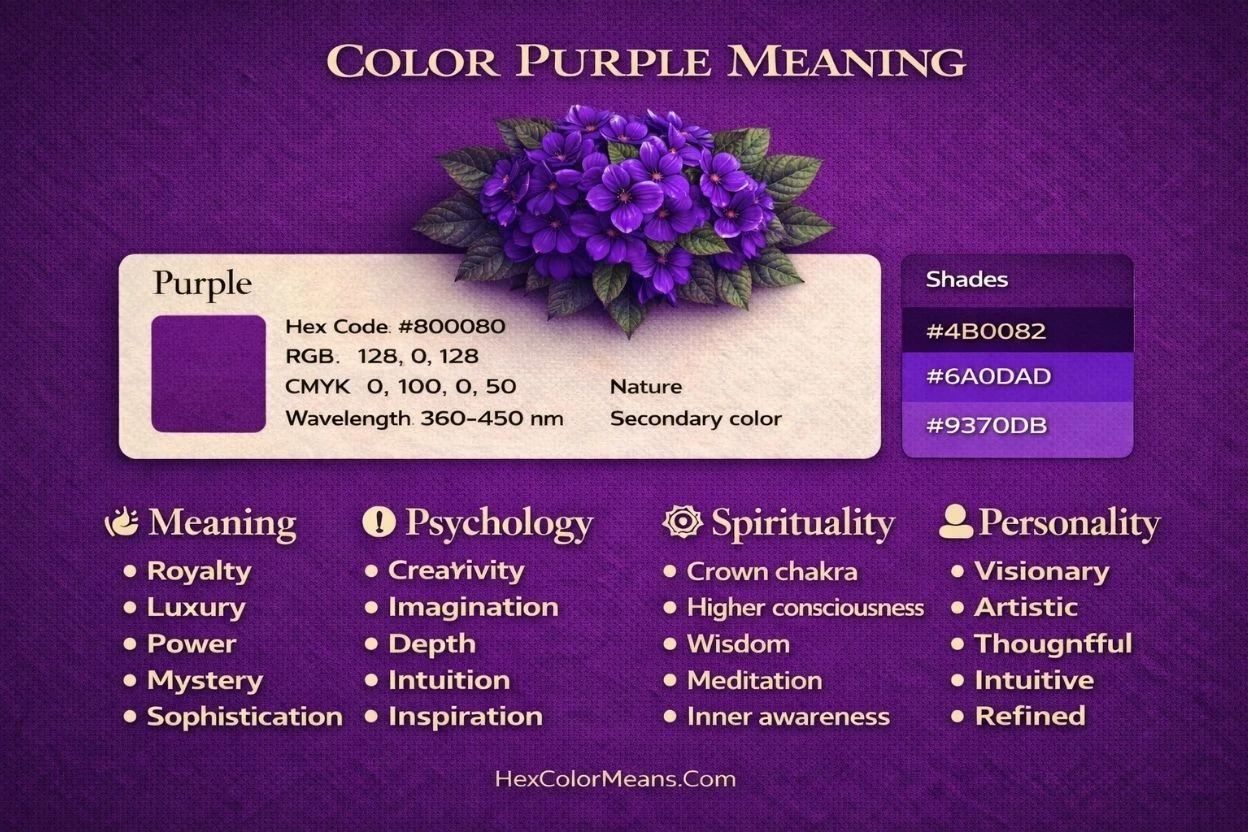
Purple is found between red and blue on the color wheel. This position means it blends red’s energy with blue’s calmness.
That balance gives purple a special character. It feels strong but also serene. It appears artistic yet orderly.
Picture royal clothing and fields of lavender. Imagine evening skies and rare gems. Many expensive brands also choose this color.
These items all share a quality. They seem extraordinary. Purple usually avoids feeling common.
In color psychology, purple is called the shade of creativity and secrecy. It also means wisdom and profound thought.
This color asks for quiet thinking. It helps calm a busy mind. In addition, it encourages new ideas.
Purple does not shout for attention. Still, it always makes its presence known.
Key takeaways
- Purple stands for royalty, spirituality, creativity, and inner power.
- Mentally, purple helps imagination, gut feelings, and emotional insight.
- Spiritually, purple links to the crown chakra and higher consciousness.
- For brands, purple suggests luxury, rarity, and high quality.
- Across cultures, purple often symbolizes magic, mystery, and personal change.
What is the color purple?
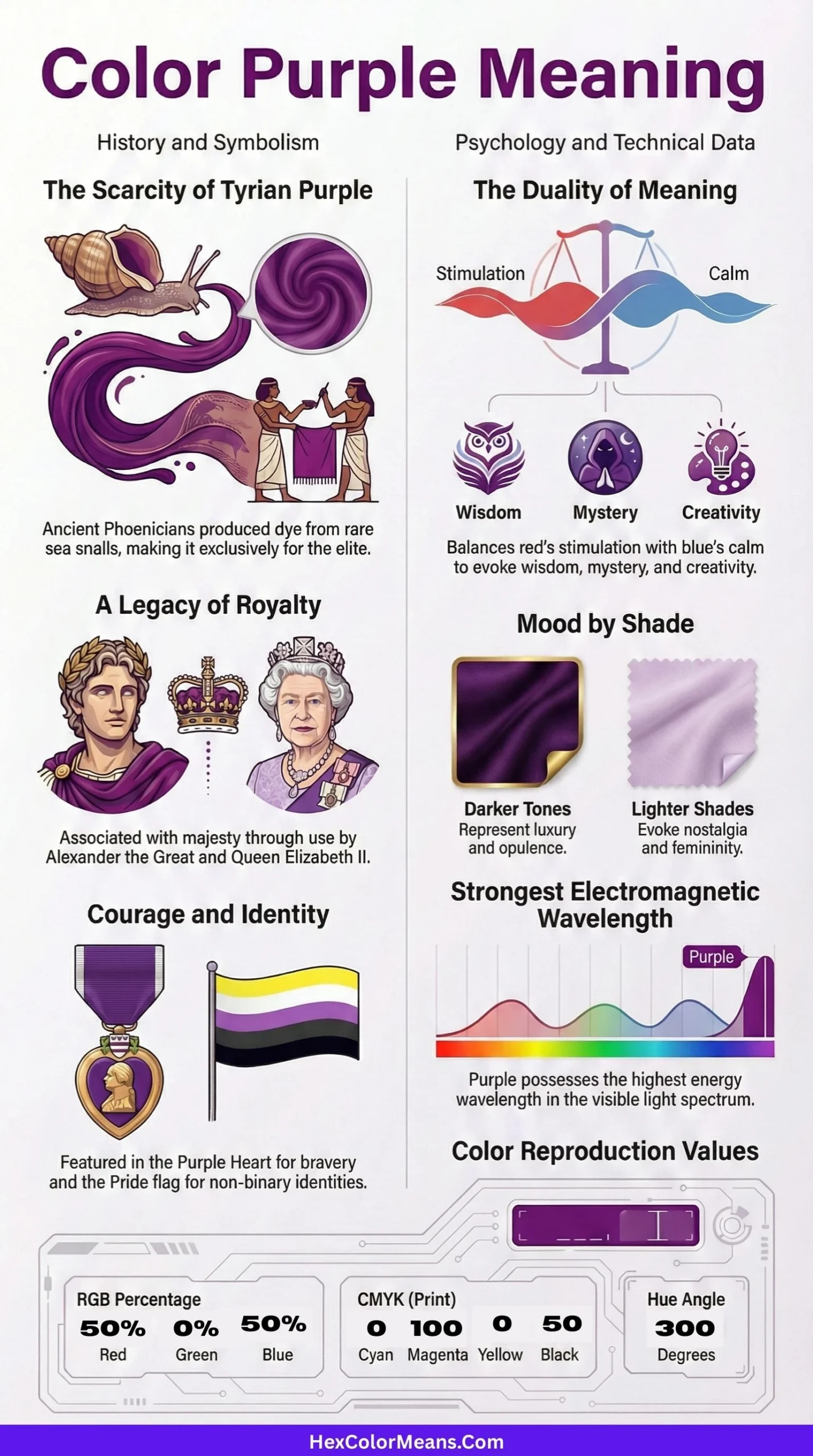
Purple is a secondary color. You make it by mixing red and blue paint or light.
Common digital codes for true purple are listed here.
- HEX: #800080
- RGB: 128, 0, 128
- HSL: Hue: 300°, Saturation: 100%, Lightness: 25%
Visually, purple is uncommon in nature. Colors like green or blue appear more often. A study on flower colors found only about 7 percent of flowers are primarily purple. This rarity makes it feel exclusive and meaningful.
Purple also sits at the edge of the visible light spectrum. It has a wavelength of approximately 380 to 450 nanometers. Human eyes see it at the shortest wavelengths we can detect.
The color purple is not a single personality. It spans a wide emotional range depending on shade and tone. Its most popular variations include:
- Lavender: A light, airy purple associated with calmness, sensitivity, and emotional balance.
- Violet: A vivid, energetic purple linked with imagination, creativity, and spiritual awareness.
- Plum: A deep, rich purple that feels luxurious, introspective, and emotionally intense.
- Amethyst: A cool-toned purple connected with wisdom, clarity, and inner peace.
- Eggplant: A dark, dramatic purple that suggests power, mystery, and sophistication.
History and interesting facts
History of the color purple
Purple has a very fascinating history. In ancient times, true purple dye came from sea snails.
People specifically used the Murex snail. Making a small amount of this dye required thousands of snails.
The process was also slow and very expensive. Additionally, it created an unpleasant smell.
For these reasons, purple became a strong symbol of wealth and power. Usually, only kings and emperors wore it. Religious leaders could also afford it.
Ancient Rome had strict rules about this color. Wearing purple without official permission could lead to punishment.
Similarly, in Byzantium, purple was only for royalty. A famous phrase from that time is “born in the purple.” It described a person born into a royal family.
Next, a major change happened in the 19th century. Scientists finally created synthetic purple pigments.
After that, purple became available to artists and designers. Everyday people could then use it, too.
Interesting facts about the color purple
Here is a list of notable facts about purple.
- Purple was once more valuable than gold. Historical records show the dye cost more than precious metals.
- For a long time, no country flag used purple. It remained too expensive to produce for most nations. The first flag to include it was from Nicaragua in 1908.
- This color rarely appears in nature. For instance, most purple flowers rely on special pigments called anthocyanins.
- Research suggests purple objects can feel heavier to the brain. They often create a sense of importance.
- Studies on color psychology indicate purple improves creative problem solving. It specifically helps with abstract thinking.
- Darker shades of purple can lower heart rate. Therefore, they promote feelings of calm and personal reflection.
- Many link purple with dreams and fantasy. As a result, it appears frequently in surreal art styles.
Symbolism and representation
Purple is a color of power and mystery. It holds a deep connection to imagination and spirituality. This color also signifies profound personal transformation.
It often represents several key ideas. The first is royal authority, due to its historical rarity and cost. Next, it symbolizes inner wisdom.
Magic and fantasy are commonly linked with this hue. It also relates to emotional depth. Finally, it connects to the journey of personal identity.
Unlike red, purple does not loudly demand attention. Also, unlike blue, it does not simply fade into the background. Instead, it sits in a thoughtful and balanced middle space.
Purple invites people to pause and think deeply. It prompts them to feel emotions fully. This color encourages exploration beyond what is immediately visible.
Meaning of the purple color in spirituality
In spirituality, purple has a very strong link to the crown chakra. This energy center is located at the very top of the head.
The crown chakra governs a person’s higher consciousness. It manages their connection to spiritual concepts. This chakra is central to universal awareness.
It also fosters a deep sense of inner peace. Ultimately, it is the center associated with enlightenment.
A balanced crown chakra brings feelings of clarity. It also provides a firm trust in life’s flow.
However, a blocked crown chakra can cause a sense of disconnection. It may also lead to feelings of being lost or purposeless.
Purple is actively used in various spiritual practices. Its purpose is to enhance the quality of meditation.
Another key use is to improve and trust intuition. It helps to strengthen a person’s spiritual identity. Furthermore, it encourages surrender to a higher wisdom.
Many tools in spirituality feature this color. Purple candles are lit for rituals seeking insight.
Purple crystals, like amethyst, are used for their calming energy. Purple clothing is sometimes worn to deepen a ceremonial focus. These items frequently appear in rituals dedicated to healing and gaining deeper knowledge.
Psychological meaning of color purple
Psychologically, purple strongly activates mental processes. This color does not focus on physical energy. Instead, it directly influences thought patterns.
Purple supports a vivid imagination. It provides space for deep reflection. This color heightens personal sensitivity. It also refines emotional intelligence.
Furthermore, purple promotes a unique artistic thinking style. The color helps individuals break free from ordinary thoughts. It actively encourages fresh and unusual viewpoints.
Also, purple aids in carefully working through feelings. However, excessive exposure presents clear problems. It can trigger rapid and intense mood swings.
It may lead to persistent and unproductive overthinking. Another risk involves retreating into emotional isolation. In some cases, it fosters a habit of escapism.
For these reasons, using purple in moderation is most effective. Balanced exposure yields its benefits without the downsides.
Color purple personality traits
Positive traits
Individuals attracted to purple frequently exhibit notable positive qualities. They possess a powerful and innate creativity. Their awareness of emotions is typically profound.
These people demonstrate a consistent and high capacity for empathy. Their approach to problems involves visionary and future oriented thinking. A strong appreciation for beauty and art defines them.
Their interests often include philosophy and music. Similarly, they are drawn to design and engaging storytelling.
Negative traits
People with purple linked traits also face specific difficulties. They often react intensely to any form of criticism. Their emotional landscape can be complex and overwhelming.
A tendency toward frequent daydreaming is commonly observed. Also, they might struggle with staying practical and grounded. Periods of voluntary social withdrawal can occur.
Typically, their rich inner world dominates their experience. As a result, action sometimes lags behind their intricate thoughts.
What does the Bible say about color purple?
In the Bible, the color purple carries deep meaning. It primarily symbolizes royalty and sovereign authority. This color also represents divine favor and high status.
The association comes from the ancient process of making purple dye. This dye was extremely rare and costly to produce. It was often called Tyrian purple.
Therefore, only the very wealthy or powerful could afford it. Specific verses highlight this link.
Judges 8:26 lists purple garments taken from defeated kings. These robes were valuable spoils of war.
Next, Esther 8:15 describes Mordecai in royal purple and white robes. This showed his new authority from the king.
Then, in the New Testament, John 19:2 records soldiers placing a purple robe on Jesus. They did this to mock his claim of being a king.
However, the act ironically proclaimed his true spiritual kingship. Thus, Scripture uses purple to show spiritual authority. It marks individuals chosen for sacred leadership roles.
Cultural and religious significance of the purple color
1. Christianity
Within Christian tradition, purple holds a solemn role. It symbolizes repentance and humility before God.
The color also signifies a period of preparation. For this reason, it is used during the season of Lent. Lent is a time of reflection before Easter.
Purple is also used during Advent. Advent is a period of waiting before Christmas. In both cases, the color sets a thoughtful mood. It encourages spiritual readiness.
2. Hinduism
In Hindu spirituality, purple is connected to cosmic energy. It is seen on the robes of certain deities.
The color aids in meditation and spiritual transformation. It represents a higher state of consciousness. Moreover, it bridges the material and spiritual worlds.
3. Buddhism
Purple has significance in Buddhist practice as well. It reflects mystical insight and deep wisdom.
High-ranking lamas may wear purple robes. These robes indicate their advanced spiritual progress. The color points toward inner awakening and enlightenment.
4. Japanese Culture
Historically in Japan, purple denoted nobility and high rank. The shade was linked to the ruling class.
It also symbolizes wisdom and artistic refinement. For instance, traditional Japanese poetry often uses purple imagery. This imagery evokes beauty and elegance.
5. Egyptian Culture
Ancient Egyptians valued purple highly. They associated it with divine power and immortality.
Priests and pharaohs used purple in sacred items. The color was thought to have protective qualities. It connected the wearer to the gods.
6. African Symbolism
Across many African cultures, purple has spiritual importance. It often reflects spiritual protection and authority.
Certain rites and garments use purple to honor ancestors. The color helps access ancestral knowledge and wisdom.
7. Western Society
In modern Western society, purple retains its symbolic power. It commonly represents luxury, creativity, and individuality.
Marketers use it for premium products. Meanwhile, it remains a color of artistic expression. It signals uniqueness and imaginative thought.
Dream interpretations of color purple
Purple in dreams connects to inner growth. This growth is often emotional. It can be spiritual as well.
Common meanings are divided into categories. Bright purple signals a creative awakening. It means new ideas are forming.
Dark purple points to hidden emotions. These feelings might be unexpressed.
Purple clothing suggests personal transformation. The dreamer may be changing.
Purple light acts as spiritual guidance. It hints at a higher insight.
Purple flowers indicate emotional healing. Old wounds could be mending.
Such dreams frequently arrive during transitions. Life changes prompt these visions.
How to use the color purple
This color adds depth without force. It feels rich but not aggressive. The following details show its practical uses.
1) Color Purple in Business
Purple makes a specific statement in business. First, it signals innovation and new thinking.
It also represents premium quality and value. Importantly, it reflects emotional intelligence.
Therefore, it suits certain types of businesses. Creative agencies often select purple. Wellness brands find it appropriate.
Coaching services use it effectively. Many tech startups prefer it too.
An office with purple feels thoughtful. The space will seem visionary and calm.
2) Color Purple in Branding and Marketing
Purple establishes distinct brand recognition. Brands choose it to stand apart.
Simultaneously, it communicates luxury and refinement. This color attracts imaginative audiences.
Several famous brands use purple successfully. Cadbury uses it for premium chocolate. Yahoo employs it for its logo.
Twitch features it prominently. Hallmark utilizes it for branding.
Essentially, purple draws people who seek meaning. These individuals usually avoid fleeting trends.
3) Color Purple in Interior Design
In interior design, purple shapes mood. It creates a specific emotional atmosphere.
Best practices involve different shades. Lavender brings calm to bedrooms. Plum adds richness to dining rooms.
Lilac inspires creativity in studios. Eggplant conveys opulence in luxury spaces.
However, balance is very important. Pair purple with white for freshness. Beige makes it feel warm.
Gold accents introduce a regal touch.
4) Purple Color in Cinema
Film makers use purple for symbolism. It often suggests fantasy realms. It can depict dream sequences.
The color also implies mystery. It introduces alternate realities.
As a result, it appears in certain genres. Science fiction films use it often. Psychological dramas select it frequently.
Directors use it to signal the unusual. It tells viewers that normal rules may not apply.
5) Purple Color in Humans
Purple reflects specific personal qualities. It indicates deep emotional sensitivity. Wearers might feel things intensely.
The color shows creative thinking patterns. It also suggests a philosophical mindset.
People who choose purple appear thoughtful. They often seem artistic and introspective.
Their style is usually intentional. It communicates a quiet confidence.
6) Purple Color in Makeup
Purple makeup offers a versatile range of artistic possibilities. For the eyes, purple eyeshadow enhances depth and dimension.
This happens because the color contrasts with the common brown, blue, or green iris. The contrast makes the eye color appear more vivid and noticeable.
Darker plums and eggplants can define the crease for a smoky effect. Meanwhile, lighter lavenders and lilacs brighten the inner corner and lid.
Emotionally, purple makeup projects a sense of creative confidence. A plum lipstick, for example, suggests sophistication and individuality.
It is less severe than black but more distinctive than a standard red. A wash of violet blush adds a whimsical, dreamy flush to the cheeks.
This is different from a traditional pink or peach tone.
For a fully coordinated look, consider these products together: Plum lipstick, Violet eyeshadow, and Lavender blush. These items build a complete aesthetic.
Therefore, purple is a premier choice for dramatic, artistic makeup statements. It allows the wearer to express a bold personal identity.
7) Purple Food
Naturally purple foods are important for physical and cognitive health. Their distinctive color comes from plant compounds called anthocyanins.
These compounds are potent antioxidants. They protect the body’s cells from damage caused by free radicals.
Specifically for the brain, these antioxidants improve blood flow and reduce inflammation. This leads to better memory retention and sharper focus.
A diet rich in purple foods includes several key items. Blueberries are often called brain food and are linked to improved communication between brain cells.
Black grapes skins contain resveratrol. This compound may help protect the hippocampus, a brain area vital for memory.
Eggplant skin is especially nutrient-dense. It contains nasunin, an antioxidant that protects brain cell membranes.
Purple cabbage provides vitamin K and anthocyanins. These support mental function and concentration.
Purple sweet potatoes are high in vitamins and complex carbohydrates. This combination provides sustained energy for the brain.
Including these foods creates tangible benefits. The nutrients directly support cognitive processes and overall neural health.
8) Purple Color in Quotes and Idioms
The English language uses purple to convey specific abstract ideas. These phrases rely on the color’s historical and cultural associations.
The term “purple prose” describes writing that is overly ornate and emotional. It implies extravagance to the point of distraction.
The idiom “born in the purple” references Byzantine royalty. Emperors’ children were born in a special purple-walled chamber.
Now, it means someone born into high status or wealth. The phrase “purple haze” famously denotes a state of confusion or dreaminess.
It can describe a mental state altered by emotion or experience. Collectively, these expressions tie purple to excess, royalty, and altered perception.
They reinforce the color’s link to concepts beyond the ordinary.
9) Purple Color in Art and Architecture
Artists select purple to evoke specific moods and themes. Its mixed nature allows it to show emotional complexity.
A painting might use deep purples in shadows to suggest mystery or sorrow. In contrast, bright magentas can indicate passion or spiritual energy.
Historically, purple pigment was rare and expensive. Because of this, its use in architecture signaled great power and wealth.
Byzantine mosaics and medieval stained glass windows used purple glass. This use denoted the importance of religious figures.
Temples and churches employed it to inspire awe and signify divinity. In modern contexts, purple creates a dreamlike or futuristic mood.
Fantasy art uses it for magical auras, mystical landscapes, and royal costumes. Its application immediately separates a scene from mundane reality.
It transports the viewer to an imaginative space.
10) Songs With Purple in the Title
Music incorporates purple as a metaphor for rich inner experience. The color titles songs that deal with emotion, spirituality, and psyche.
“Purple Rain” by Prince uses the color as a symbol for a period of spiritual cleansing and sorrow. It represents a baptism of sorts through pain.
“Purple Haze” by Jimi Hendrix describes a confused, surreal state of mind. The color frames the feeling of being lost in powerful emotion or experience.
“Deep Purple” as a title suggests something profound, intense, and perhaps melancholic. Across these examples, purple is not describing a simple sight.
Instead, it labels a complex, personal, and internal journey.
11) Cities With Color Names: Purple
While no major city is officially named “Purple,” the theme persists in localized areas. Some artistic or bohemian districts earn nicknames related to the color due to vibrant murals and decorations.
Furthermore, fictional fantasy towns in literature and film often use purple in their visual design. This establishes them as places of magic and creativity.
Thematically, purple spaces are intentionally designed. Examples include lavender fields, venues with ultraviolet lighting, and cultural festivals with a purple motif.
These places prioritize artistic expression and cultural exploration. They are designed to stimulate creativity and a sense of wonder in visitors.
12) The Color Purple in the Garden
Incorporating purple into a garden design alters its atmosphere dramatically. Purple flowers often have calming, soothing scents.
Lavender, for instance, is famous for its fragrant and relaxing aroma. This scent contributes to a peaceful environment.
Purple blooms also carry symbolic meaning. Irises can represent wisdom and compliments. Violets often symbolize loyalty and modesty.
Visually, purple recedes slightly in the landscape. This creates an illusion of depth, making a garden feel larger and more mysterious.
Common purple garden plants include: Lavender for structure and fragrance, Iris for striking vertical accents, and Violet for early spring ground cover. Also, Lilac presents large, fragrant spring clusters and Orchid introduces an exotic, intricate shape.
Together, these plants craft a space that feels tranquil. They also add a touch of enchanting, otherworldly beauty.
Final thoughts
Purple operates on a level beyond mere decoration. It is a color of psychological and spiritual depth.
Its core meanings connect to imagination, genuine emotion, and higher awareness. Purple asks for a slower, more thoughtful engagement from the observer.
It prompts introspection and feeling. Historically, its rarity made it a symbol of imperial power and sacredness.
In the modern era, it retains this link to the exceptional. Now it represents creative innovation and individual depth.
Applied with intention, purple functions as a tool. It changes how we see and interpret our surroundings.
It lifts ordinary perception toward a more thoughtful and inspired state.